Grant Research - Clay Body Reactions in Soda Firing
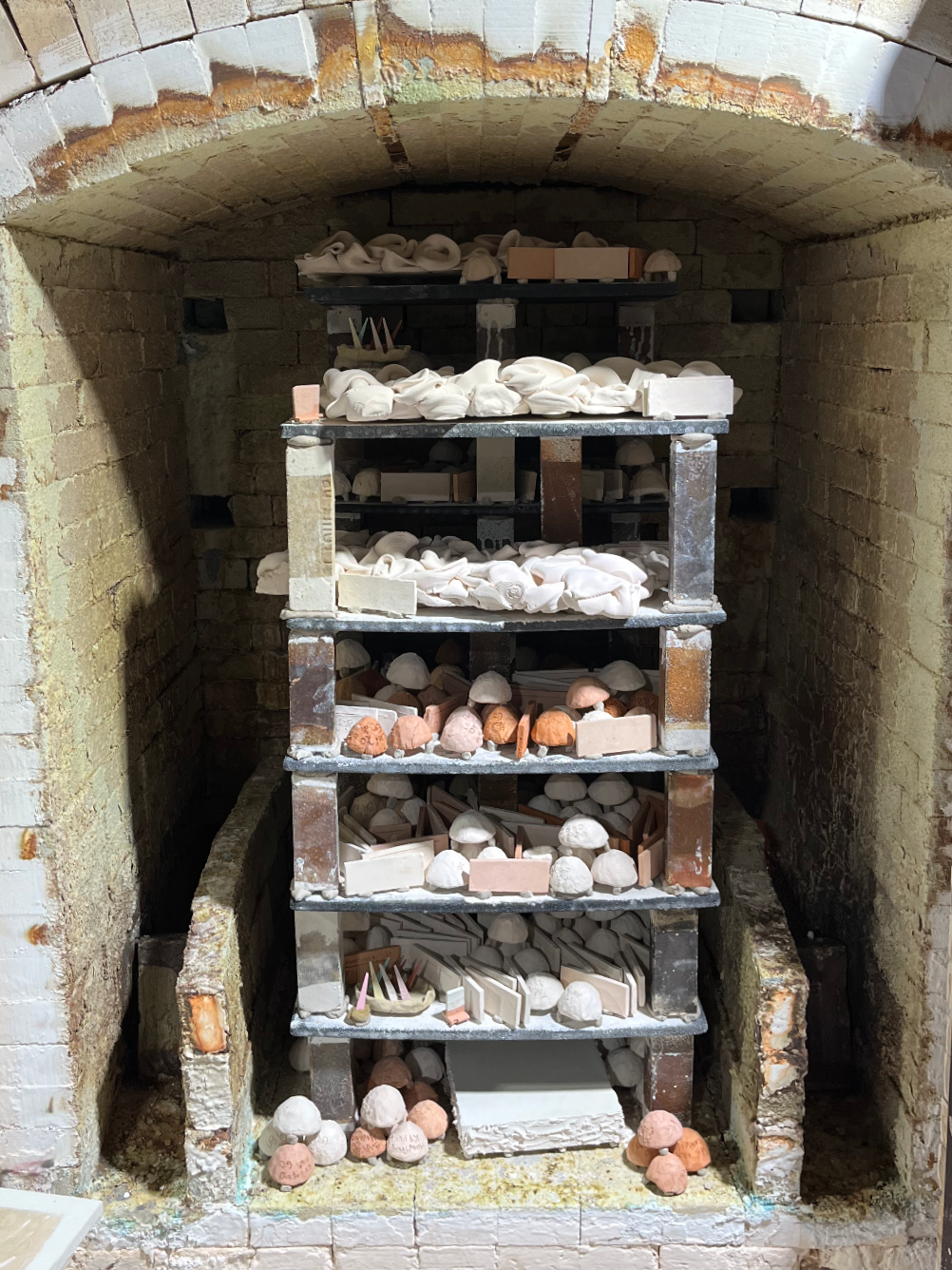
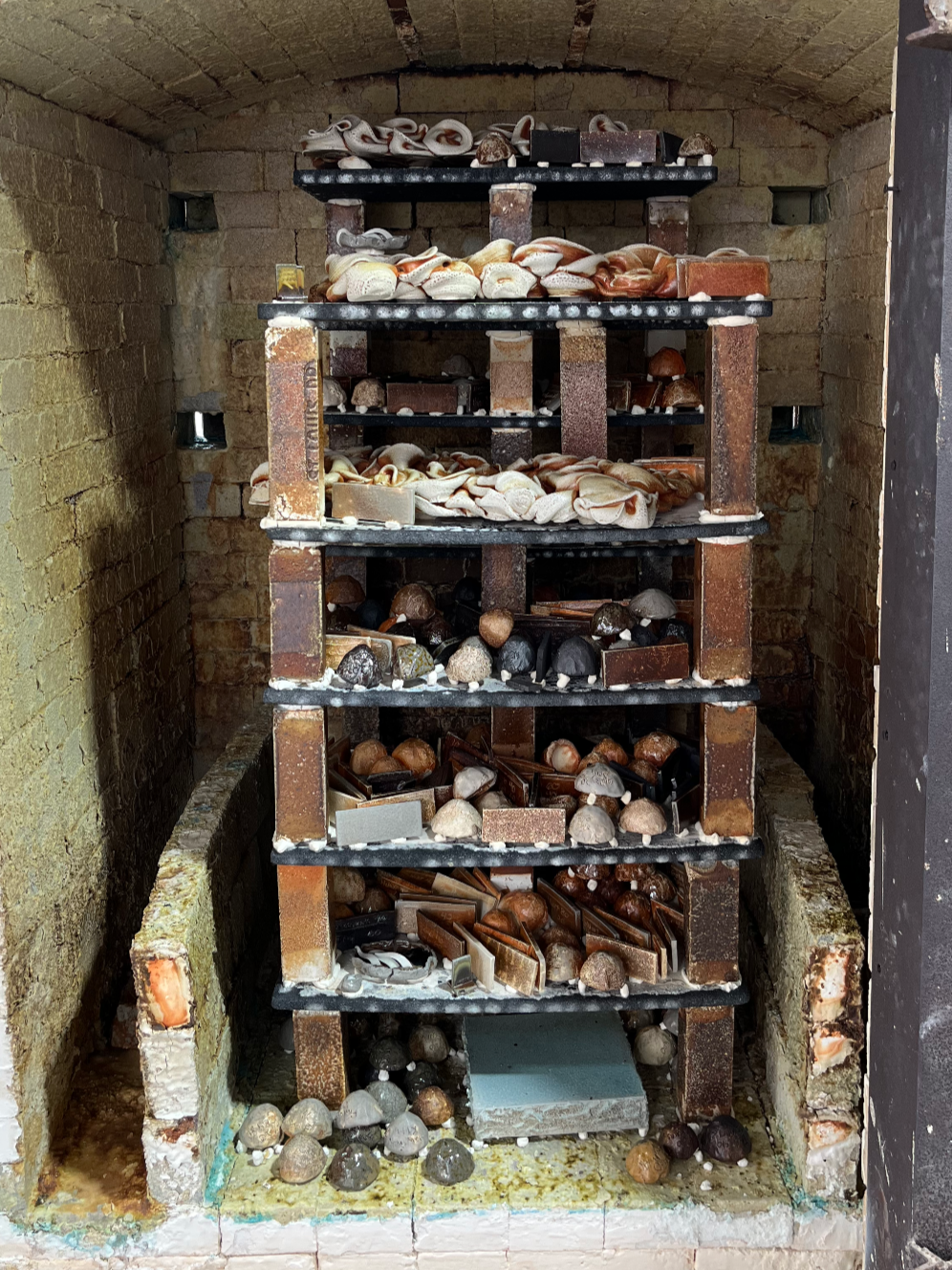
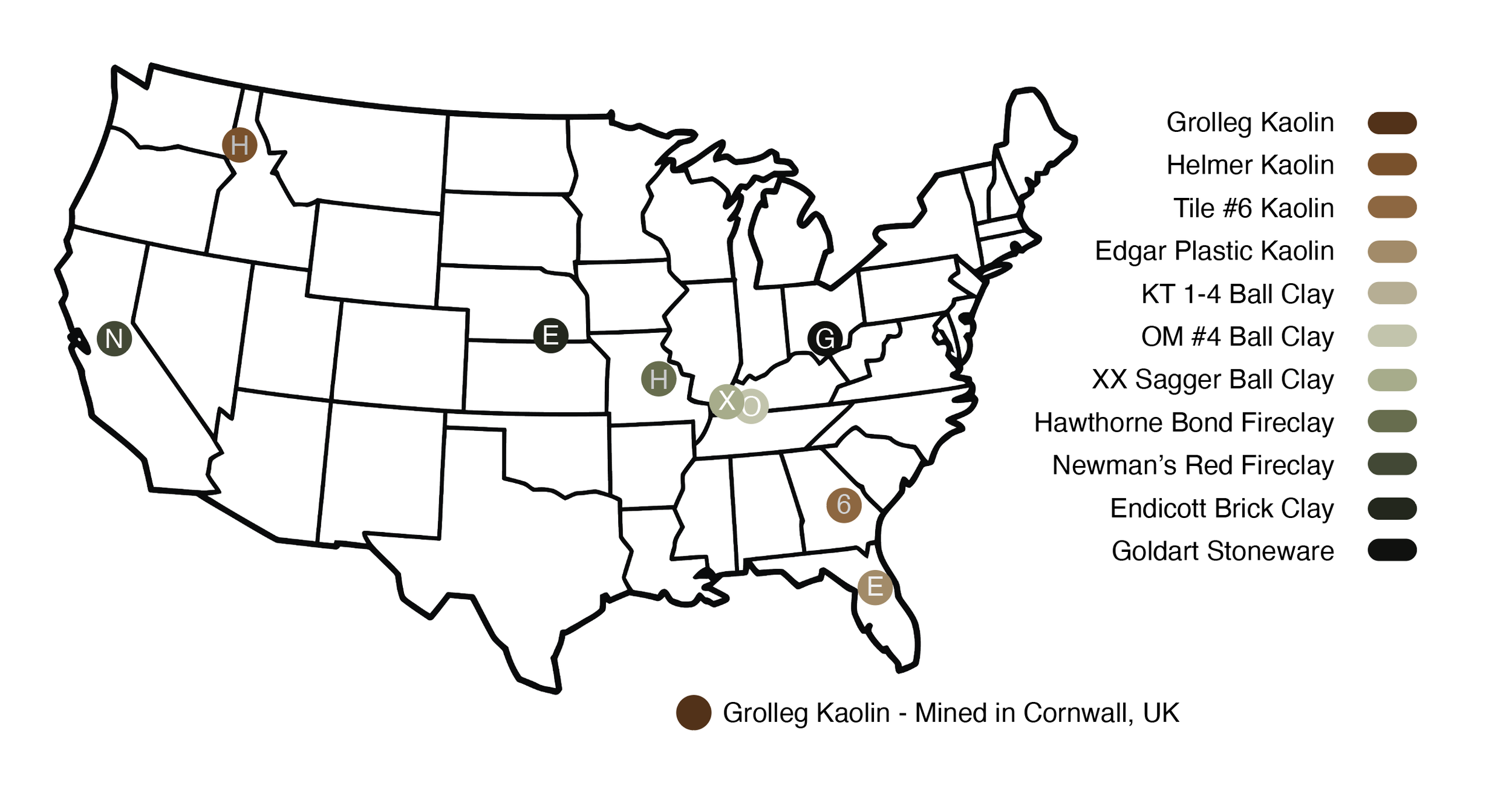
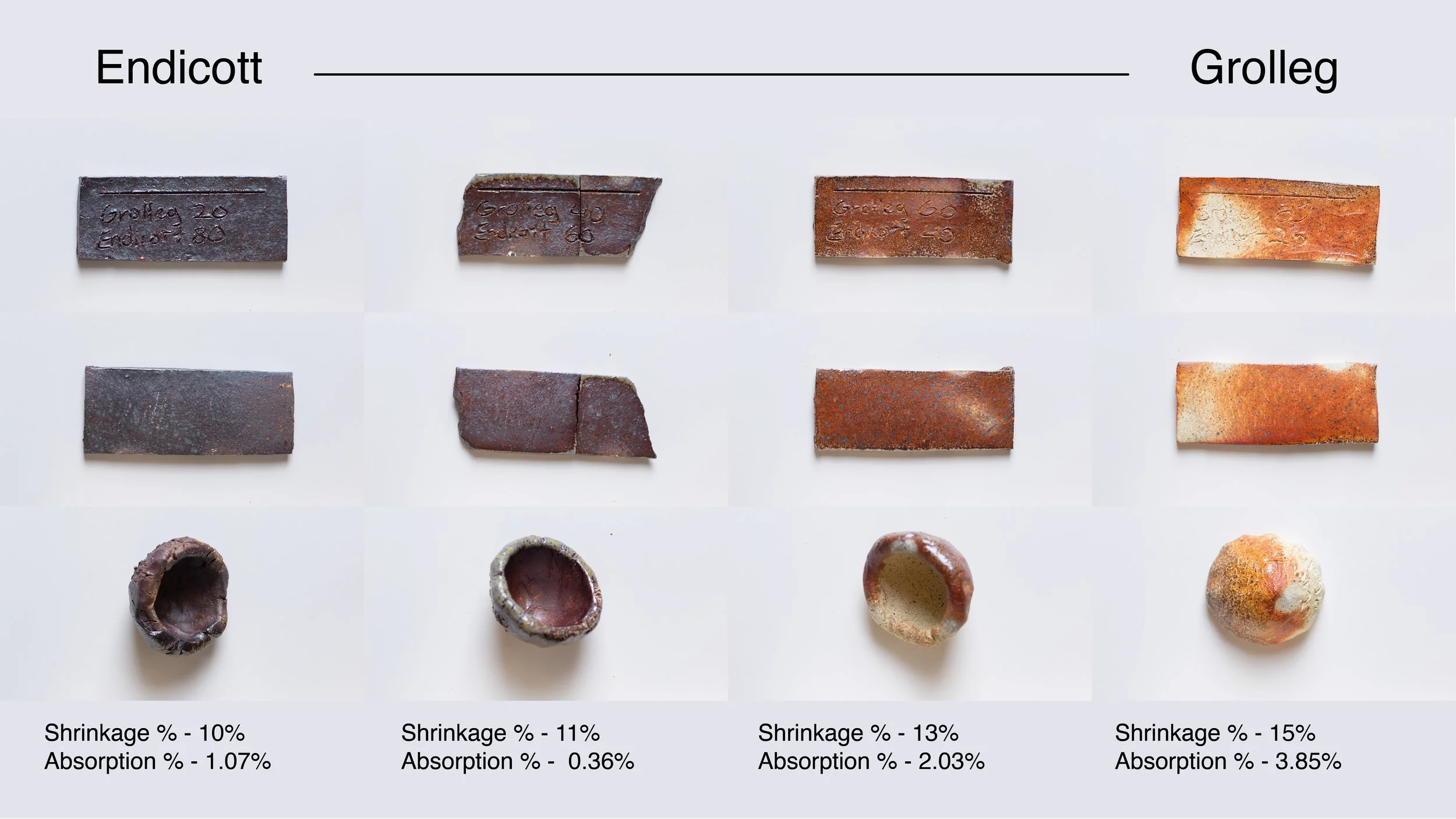
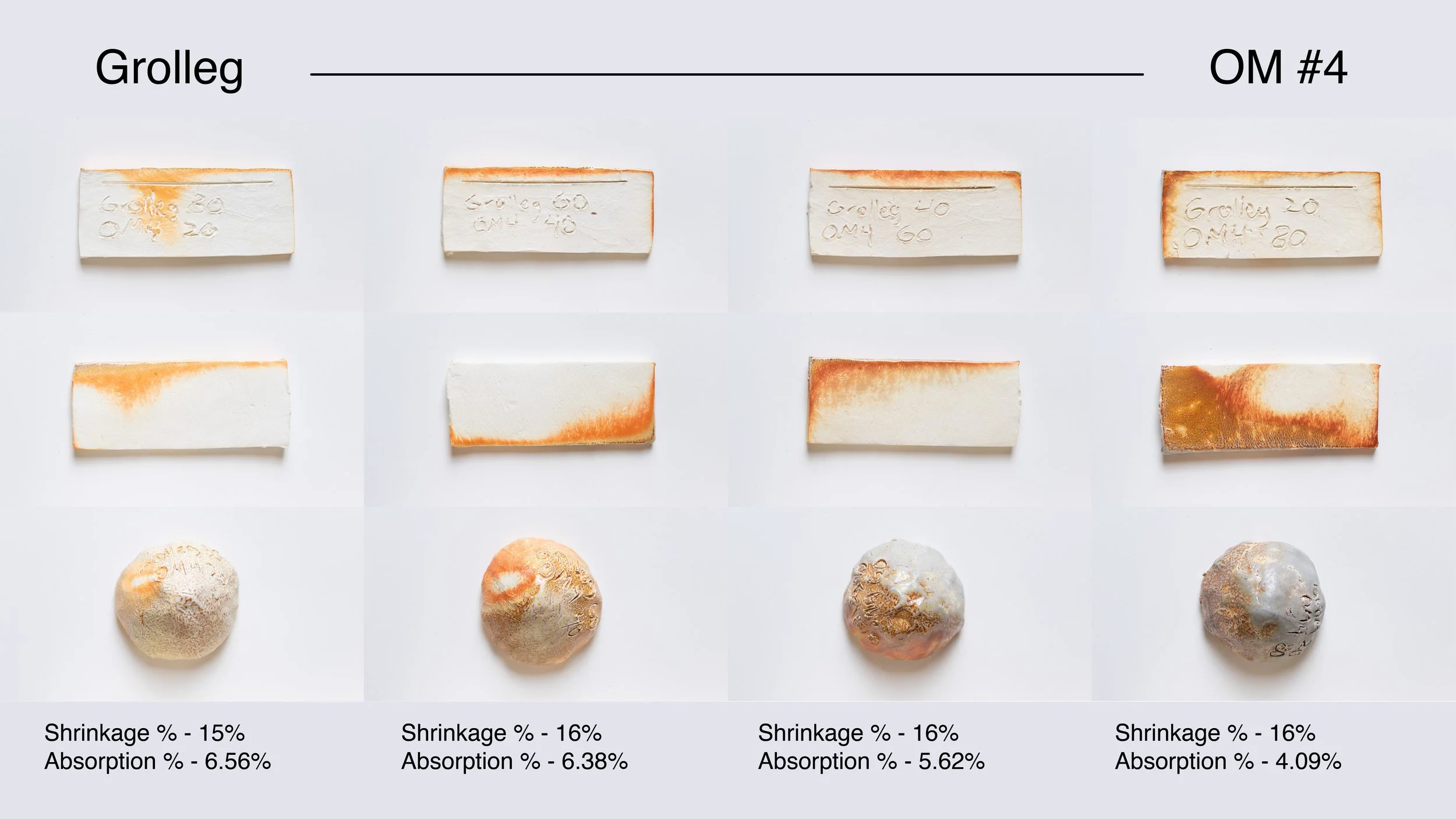
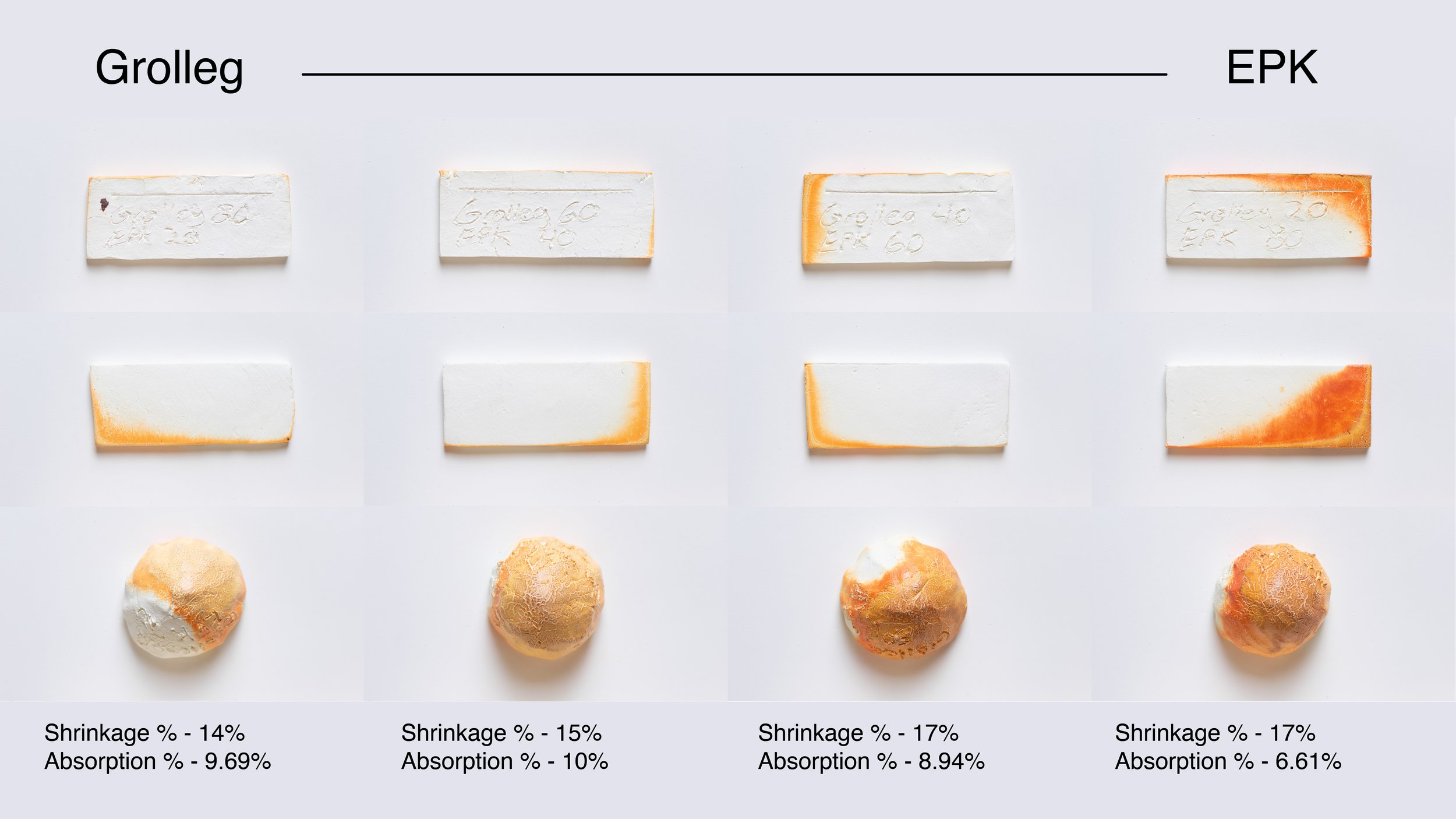
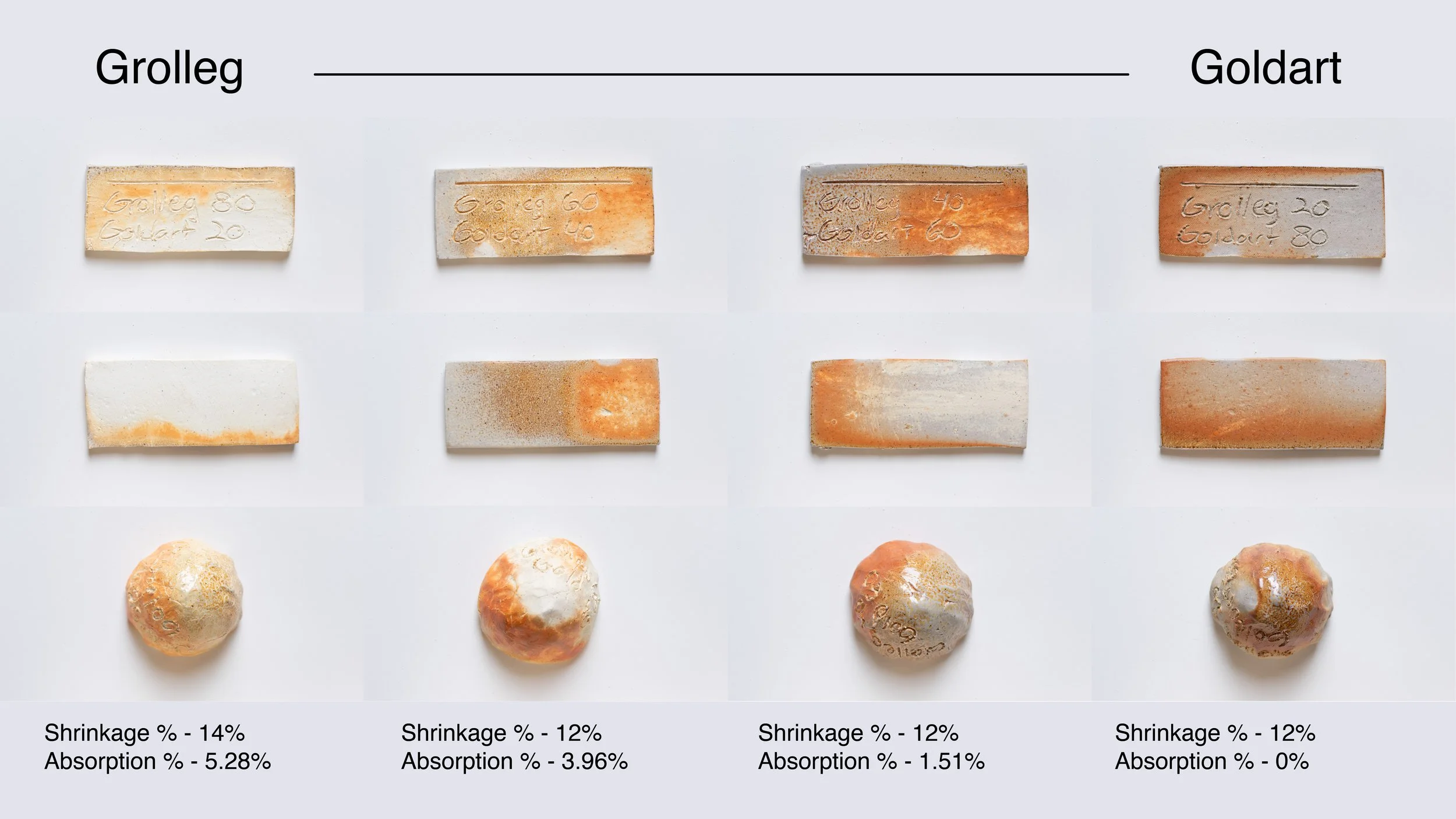
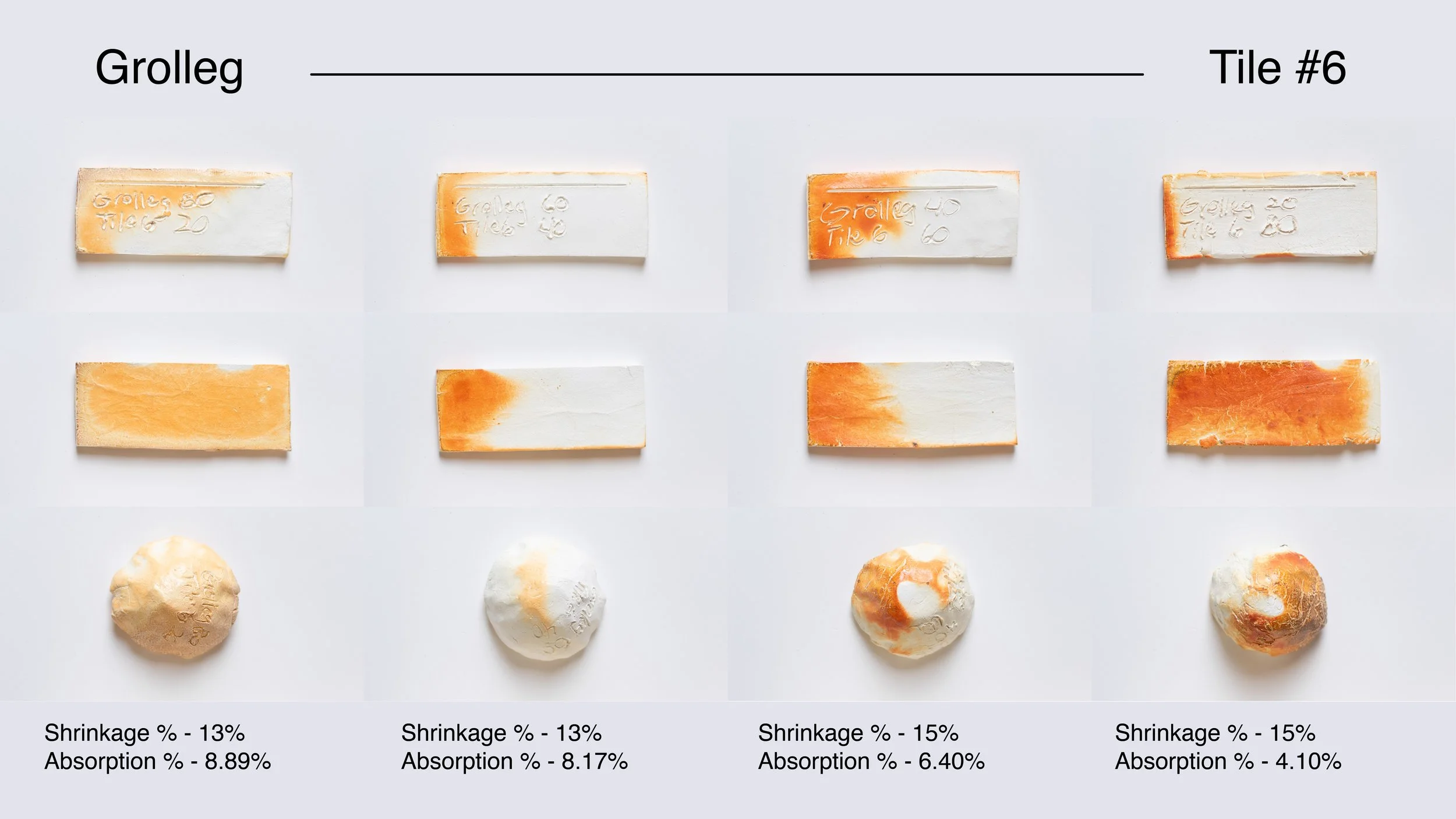
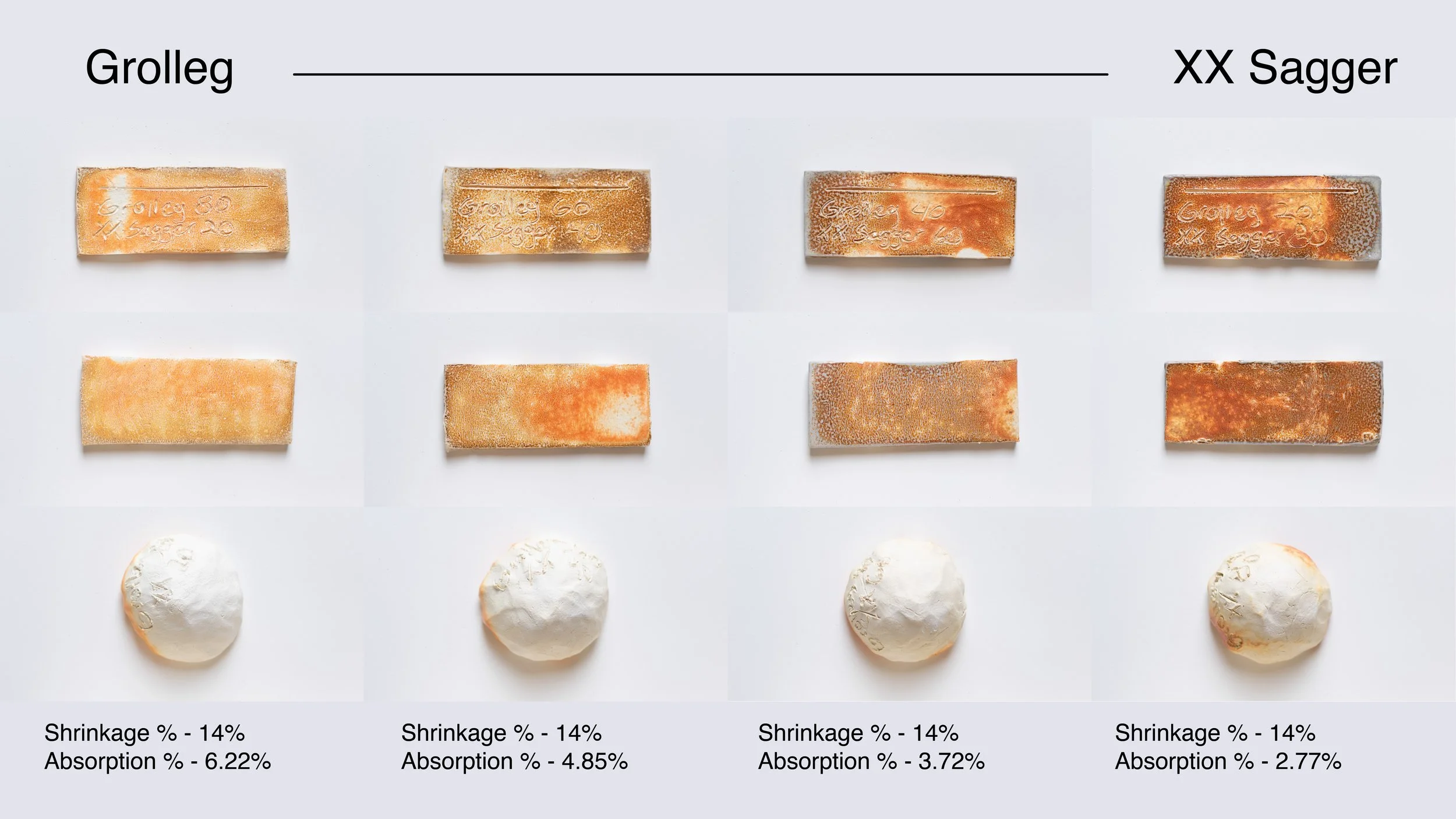
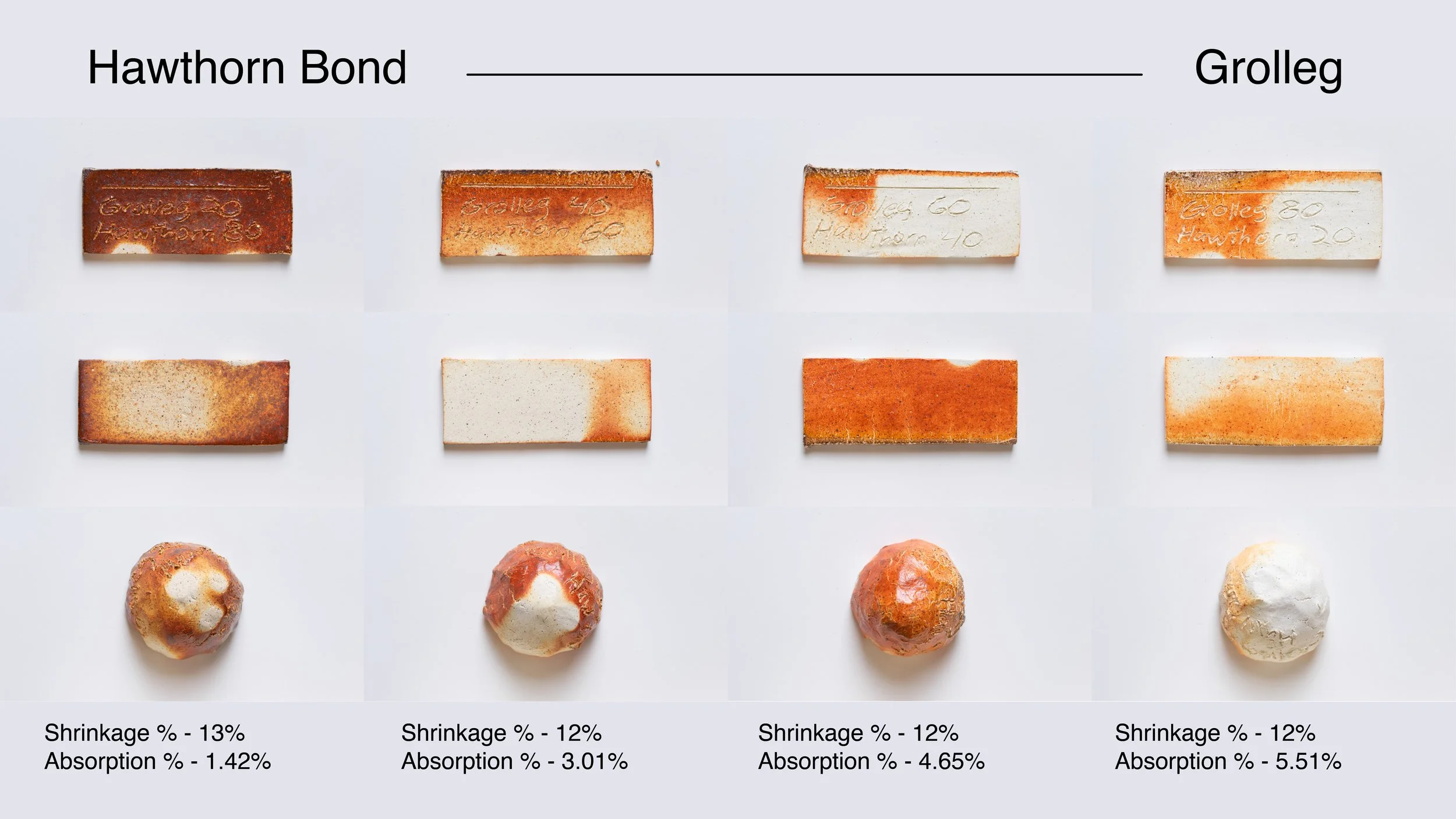
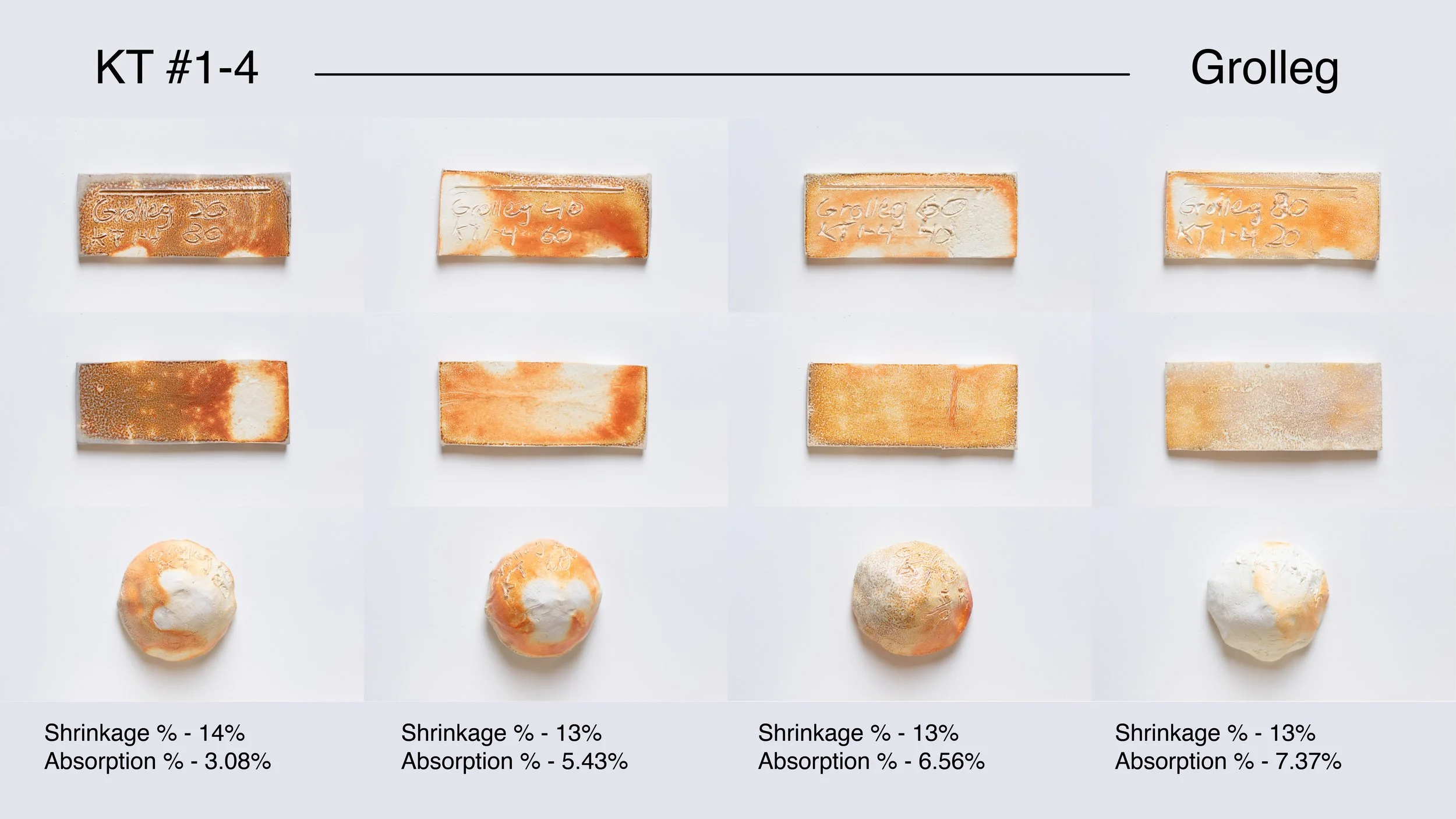
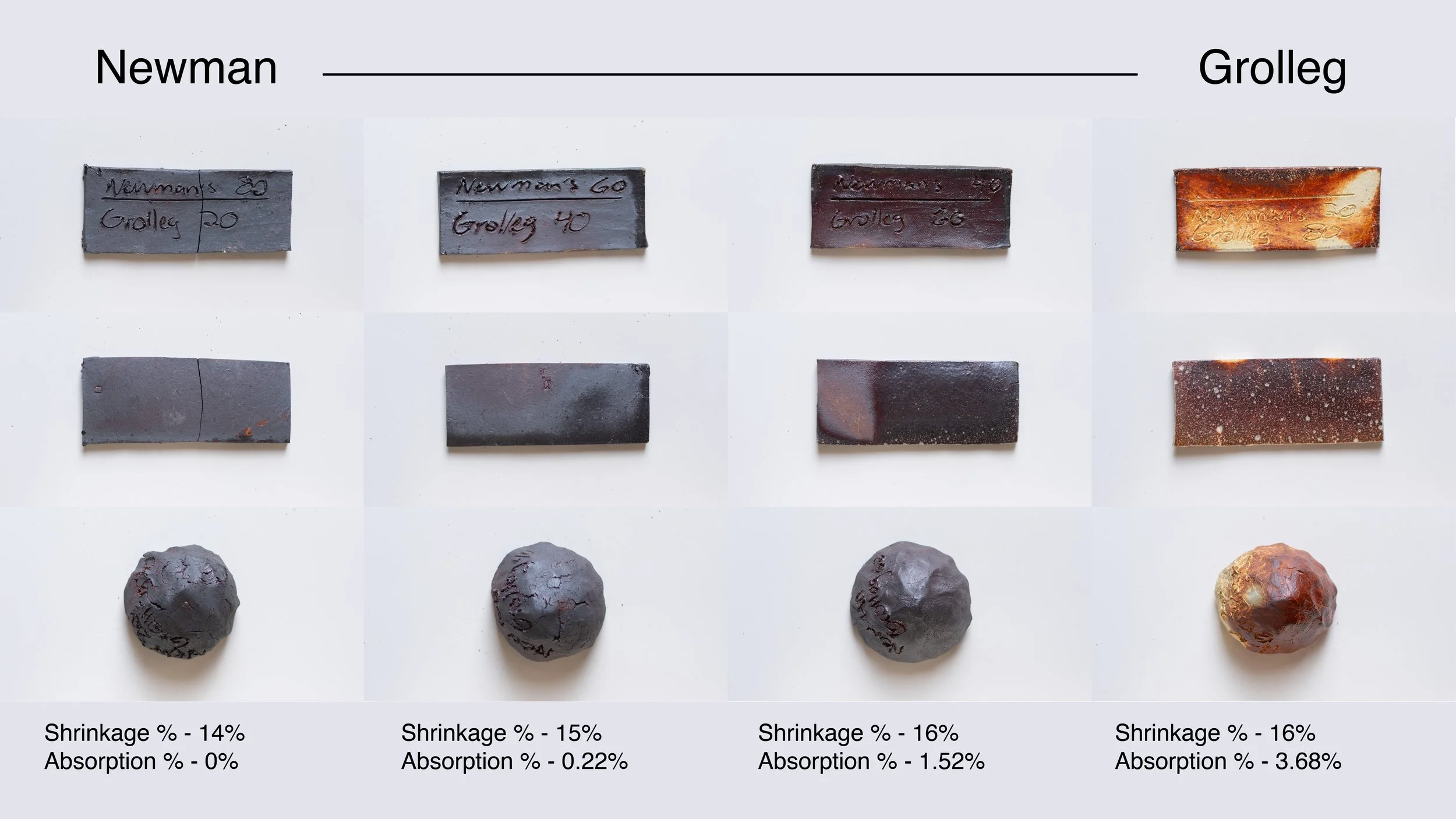
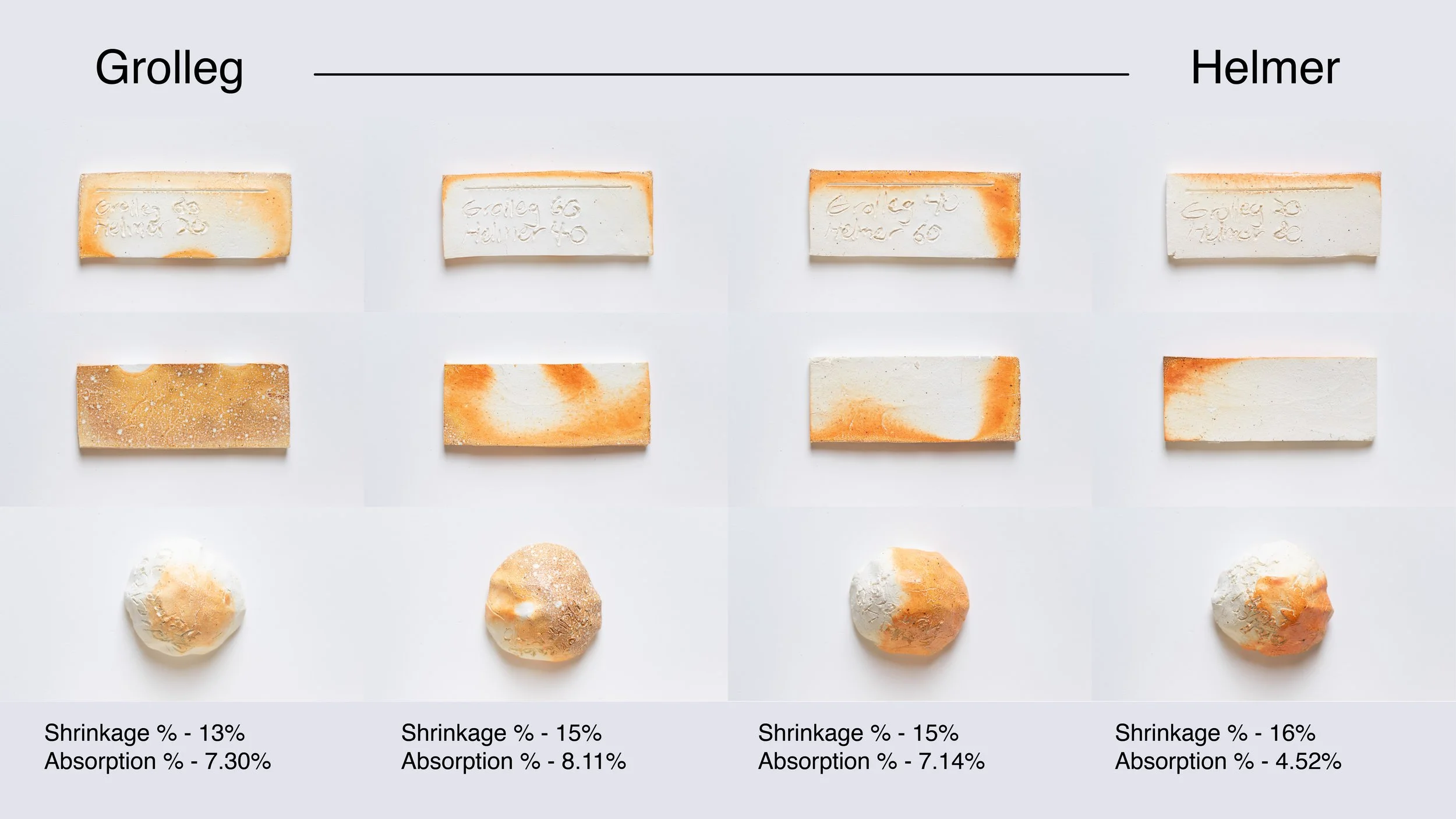
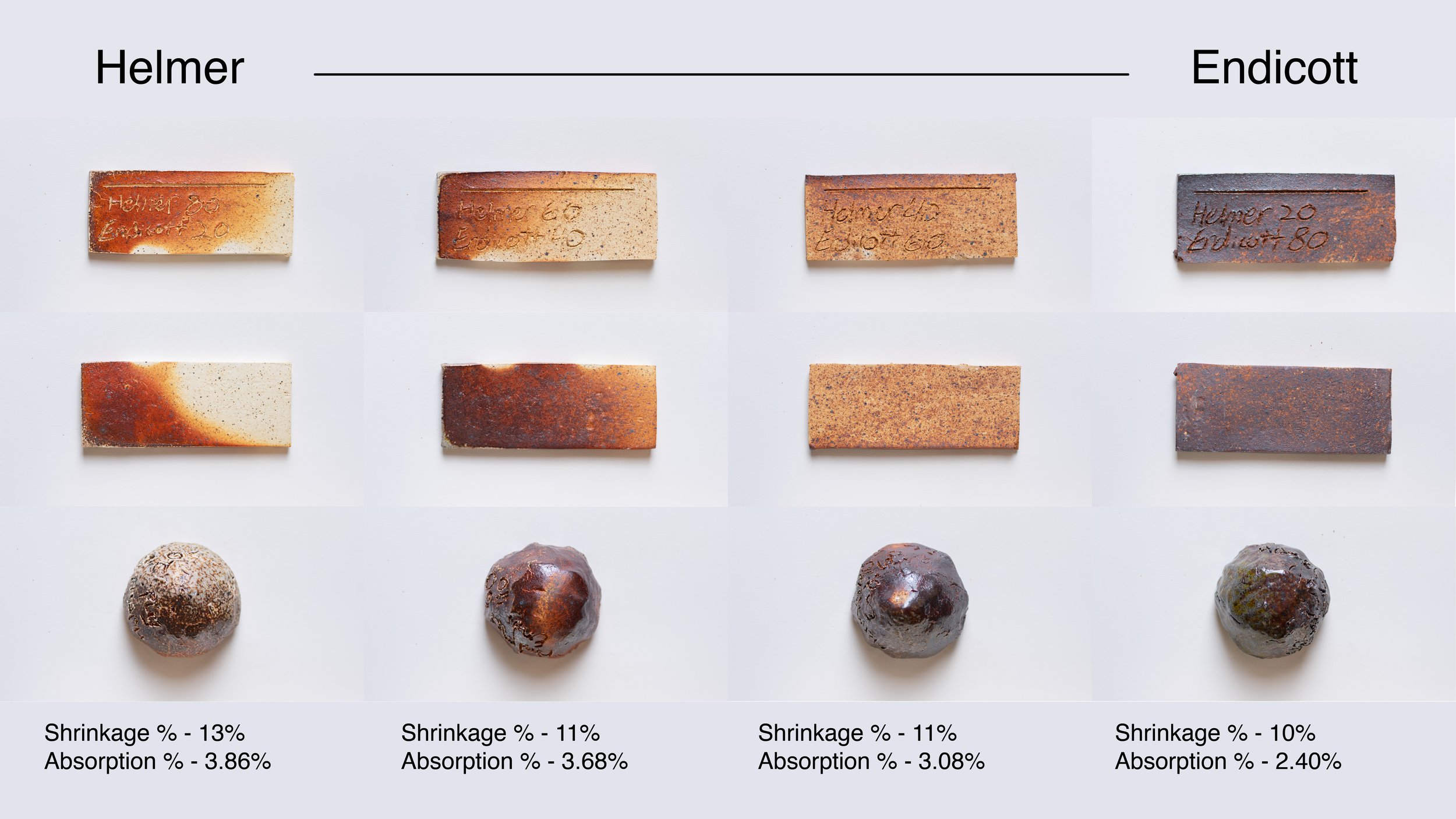
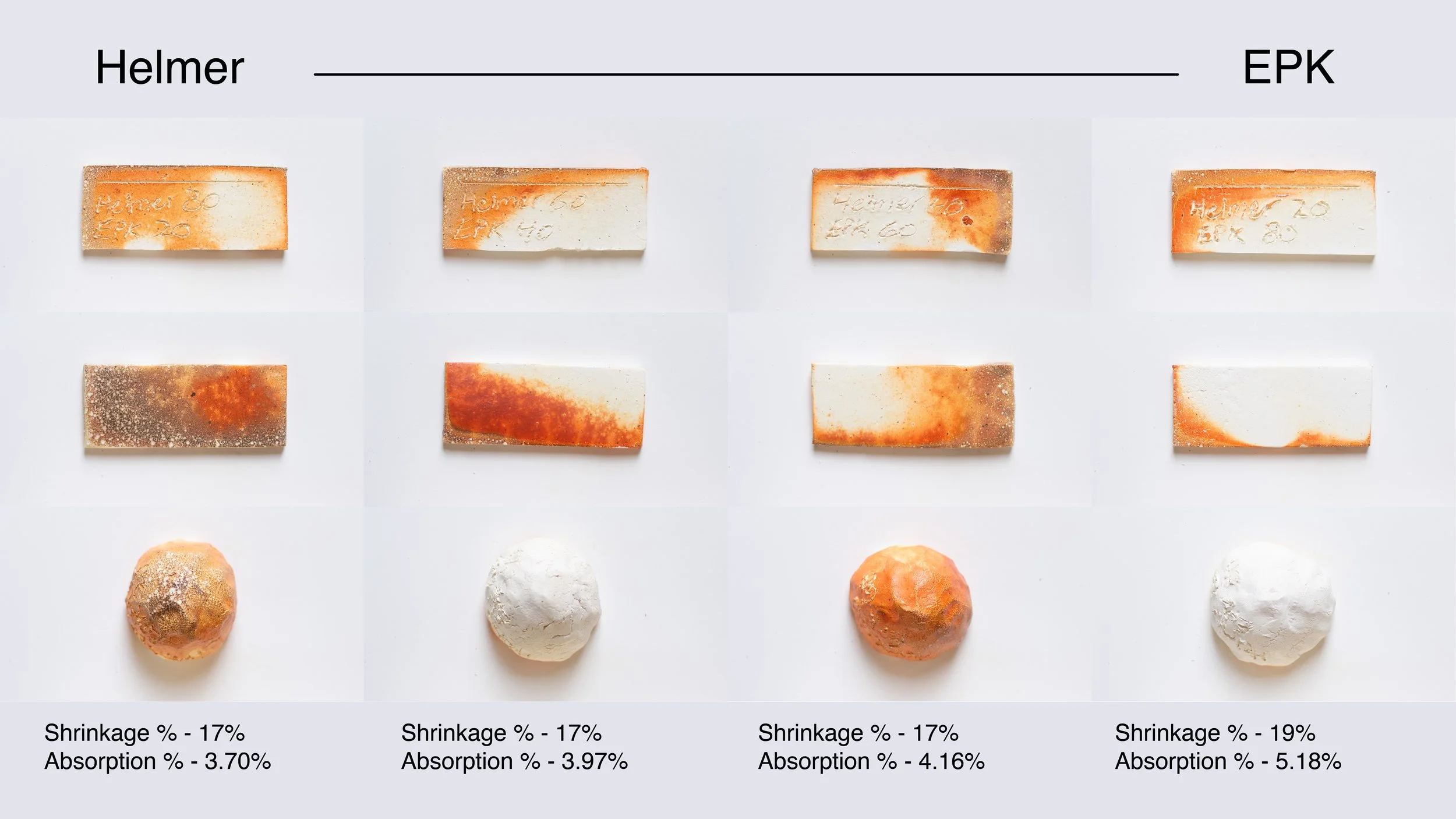
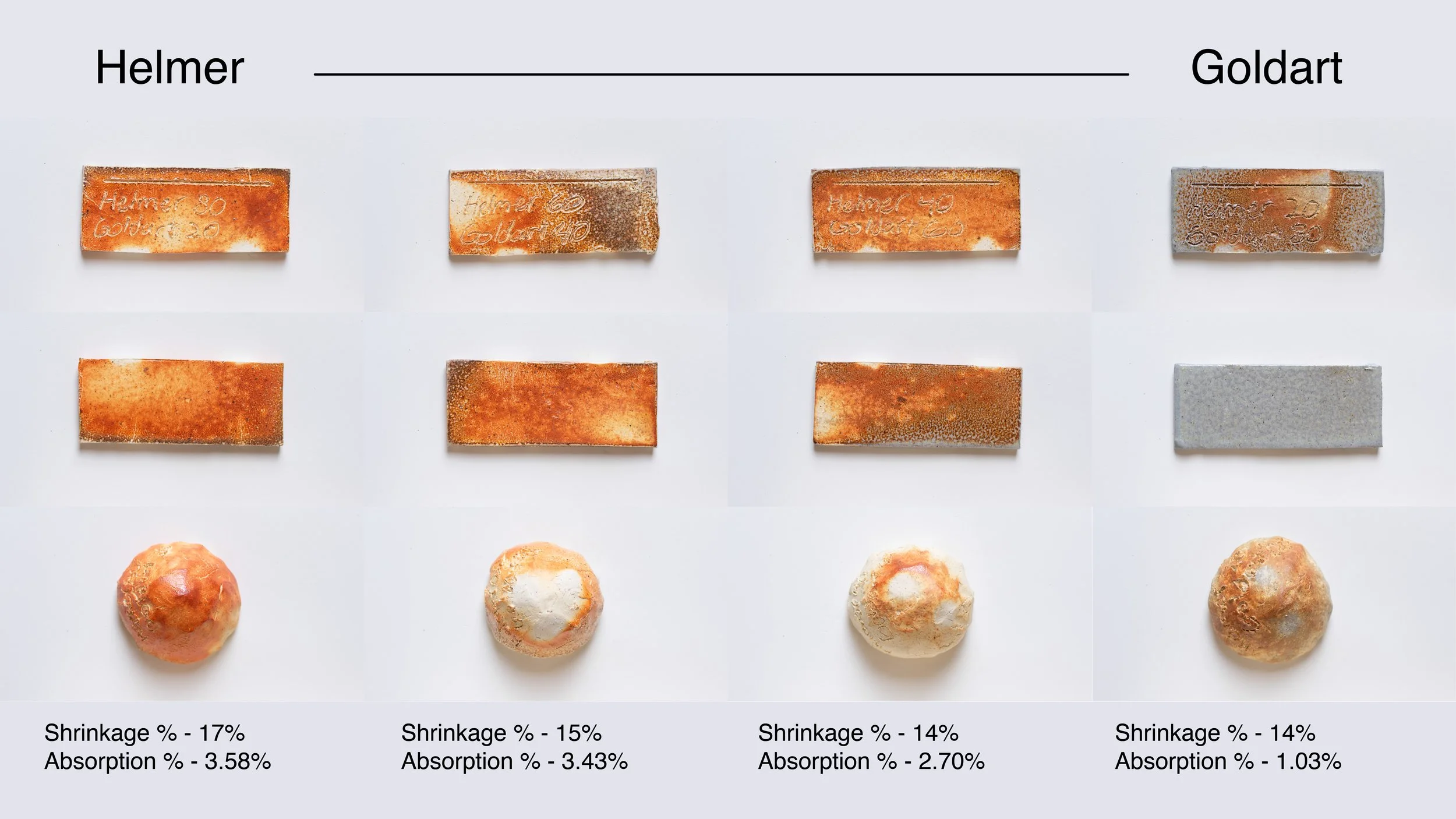
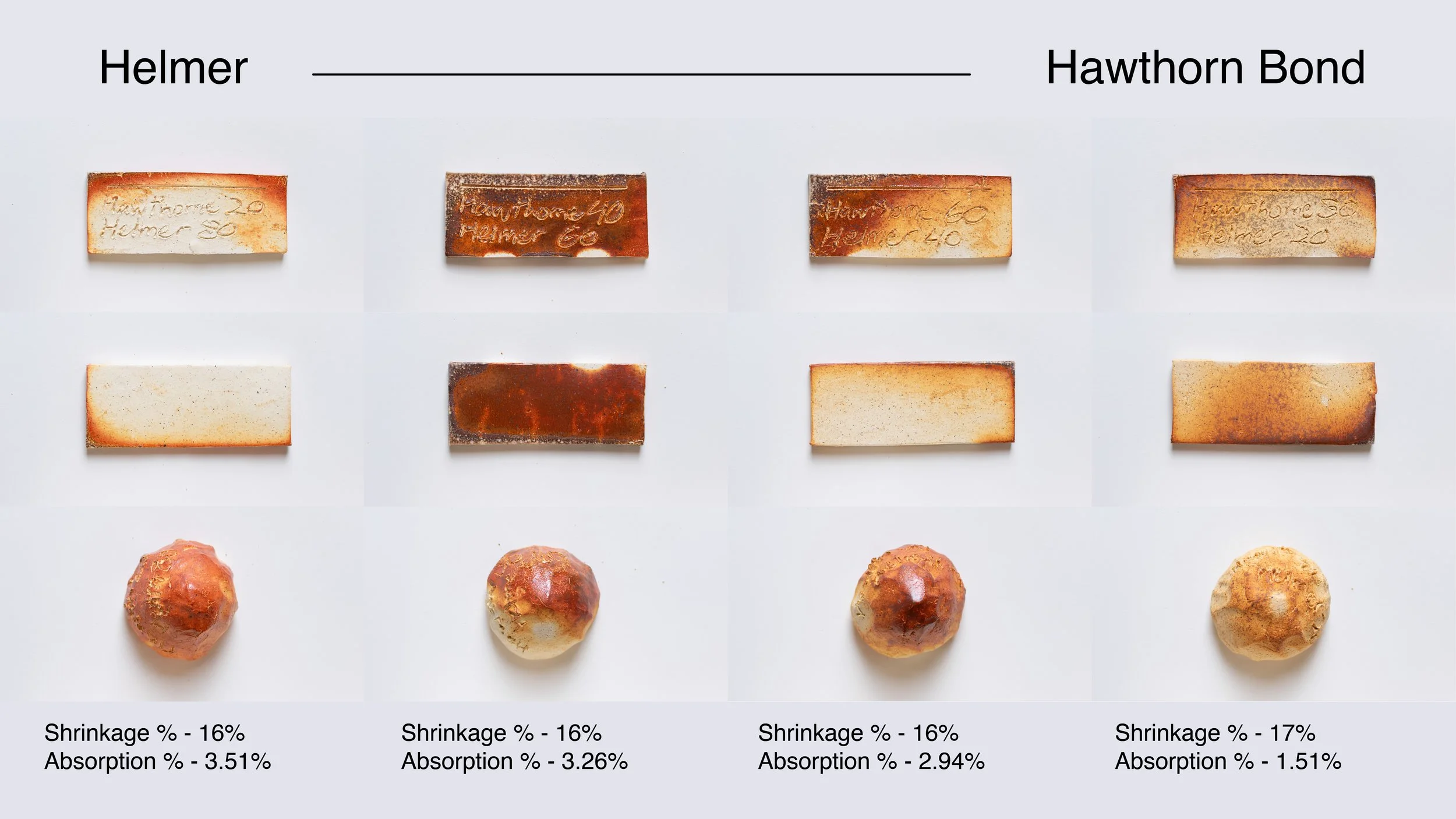
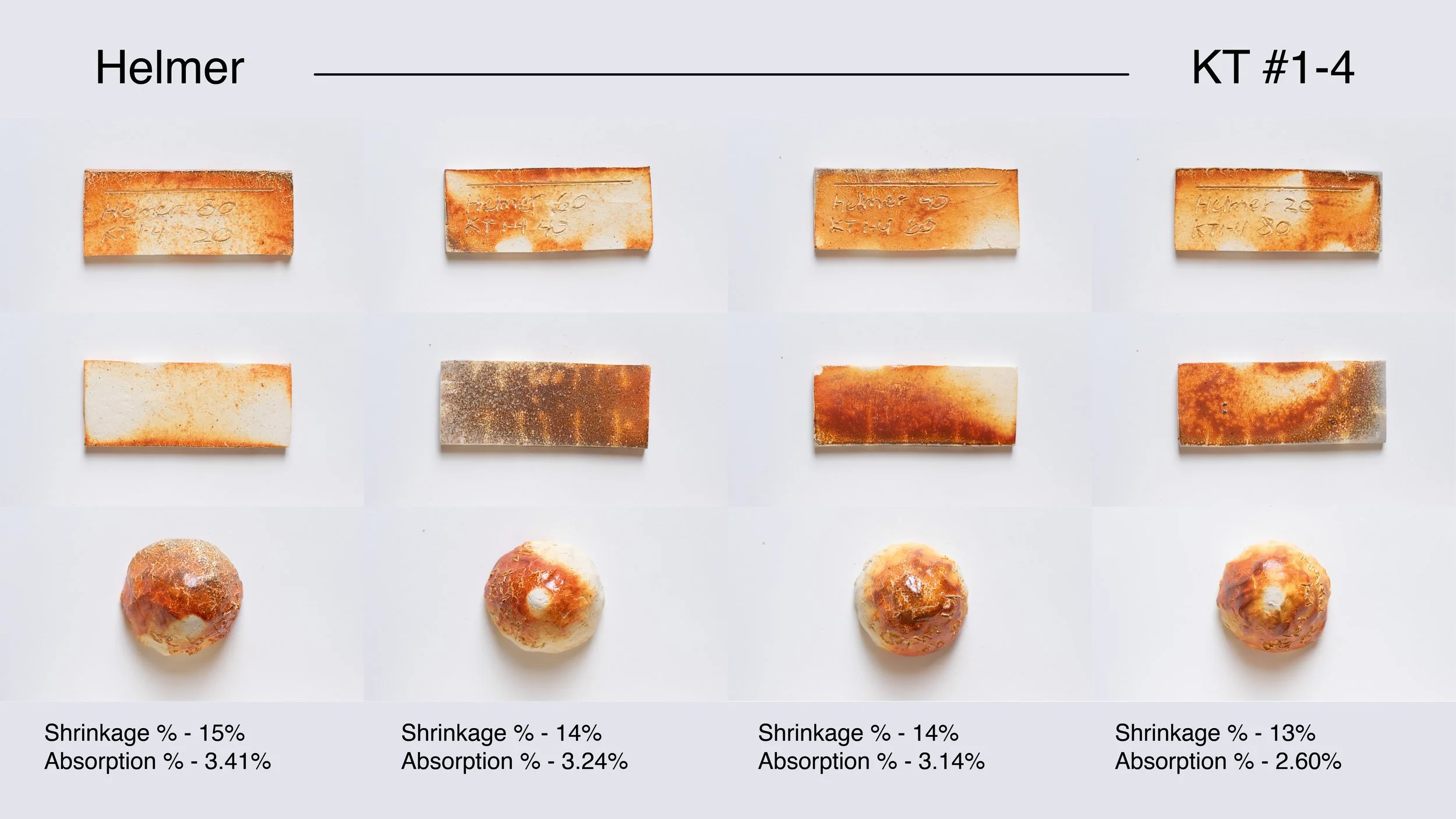
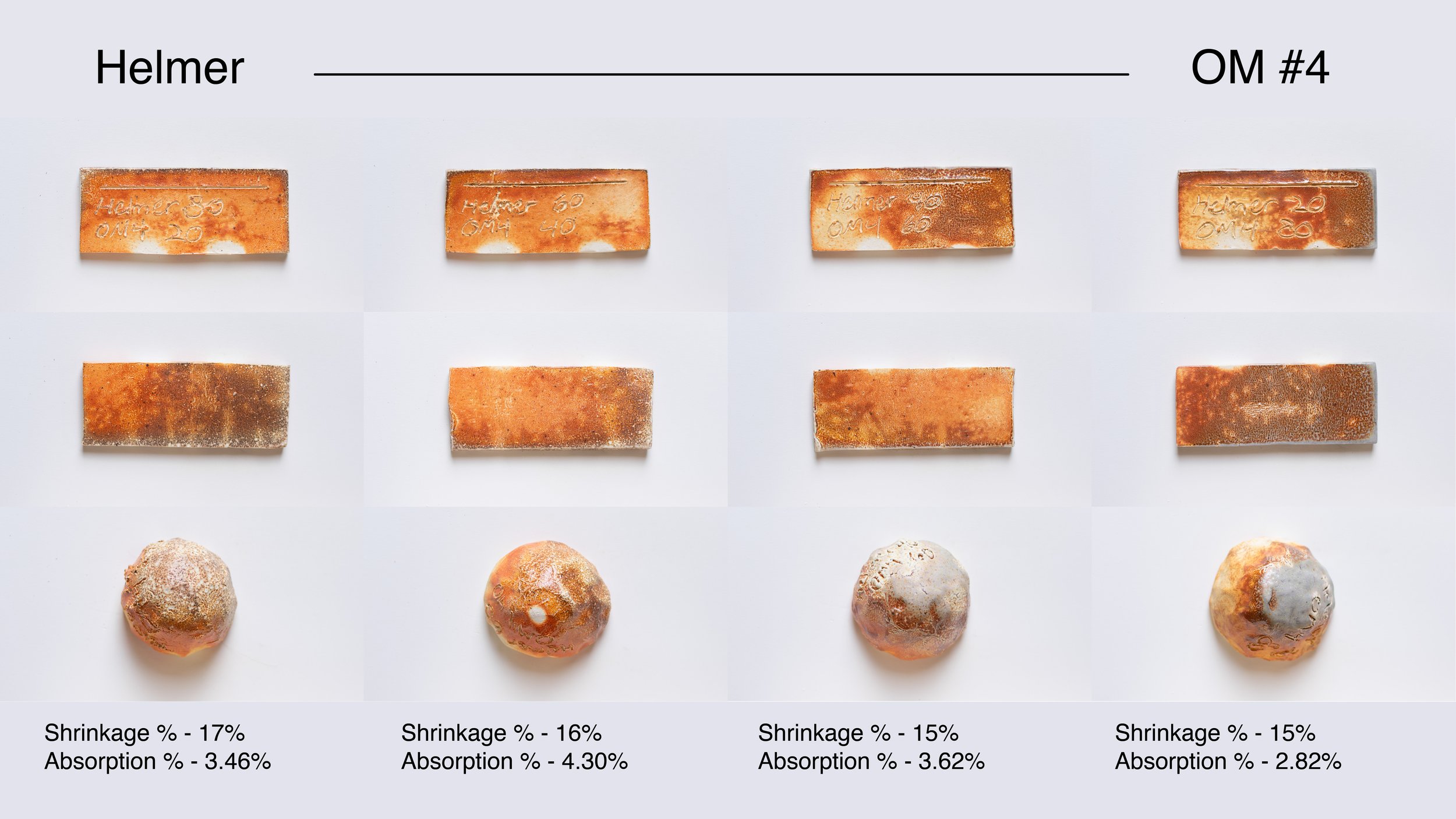
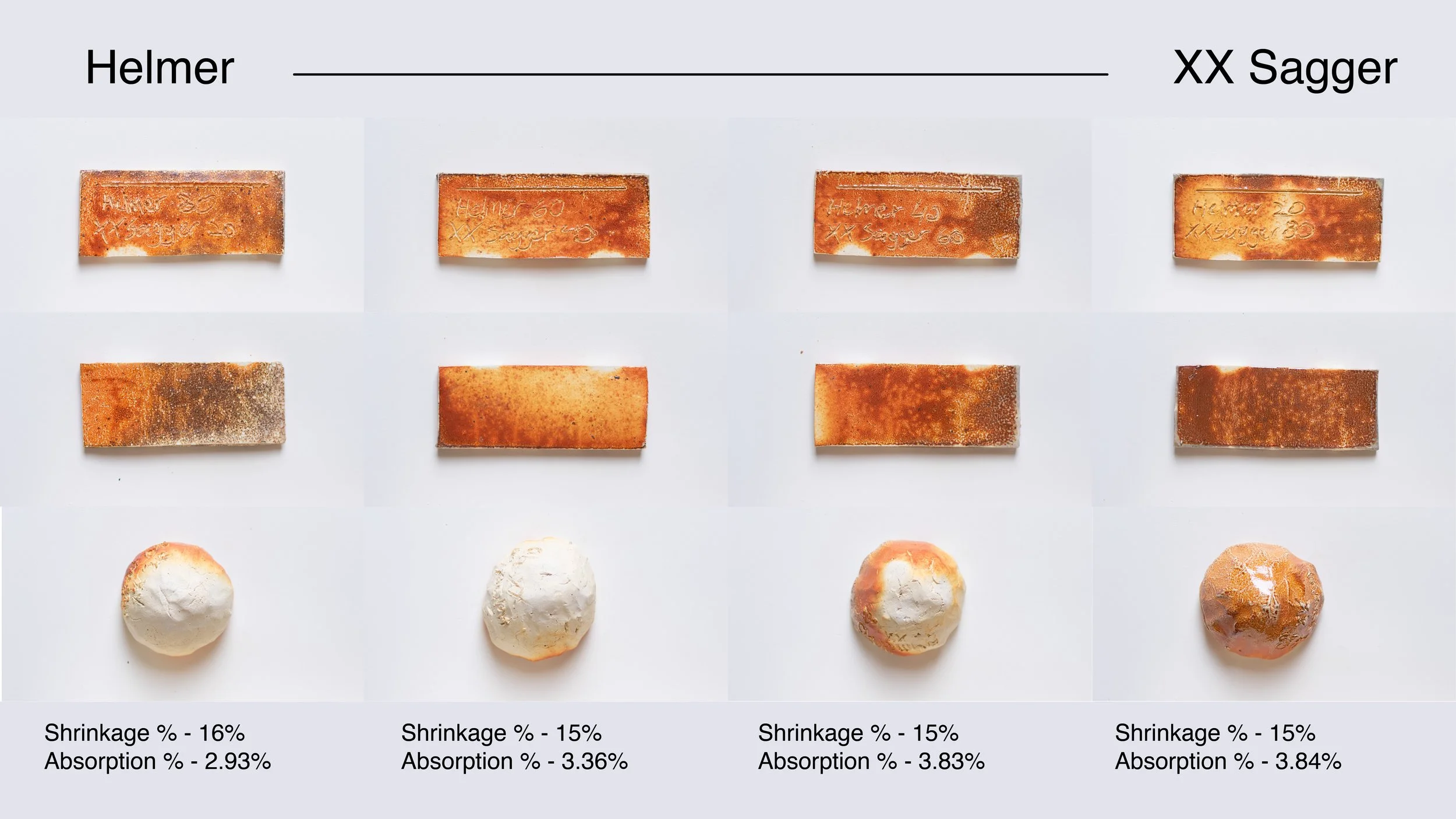
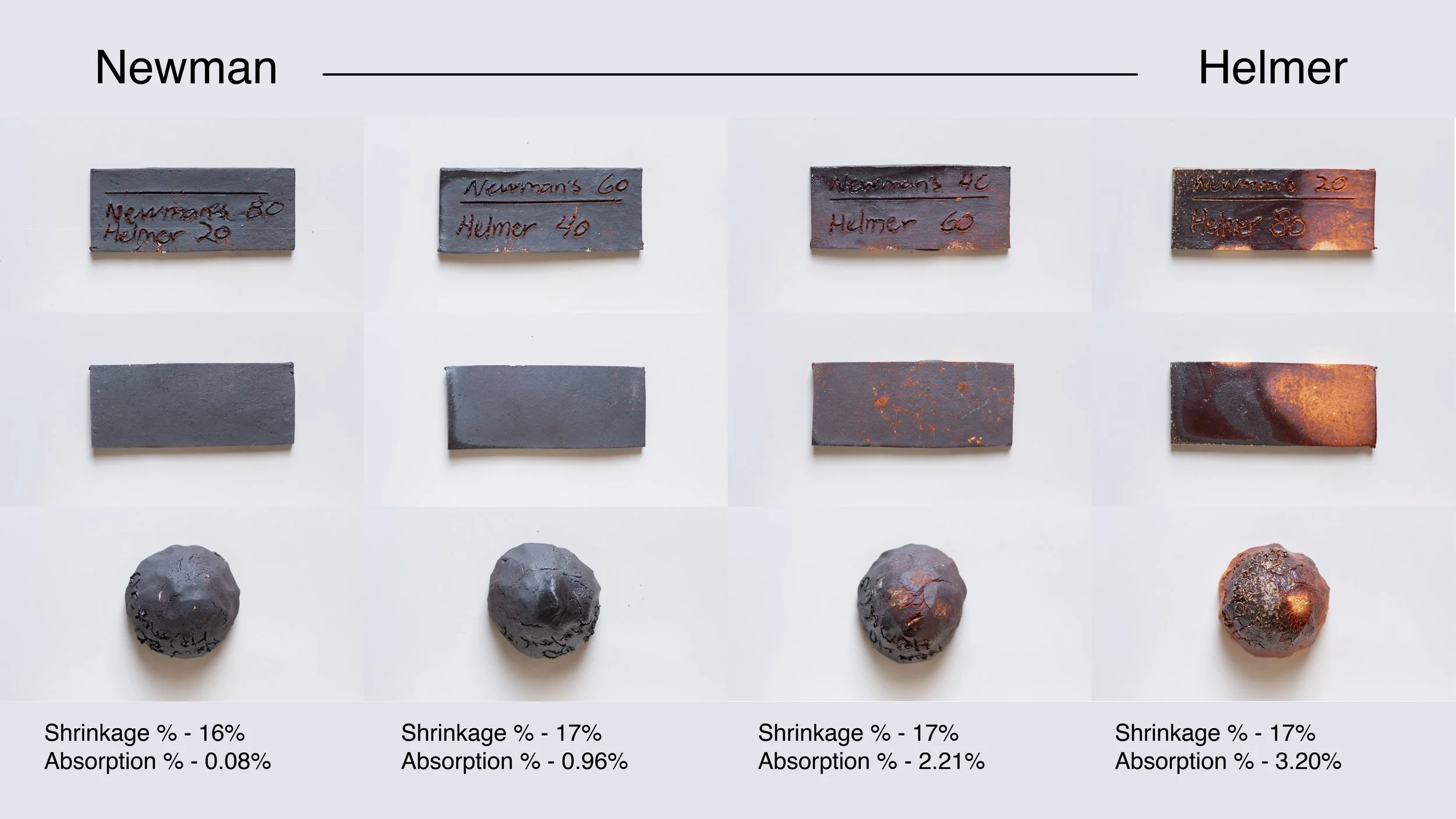
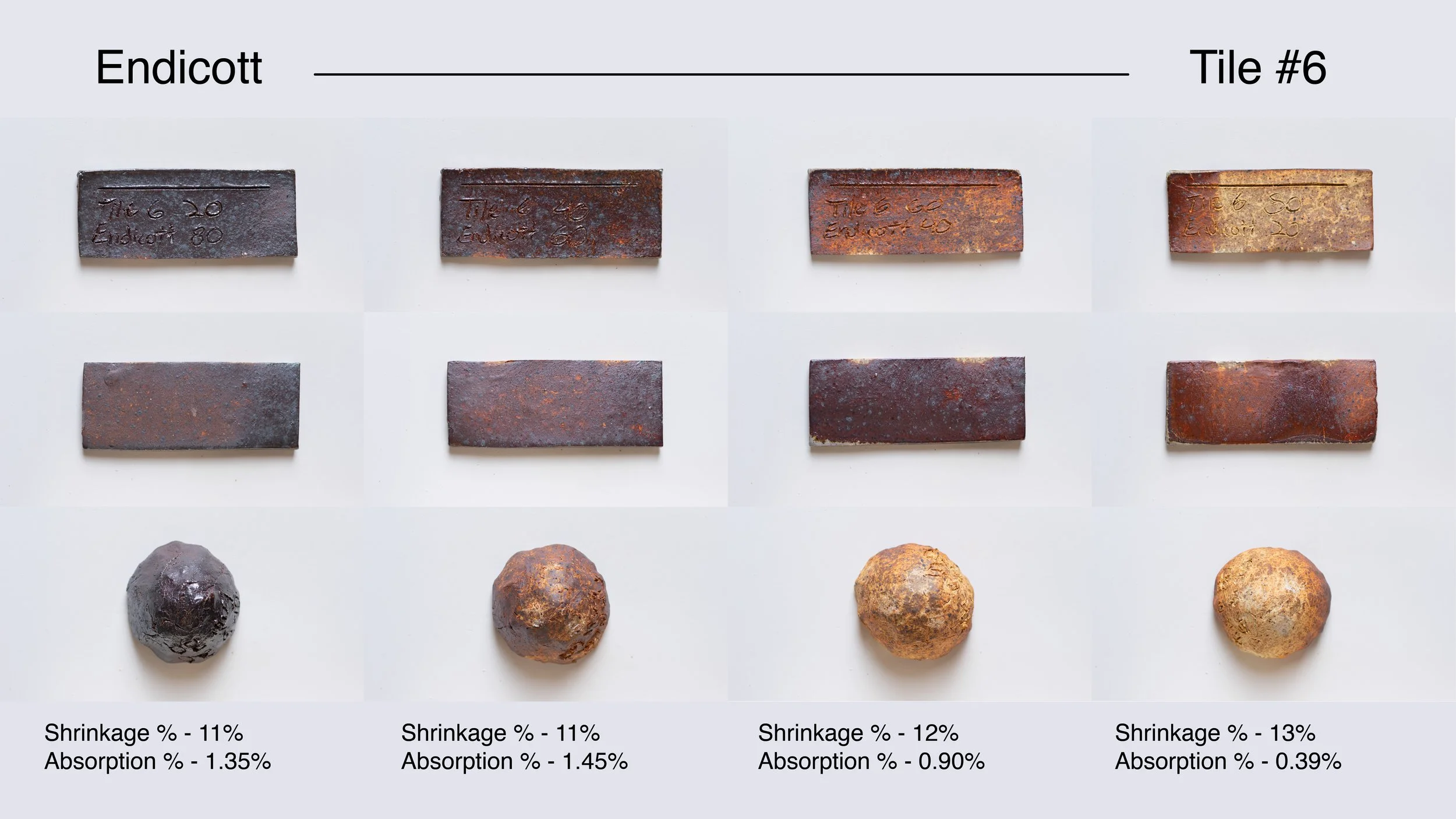
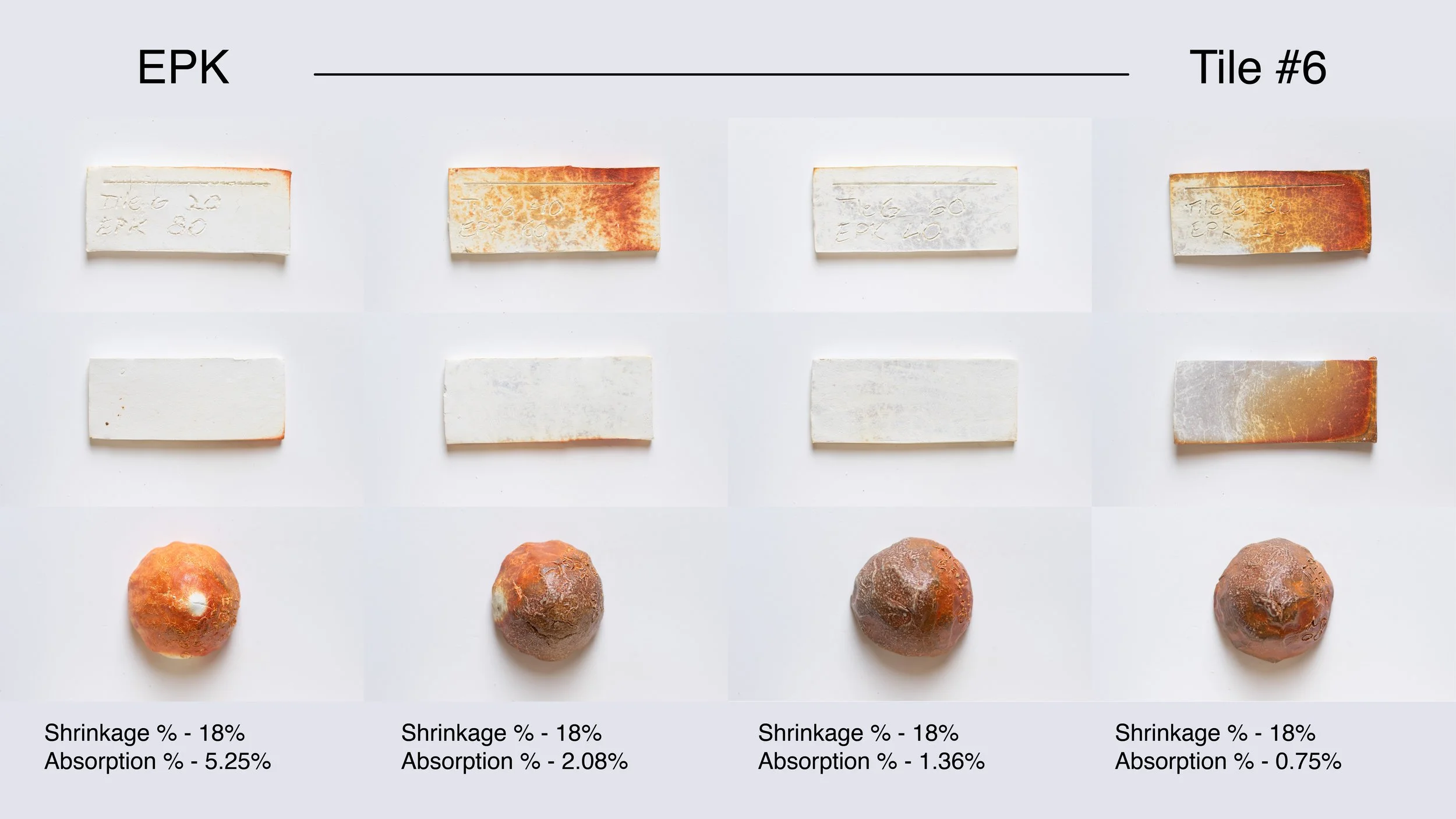
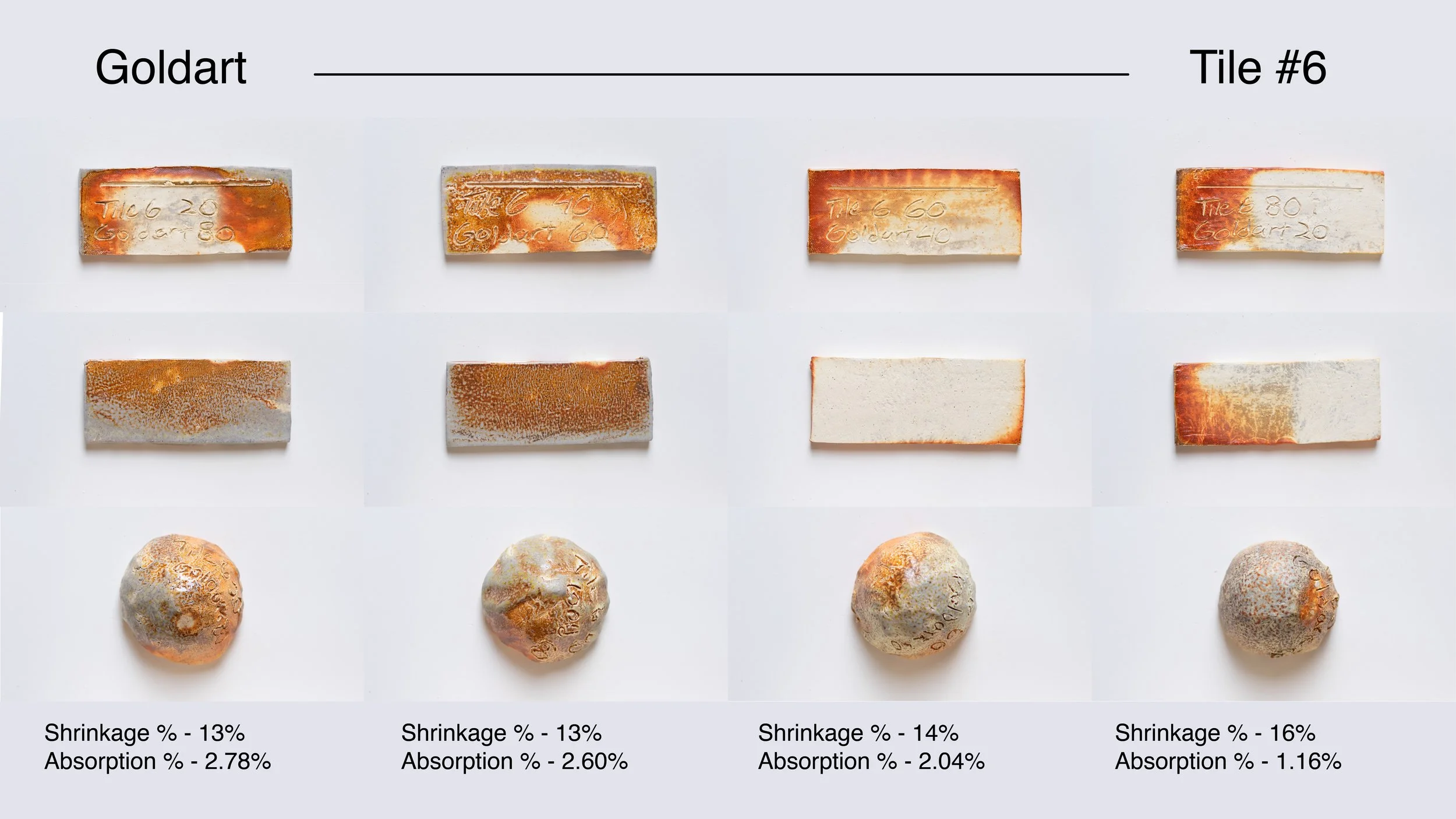
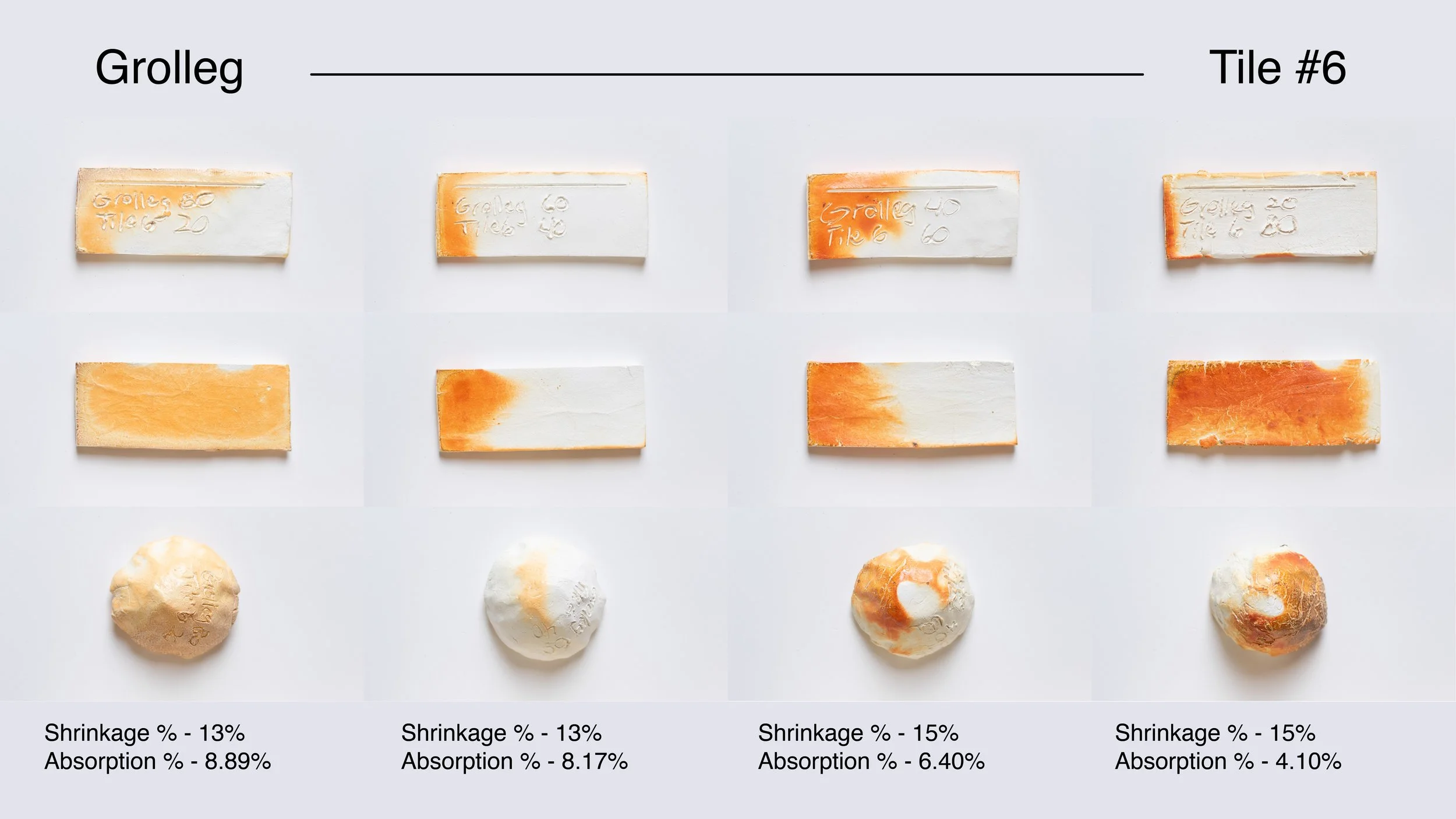
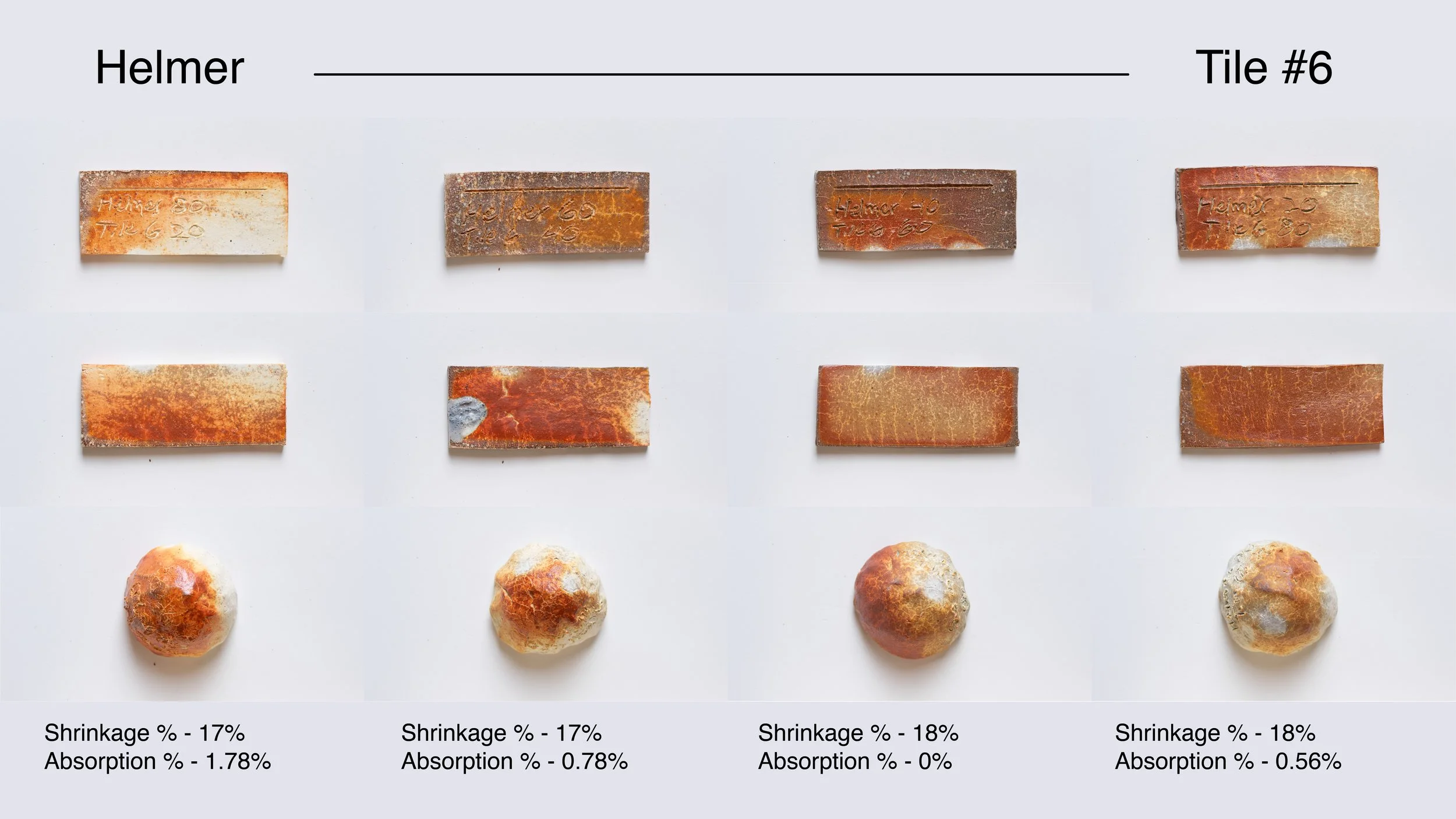
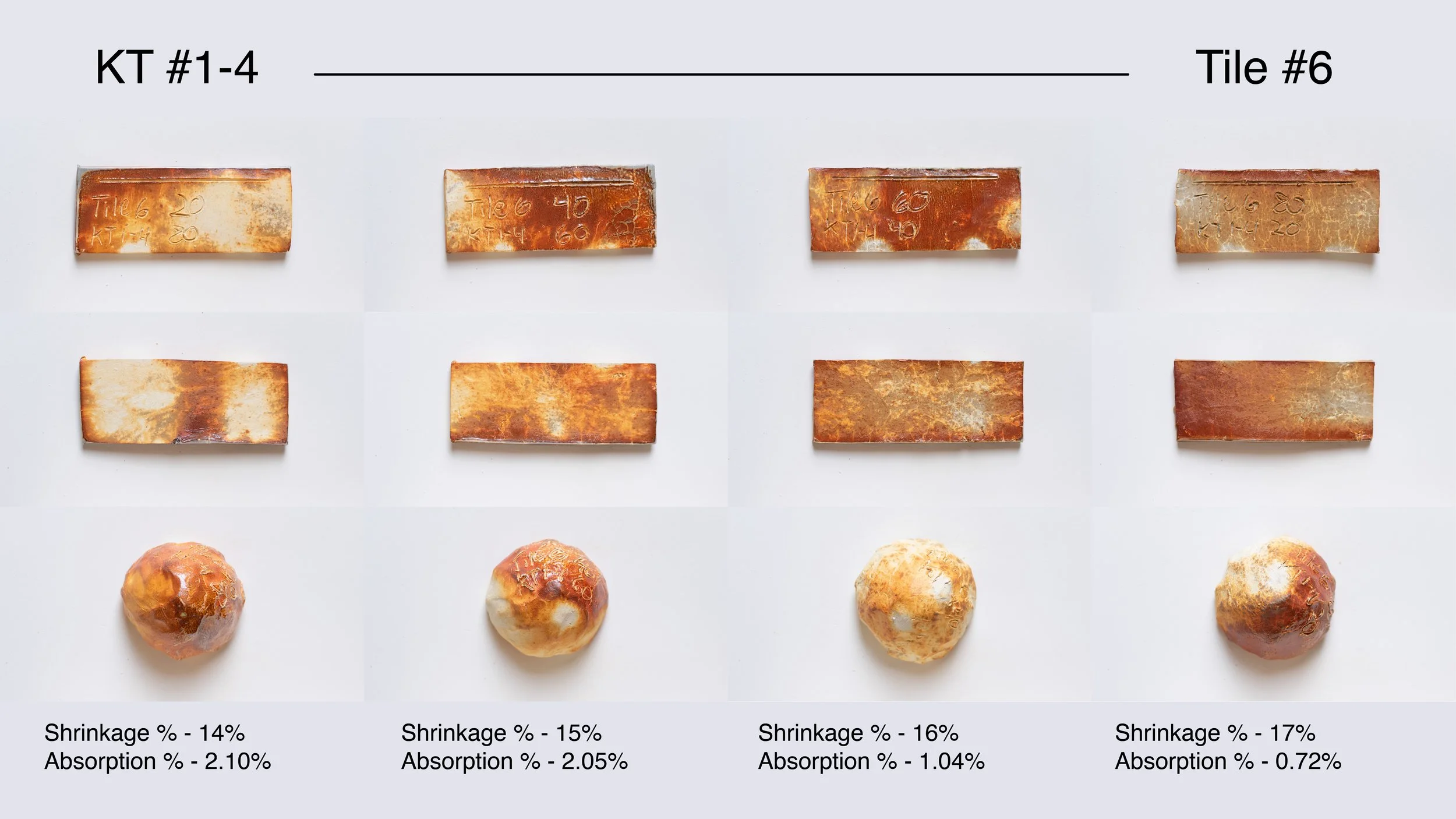
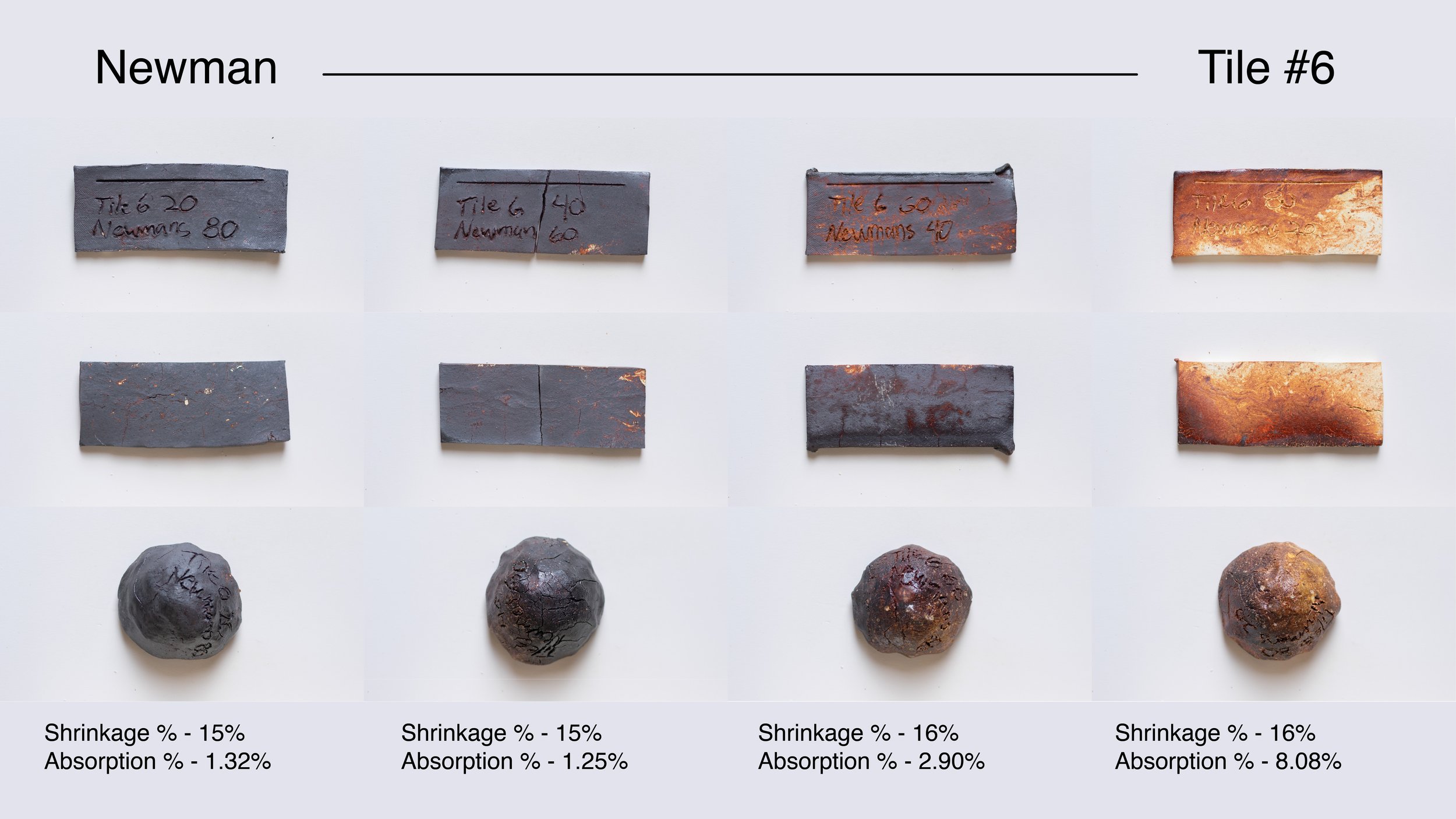
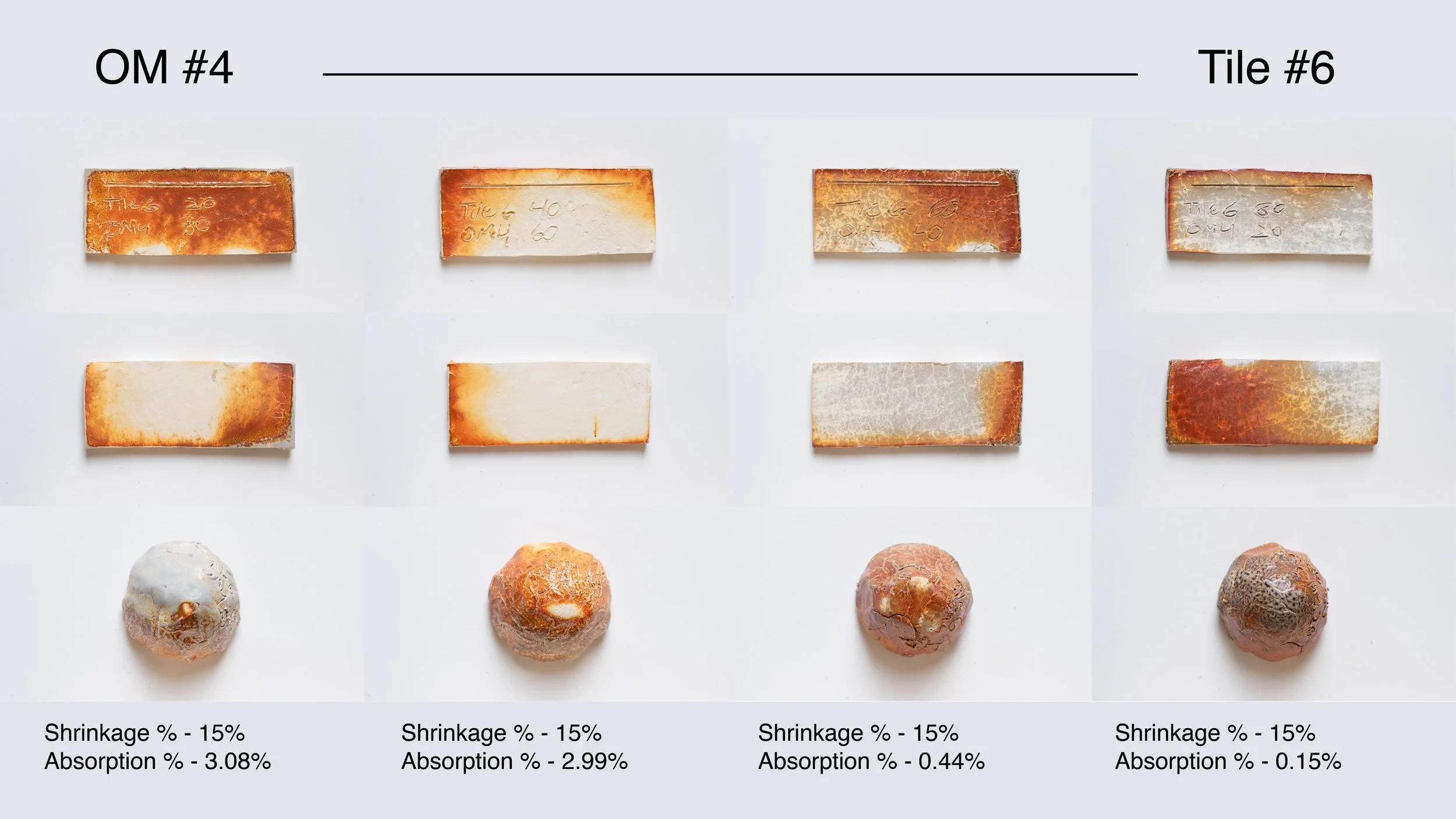
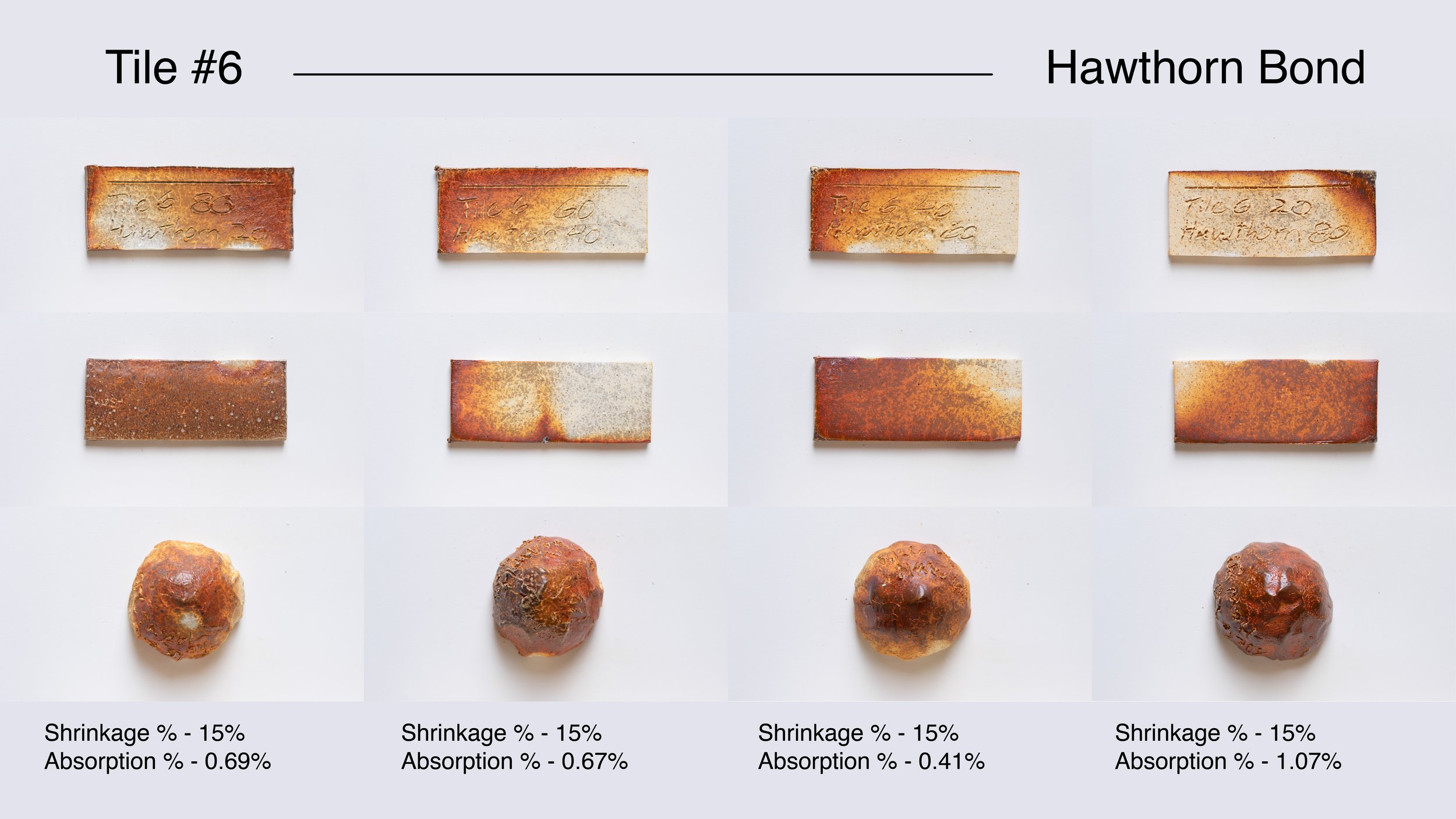
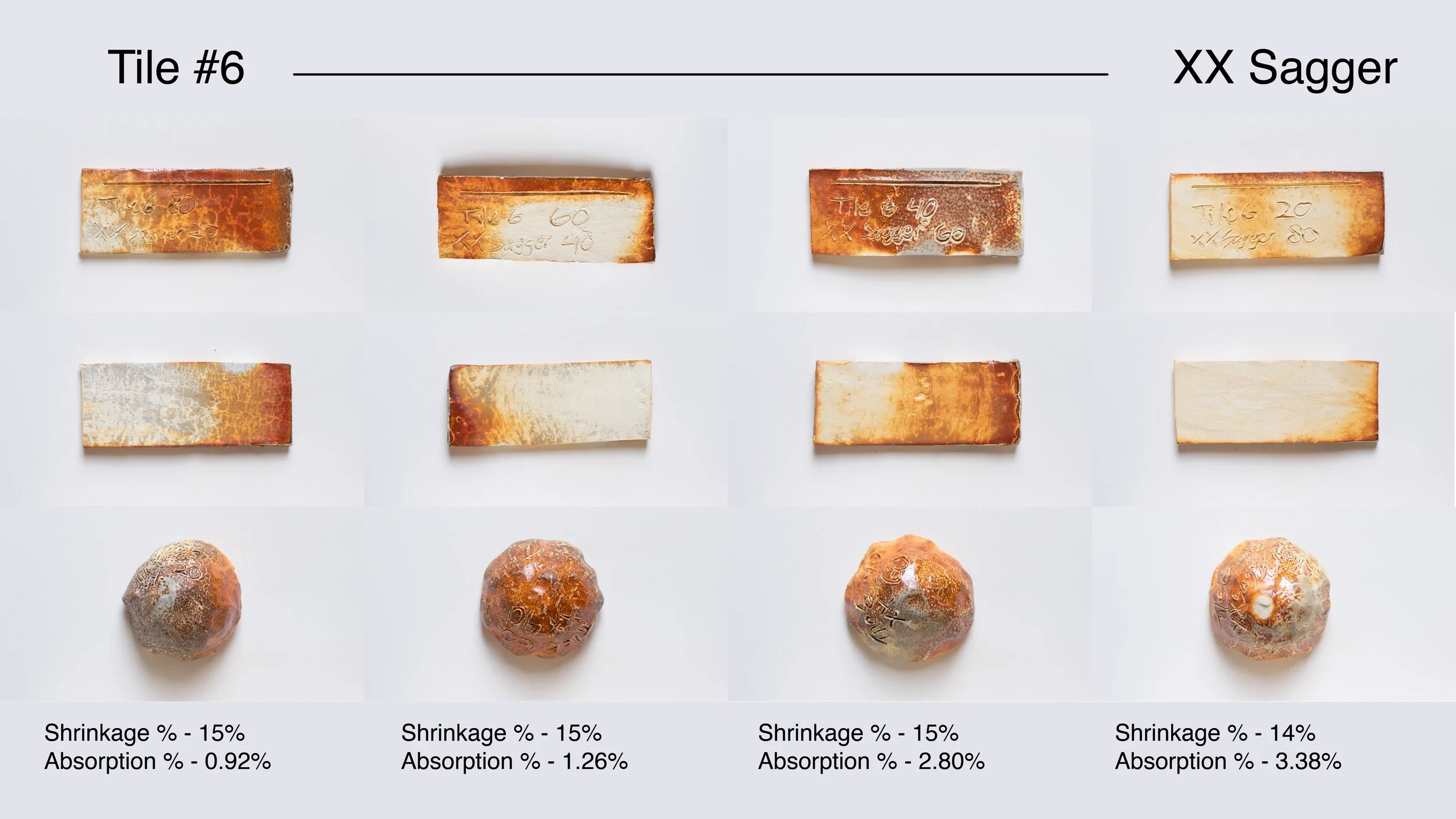
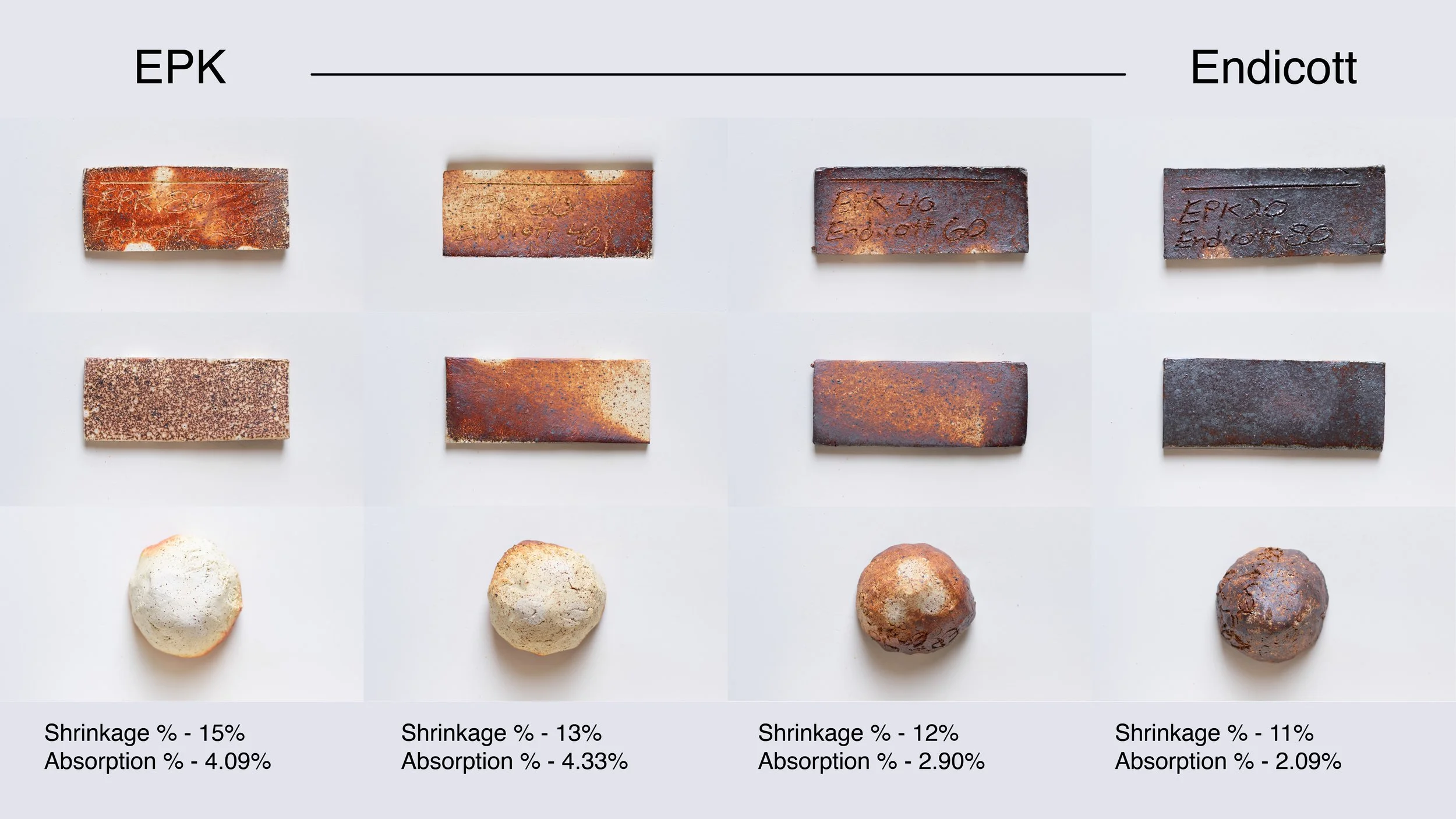
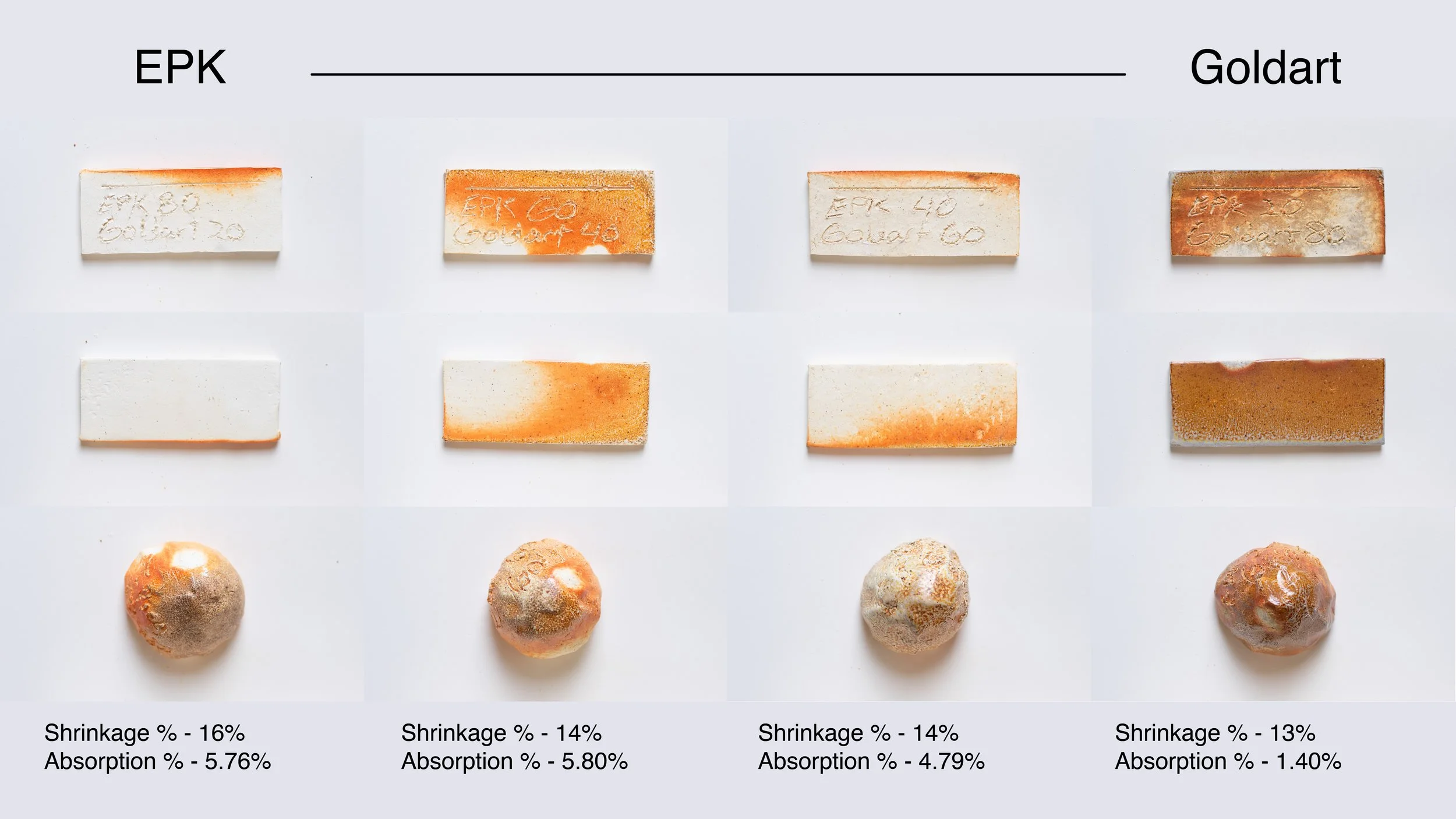
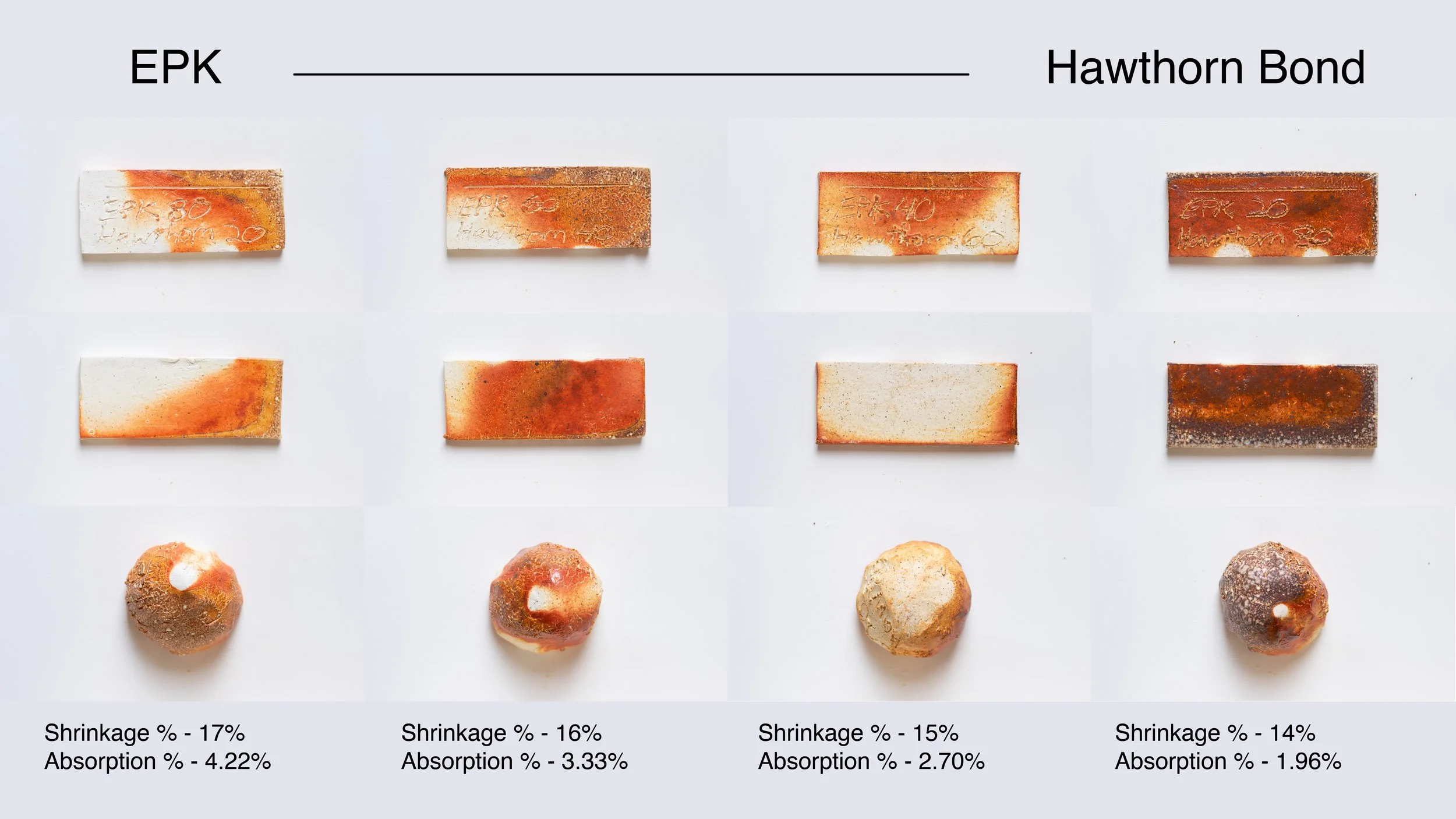
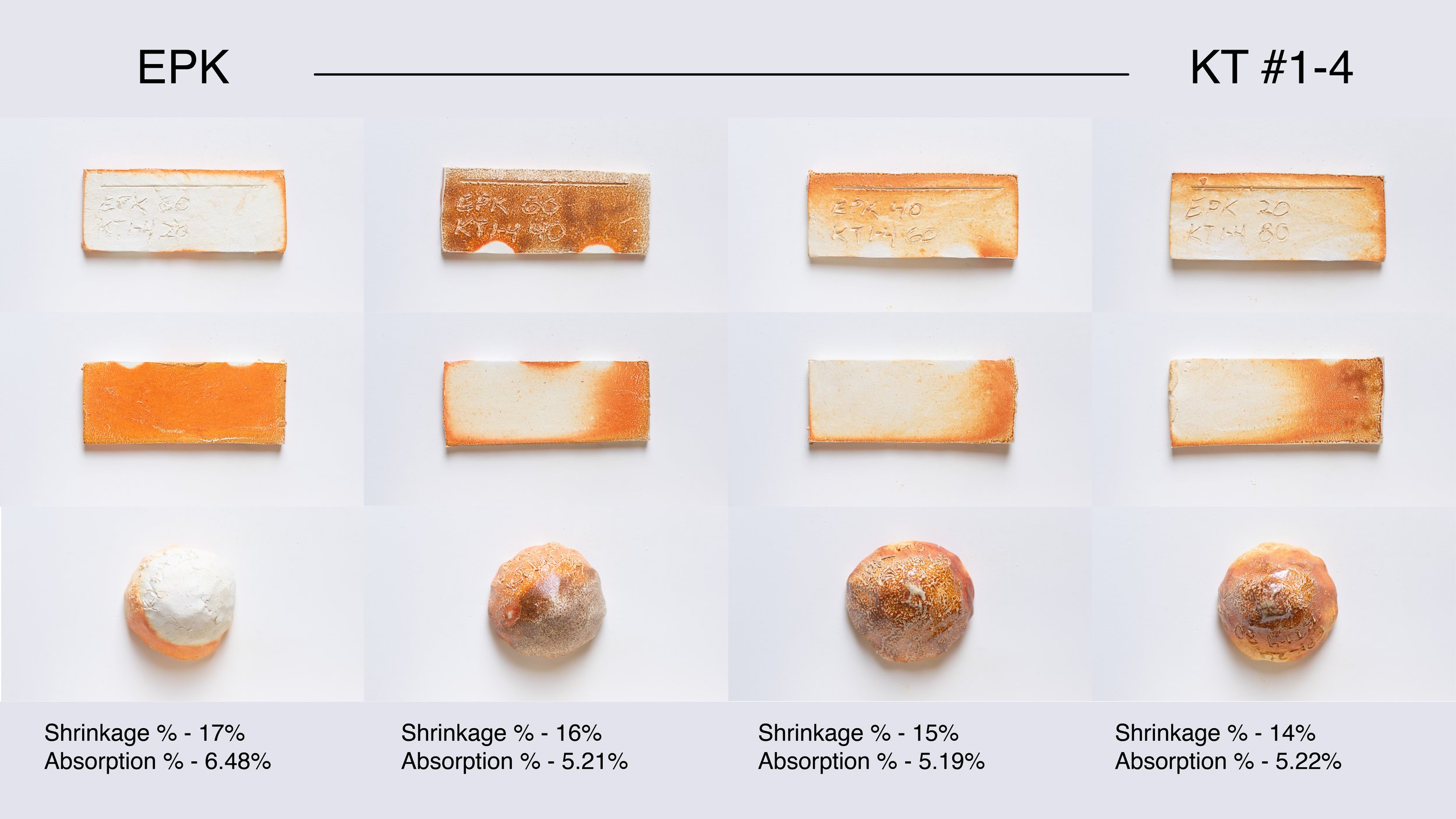
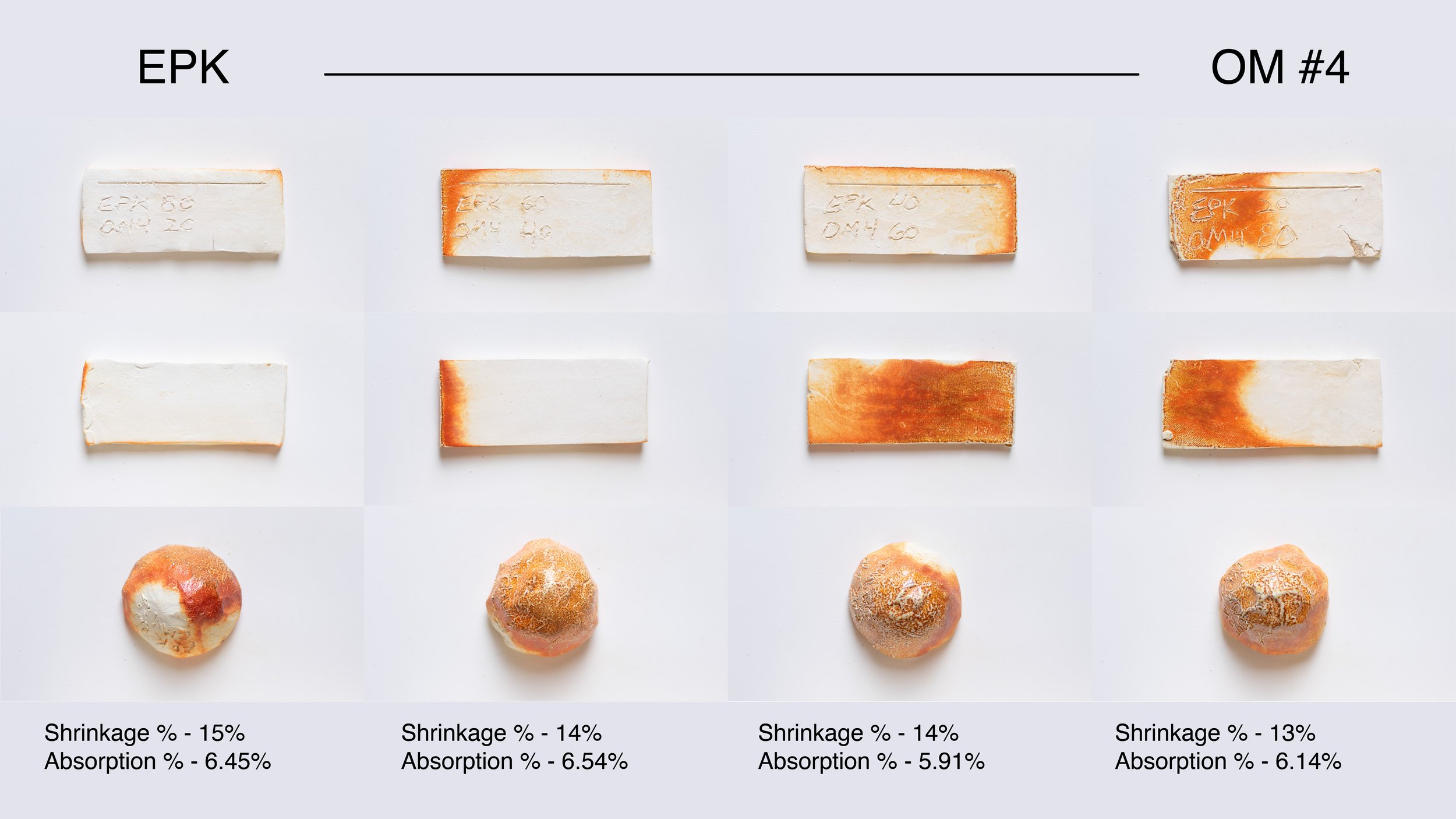
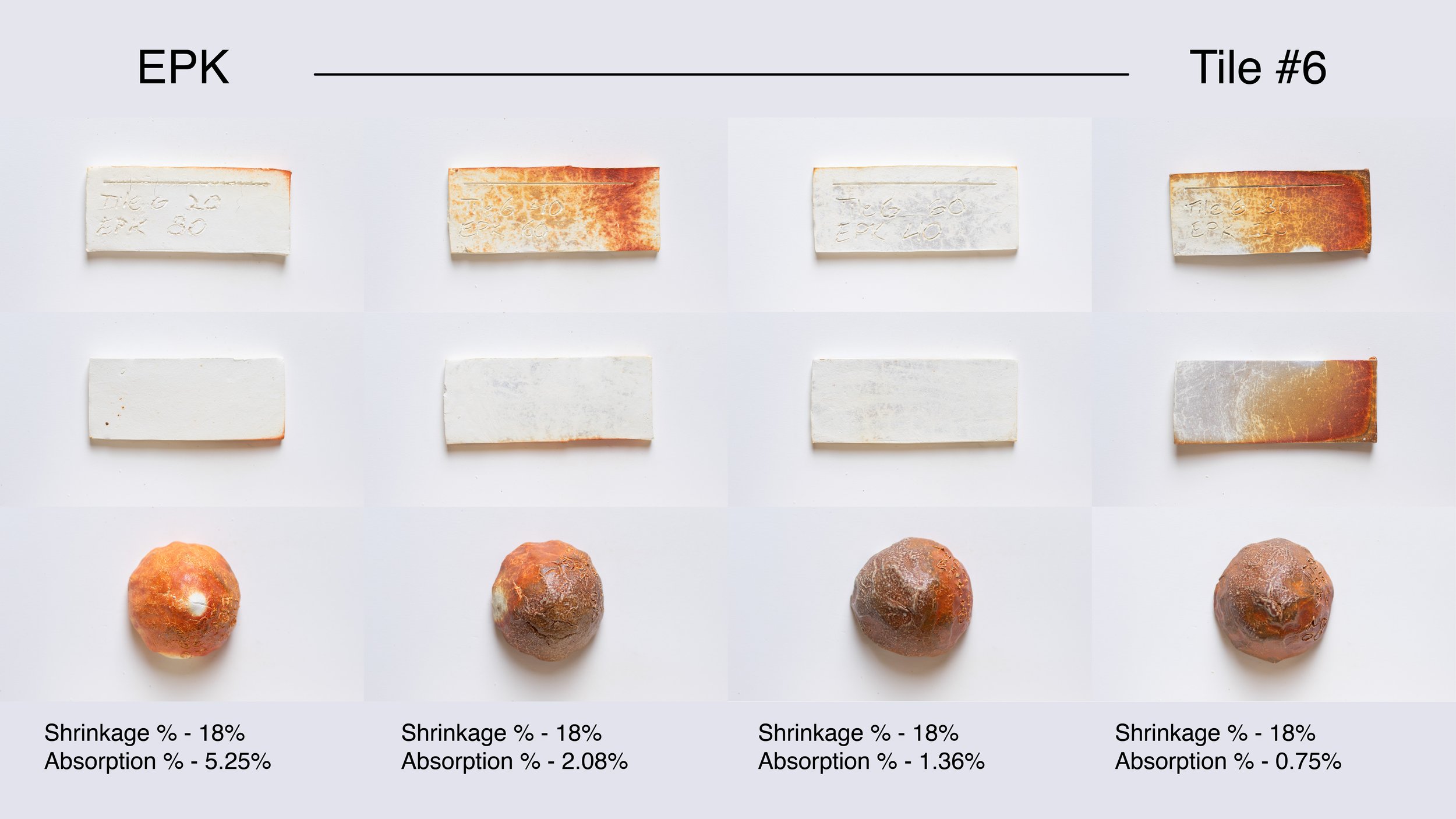
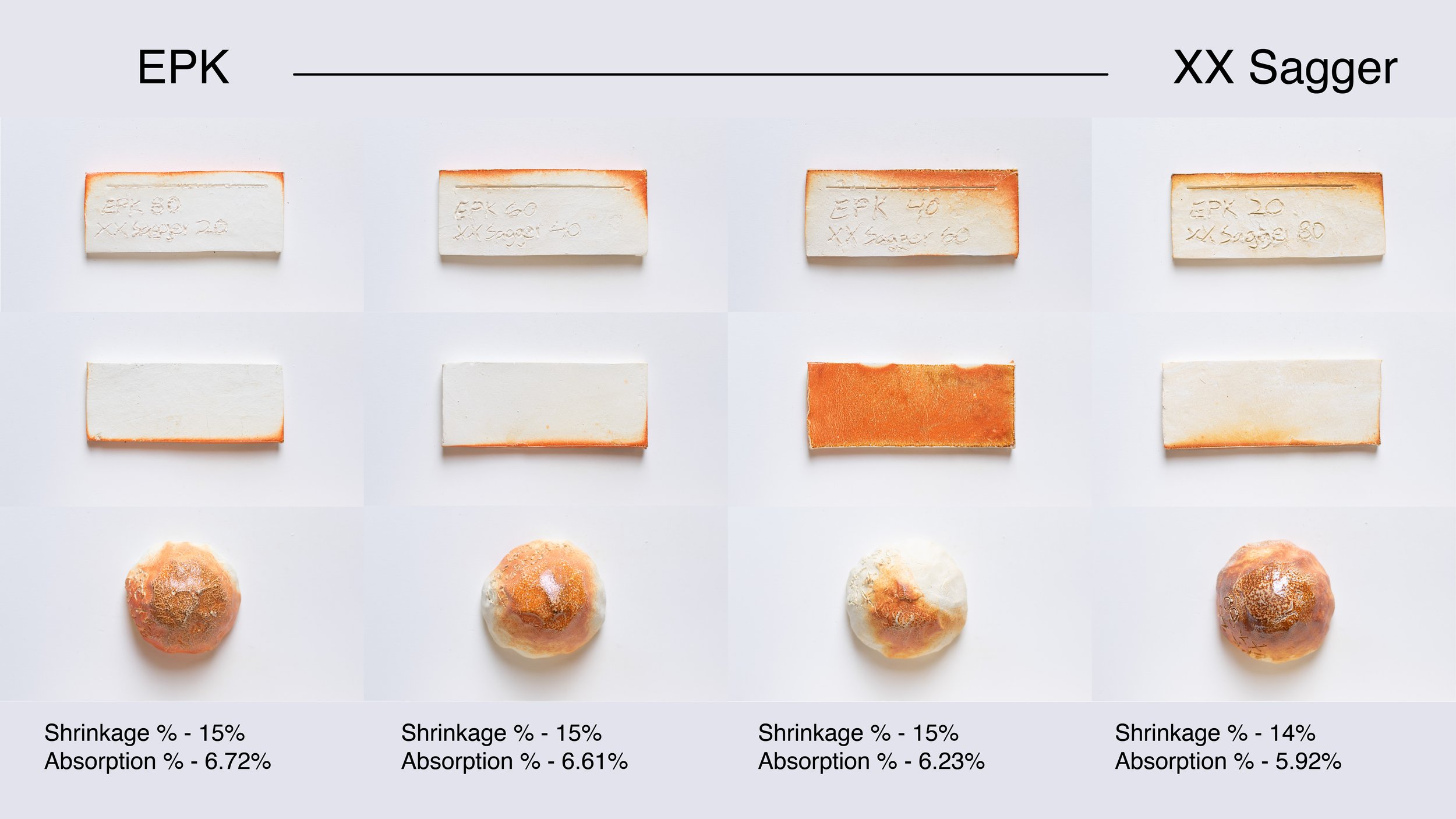
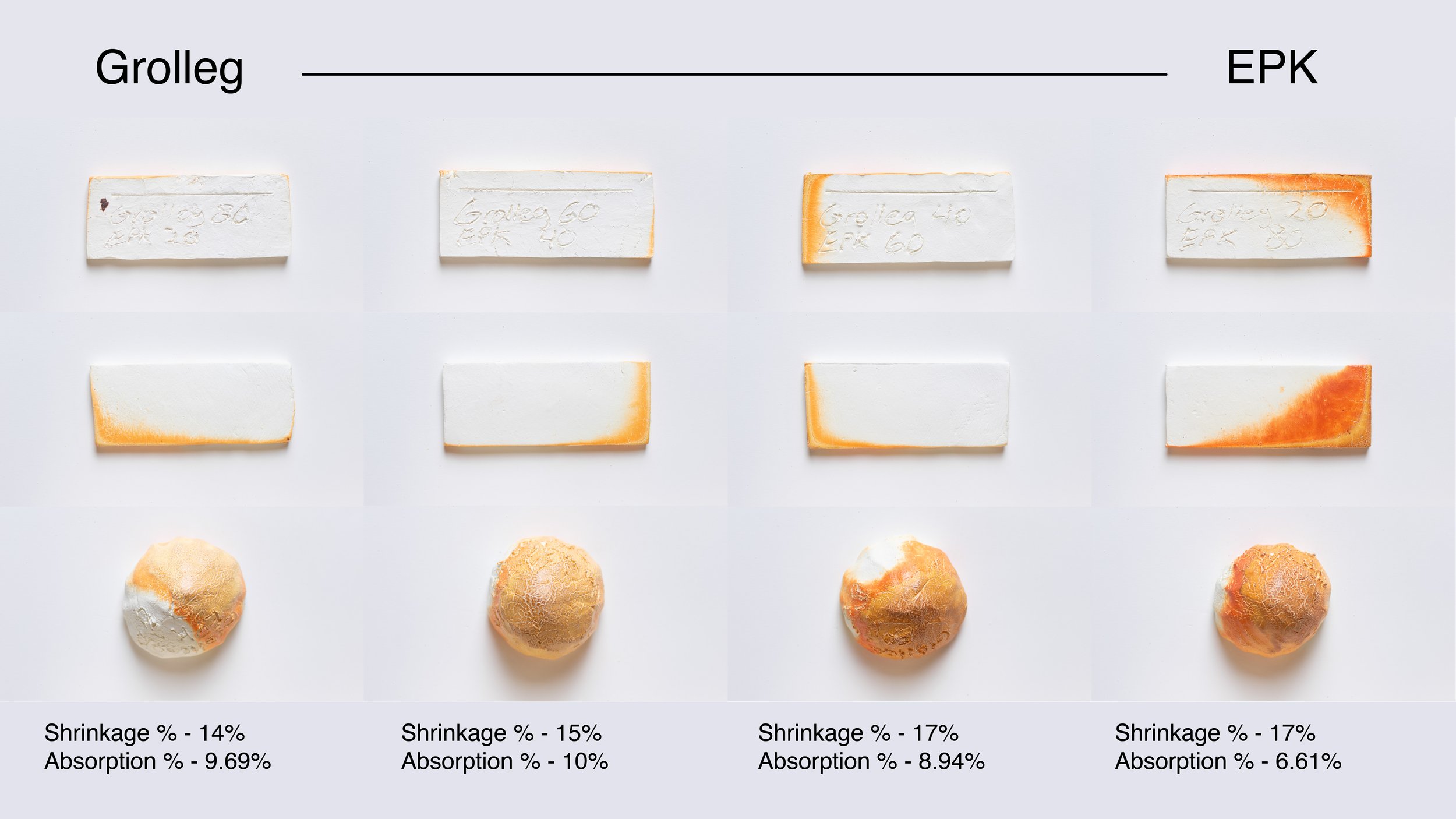
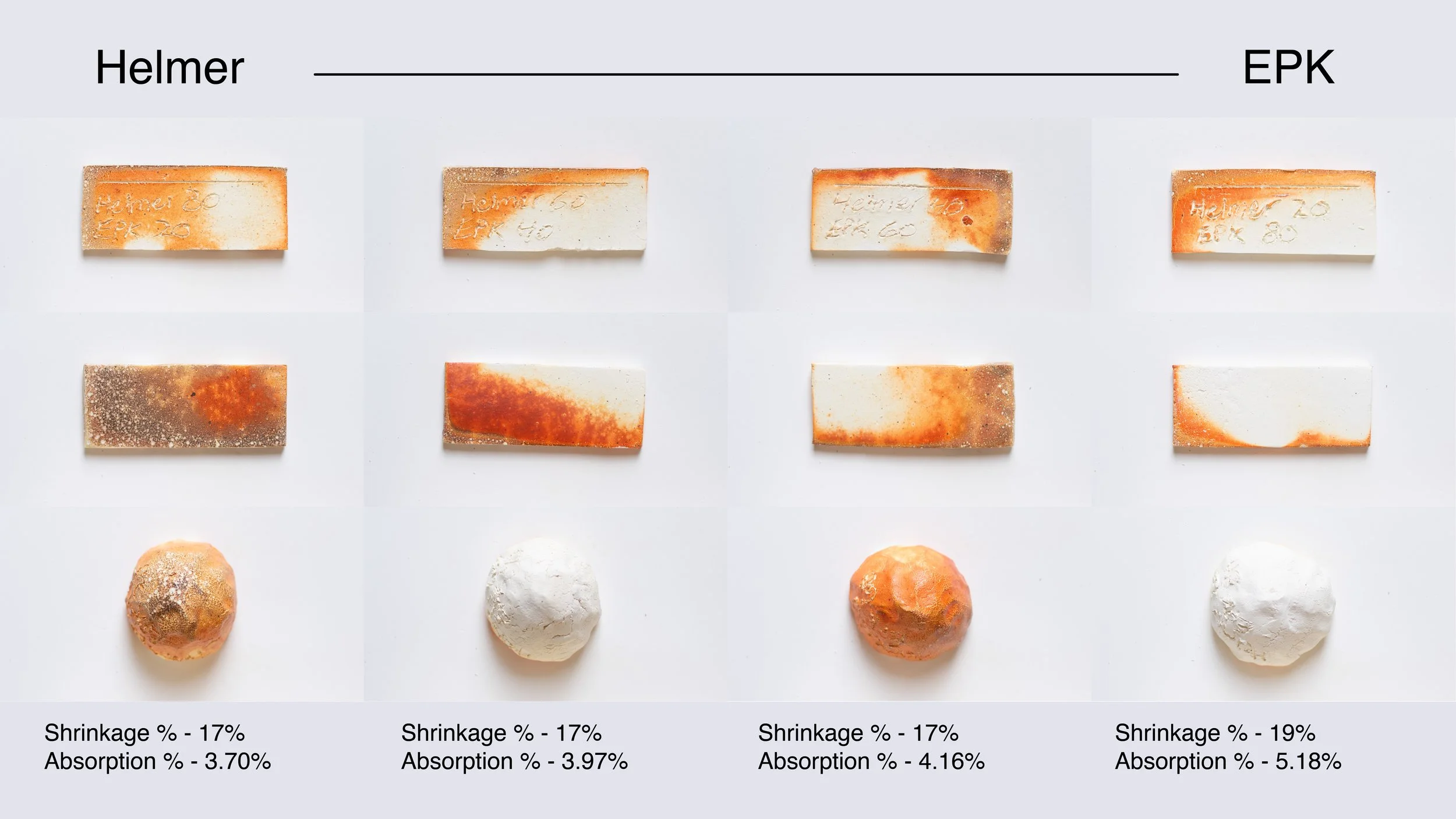
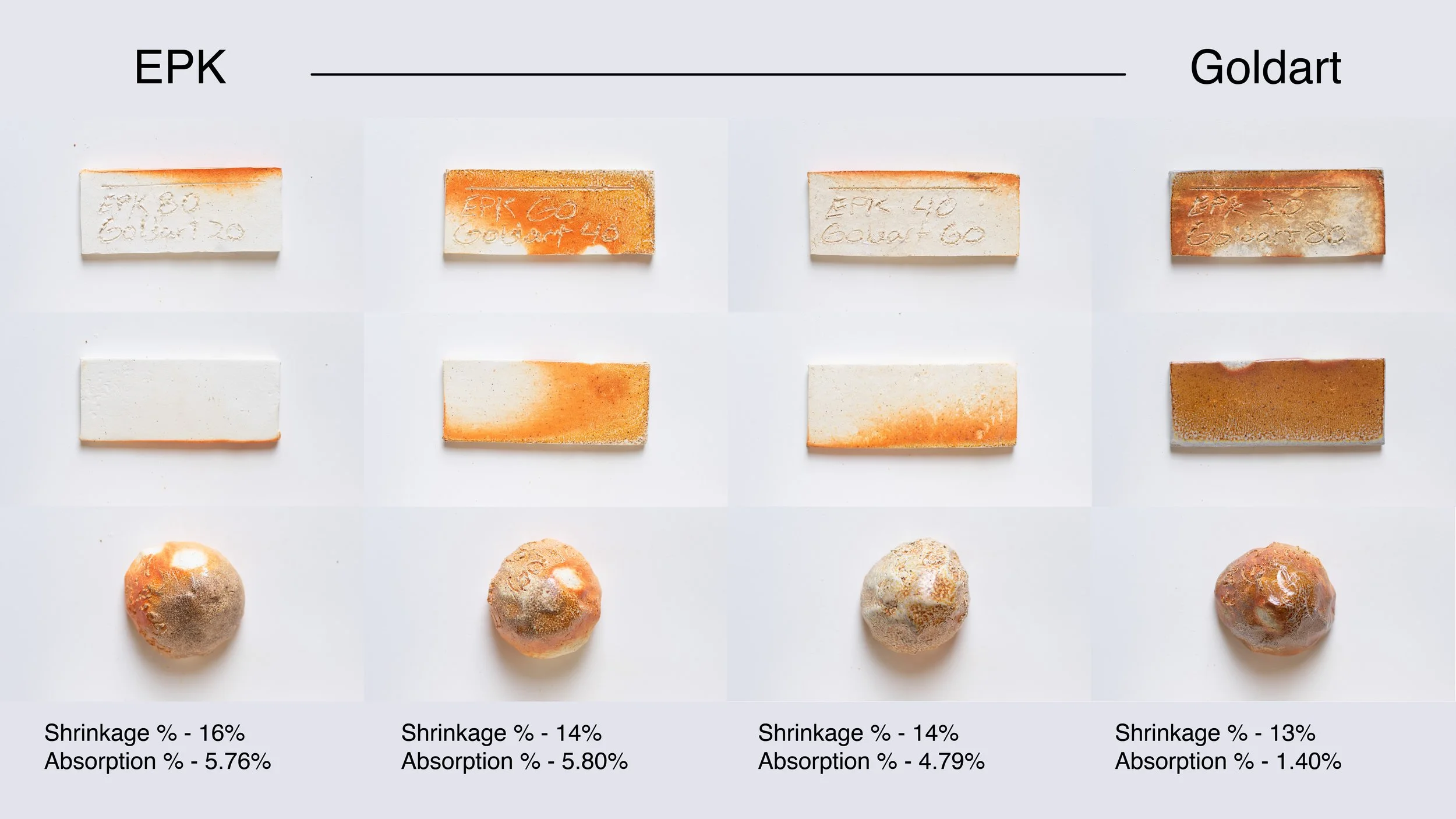
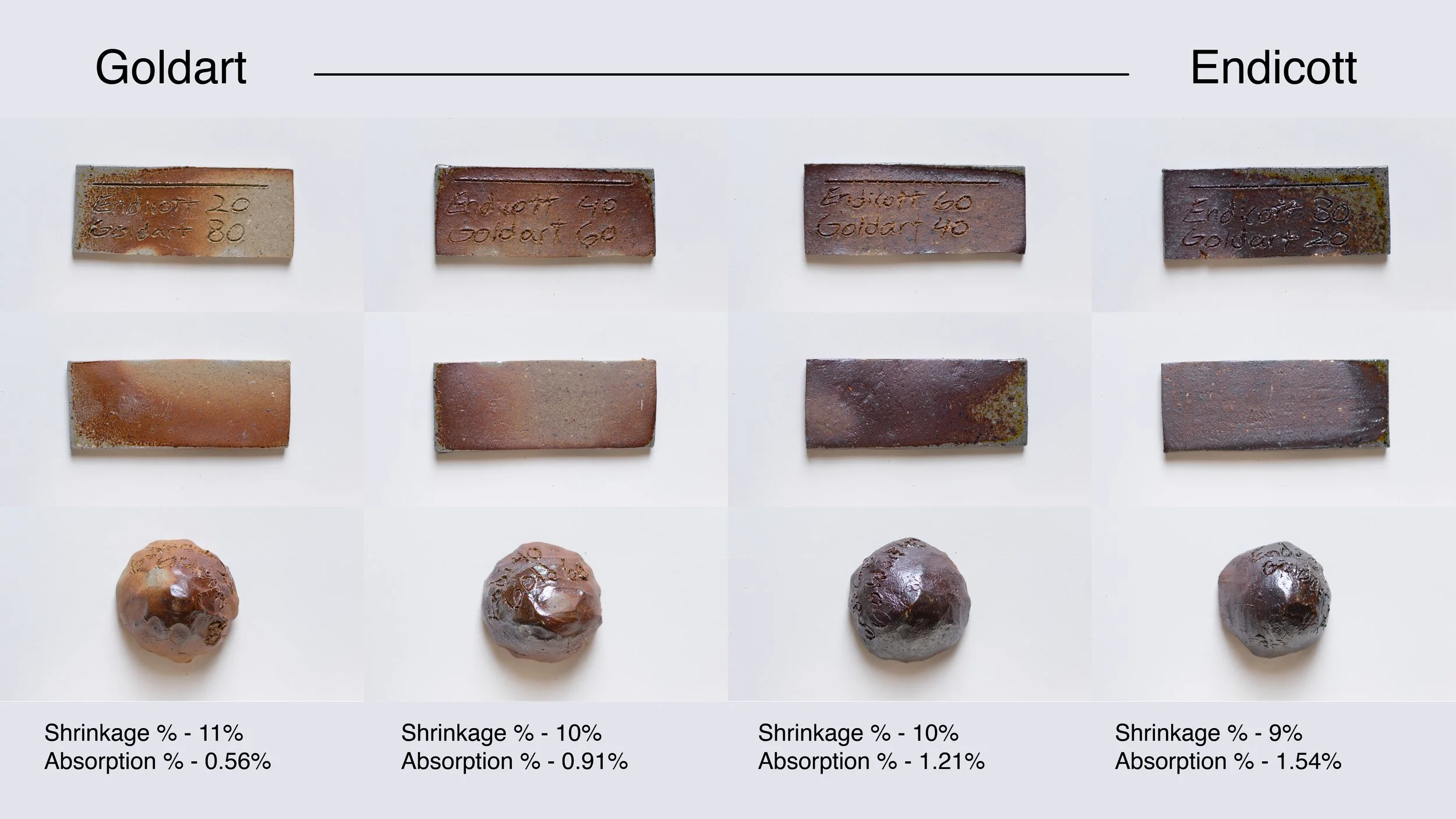
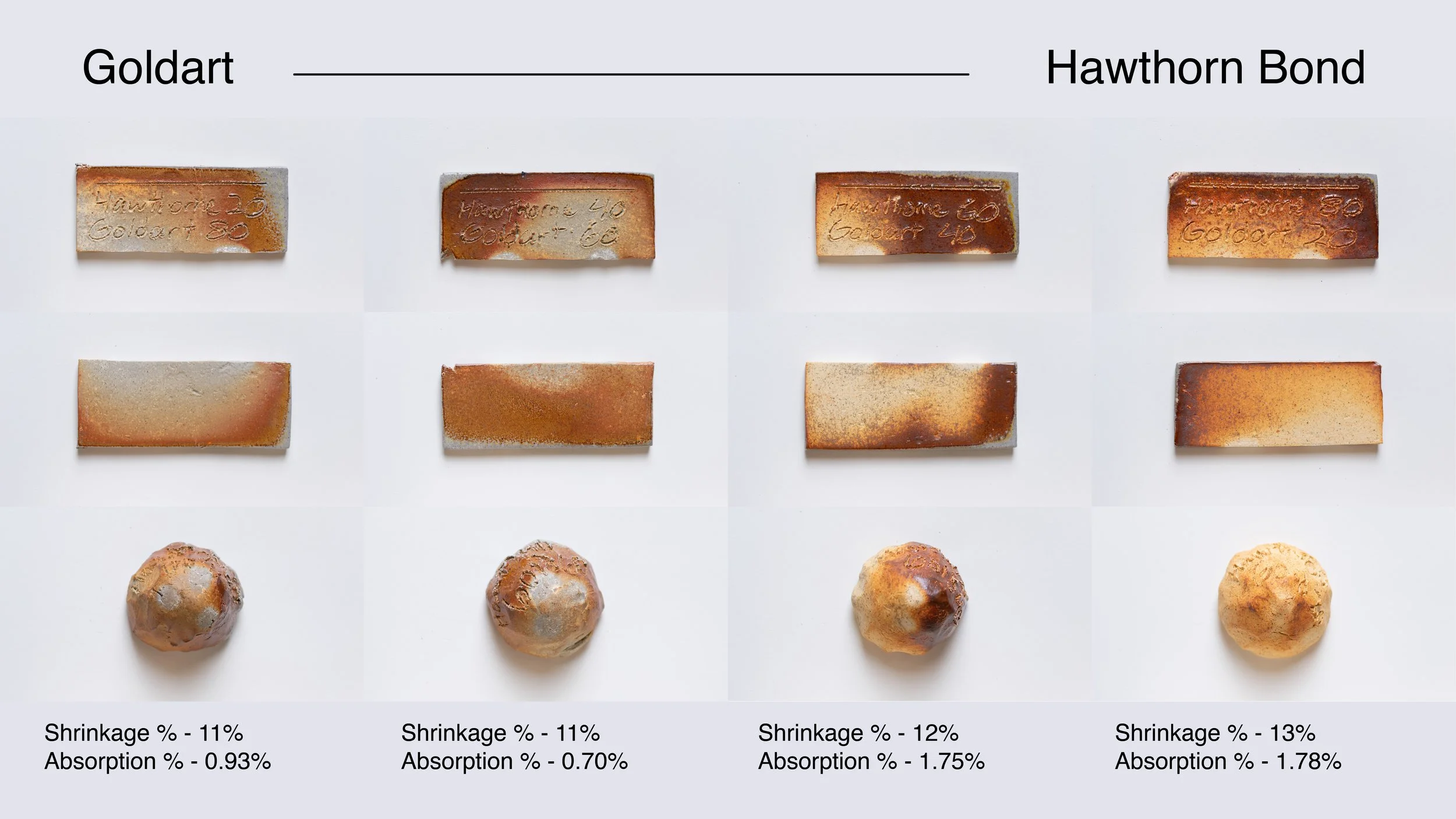
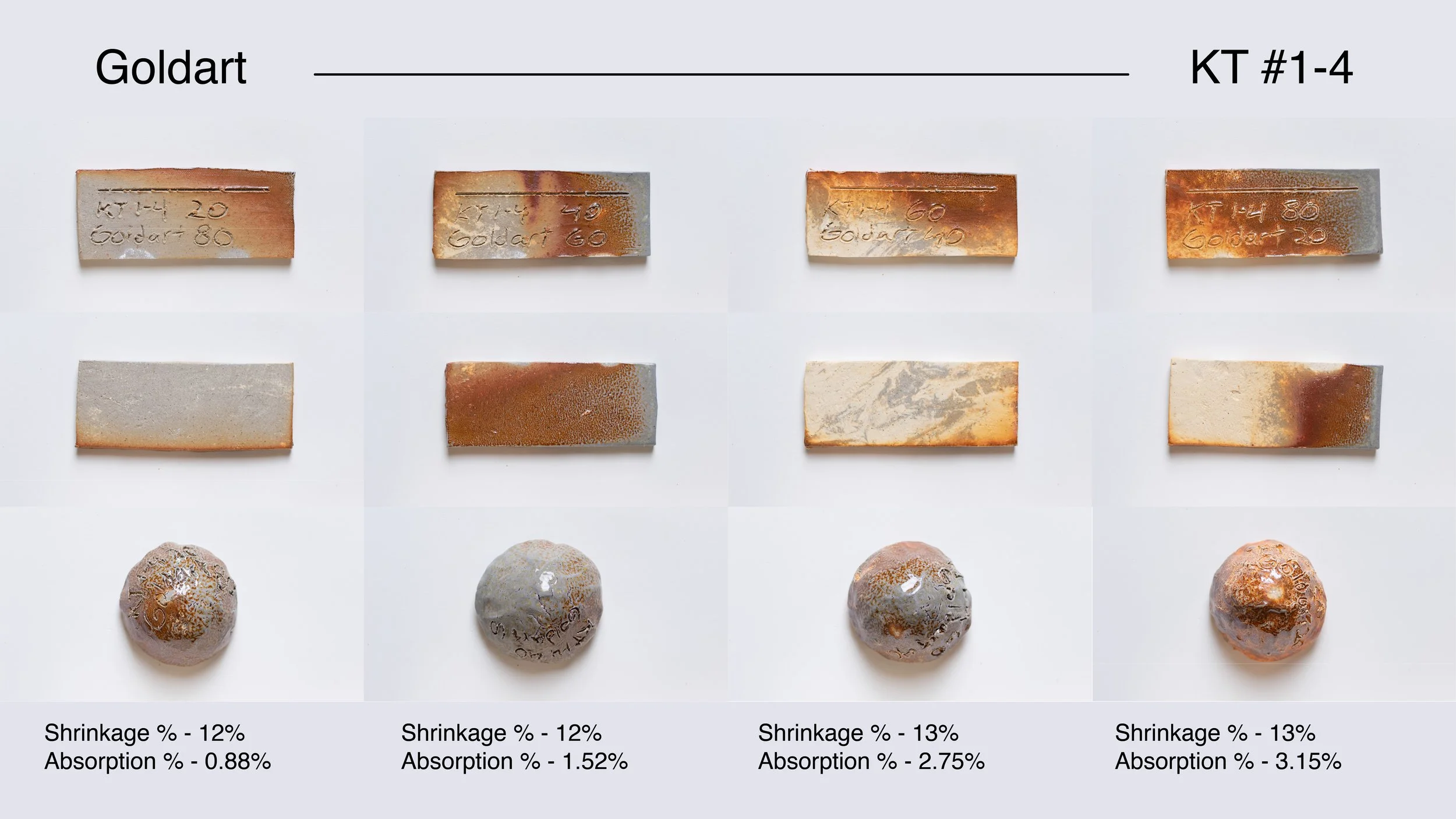
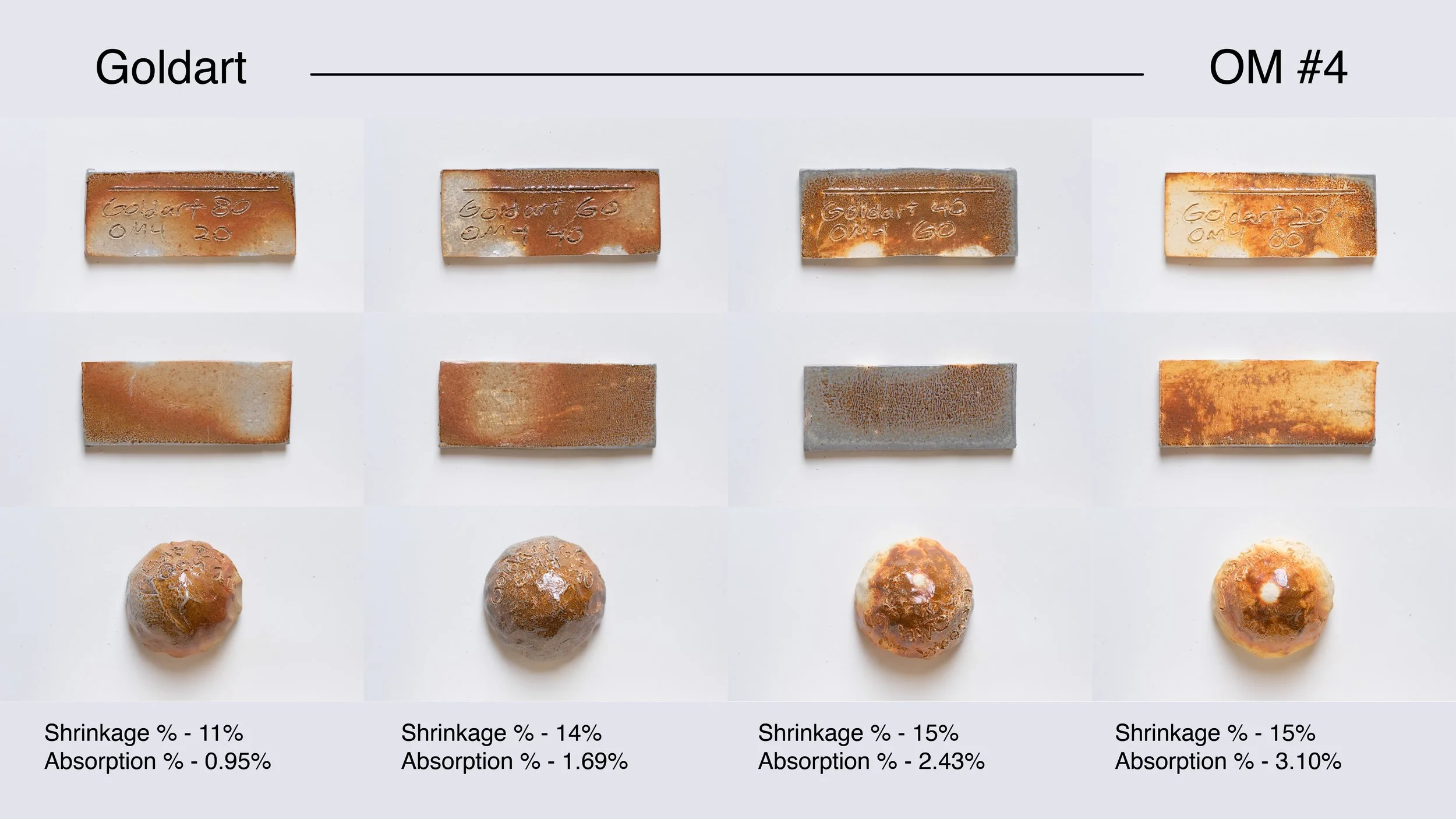
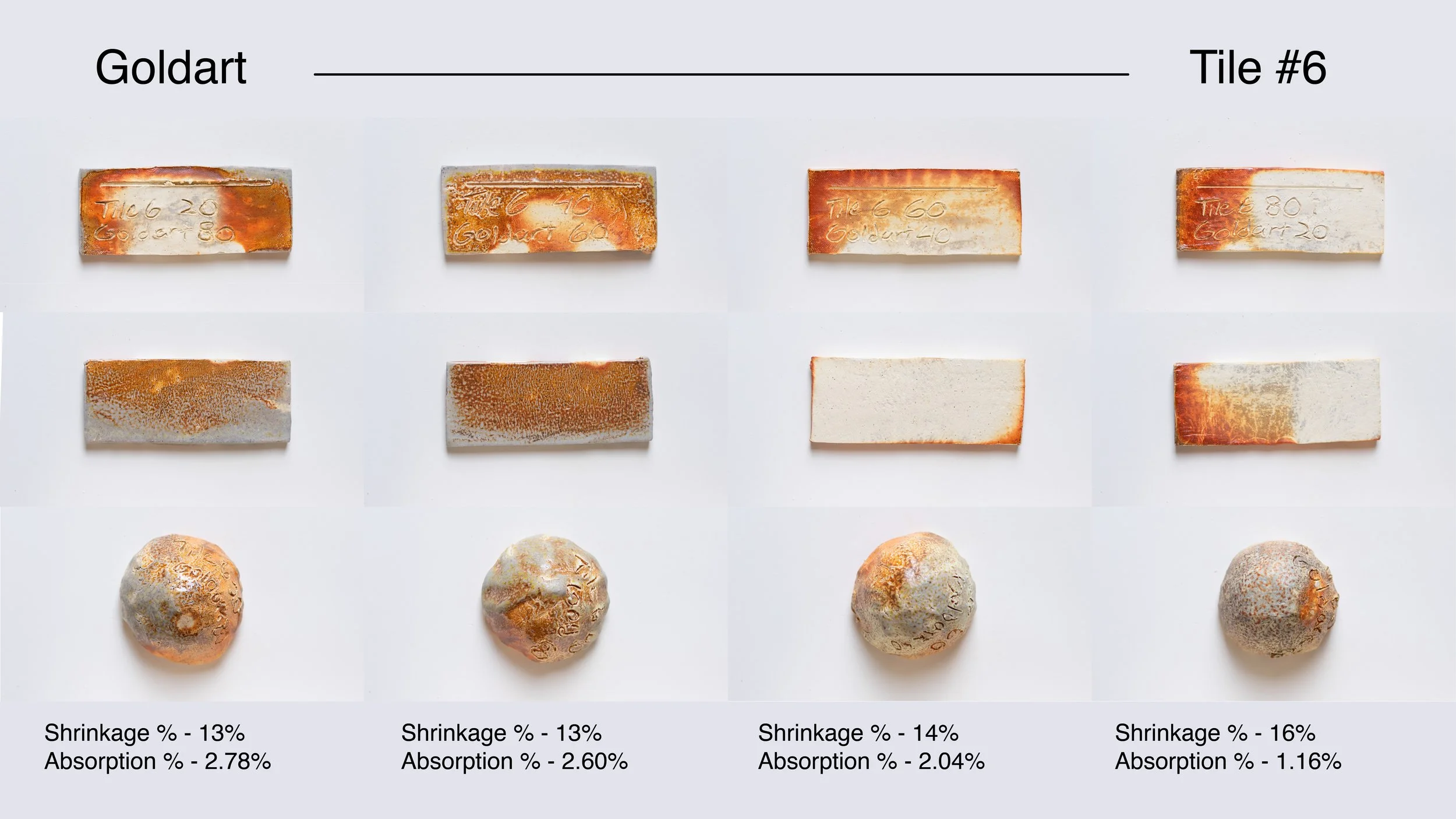
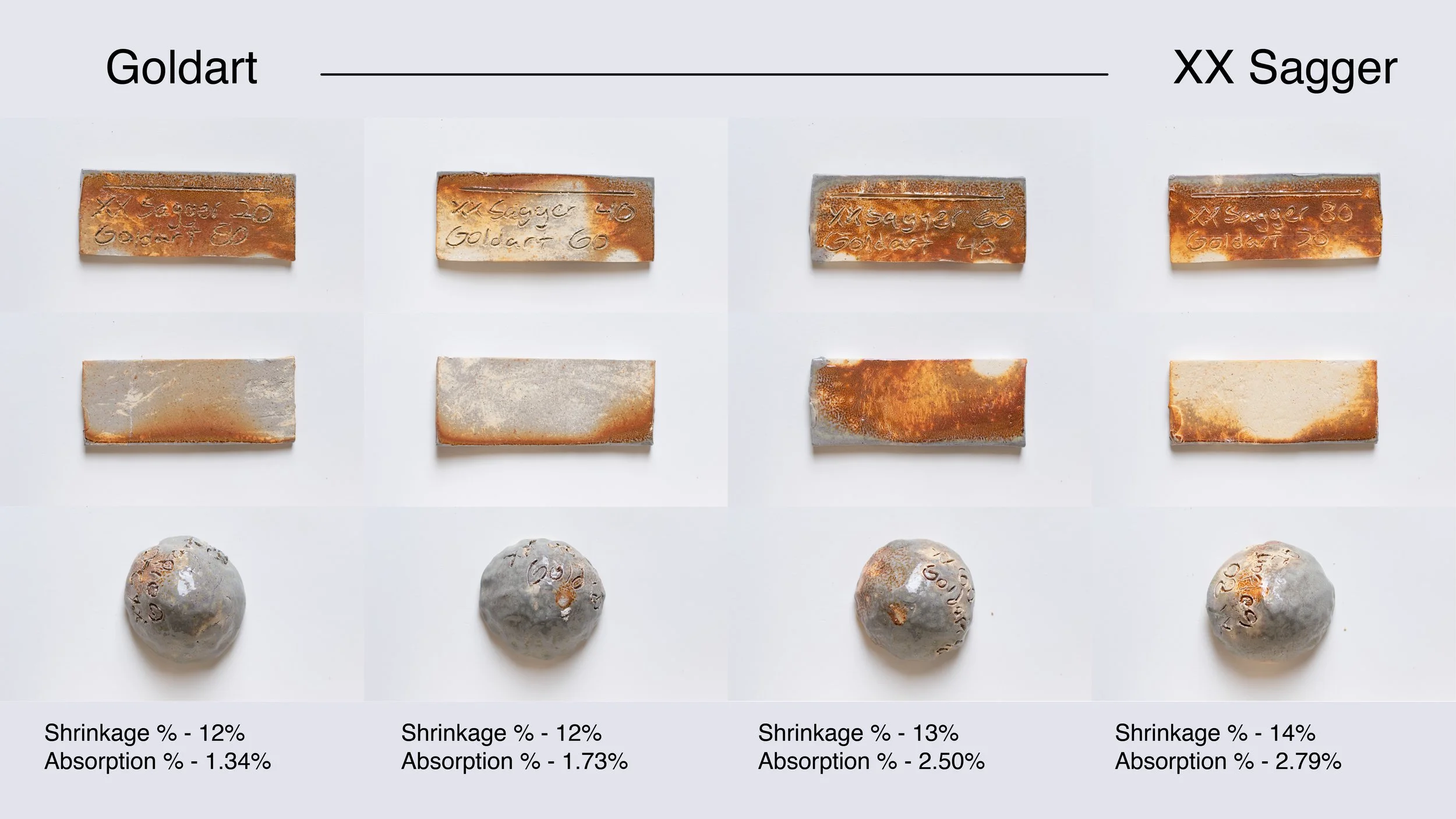
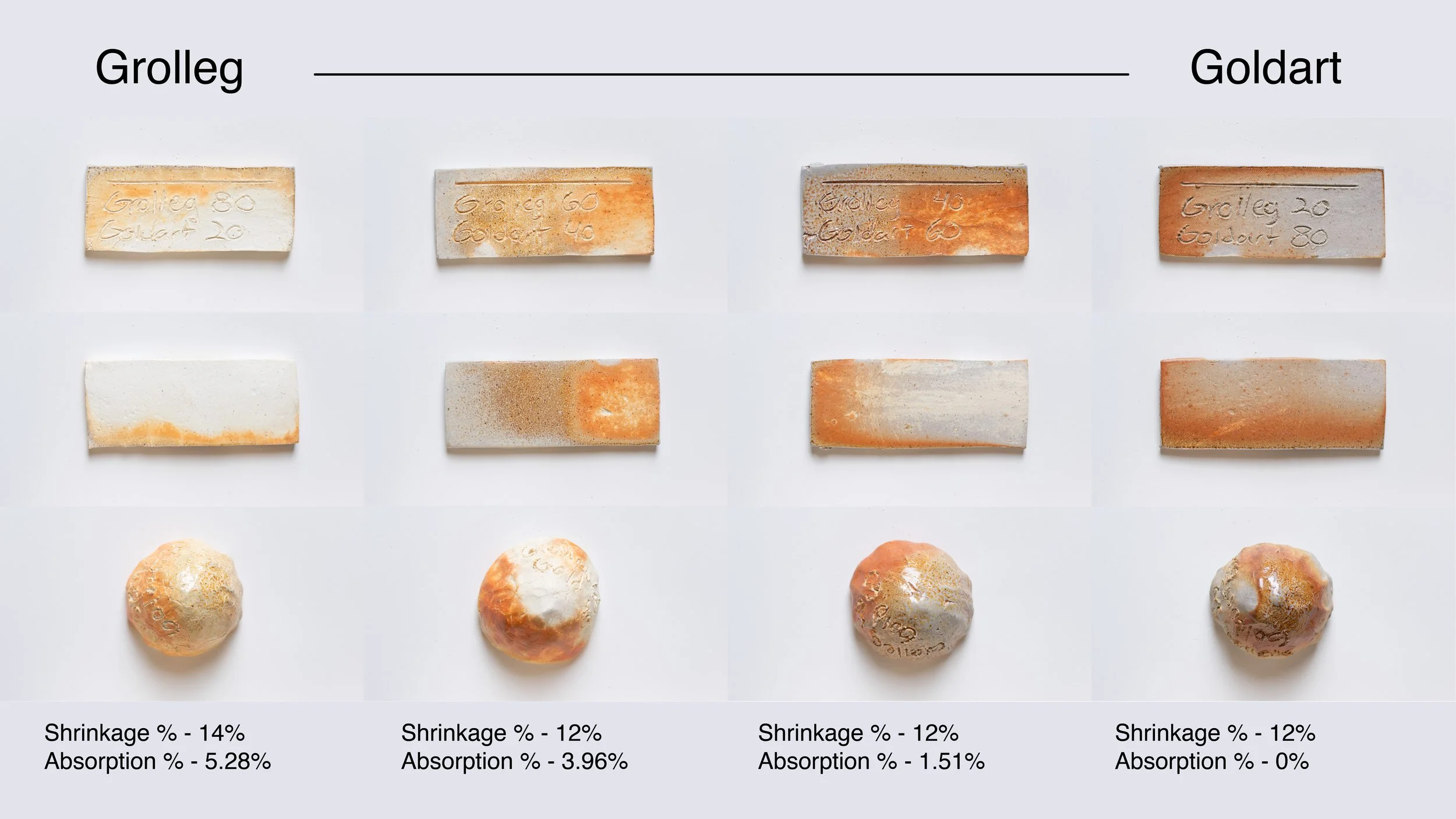
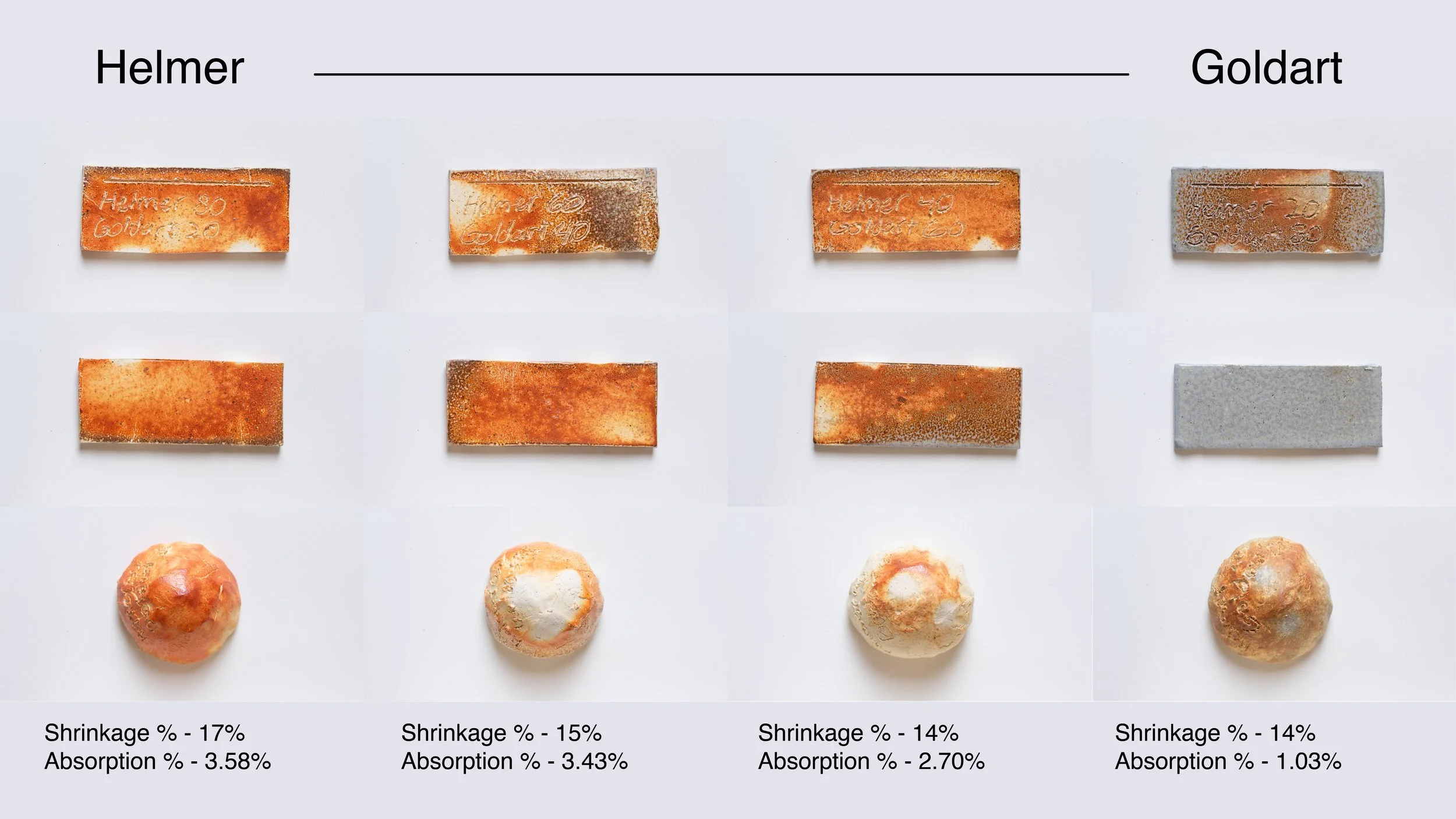
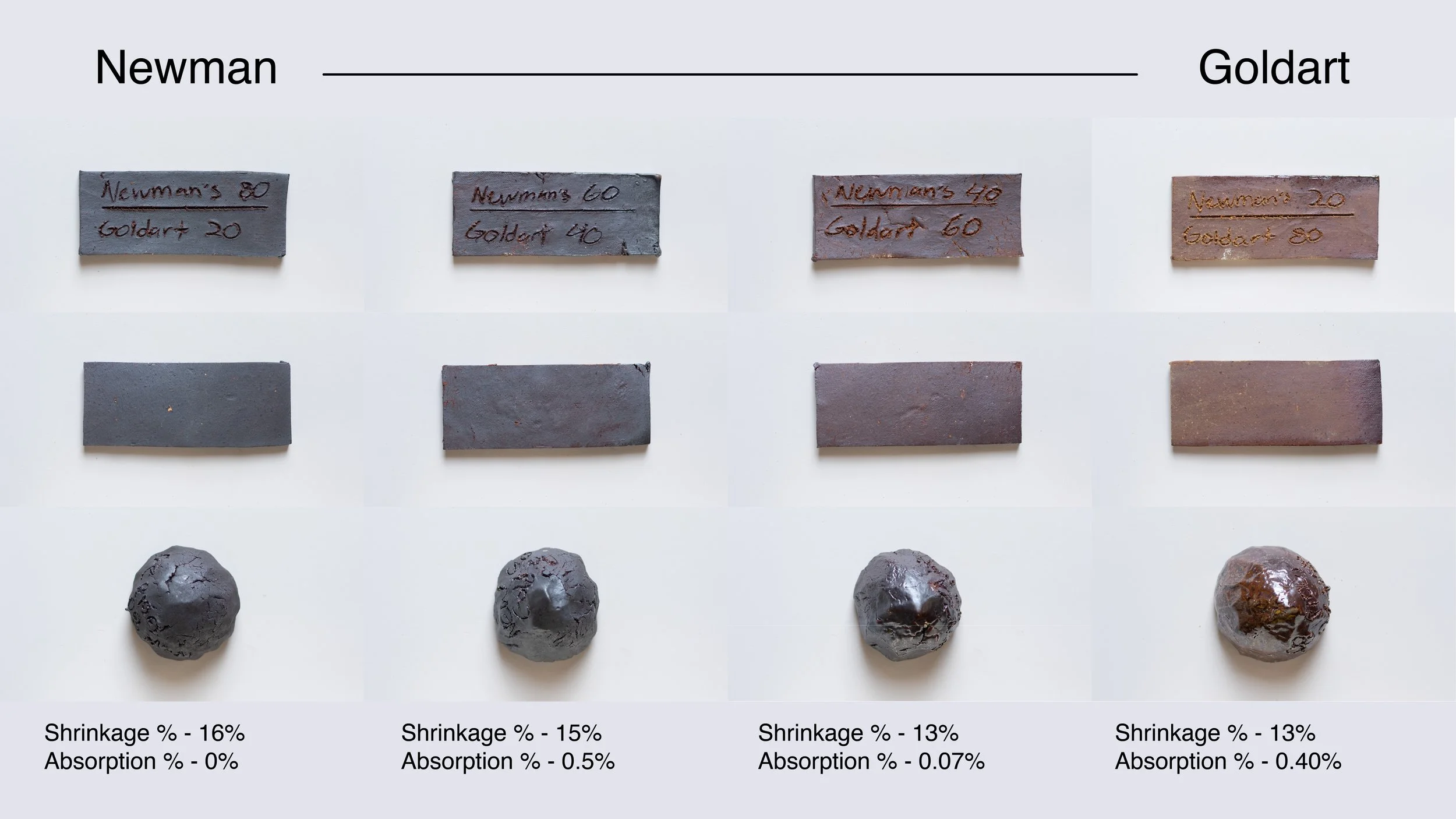
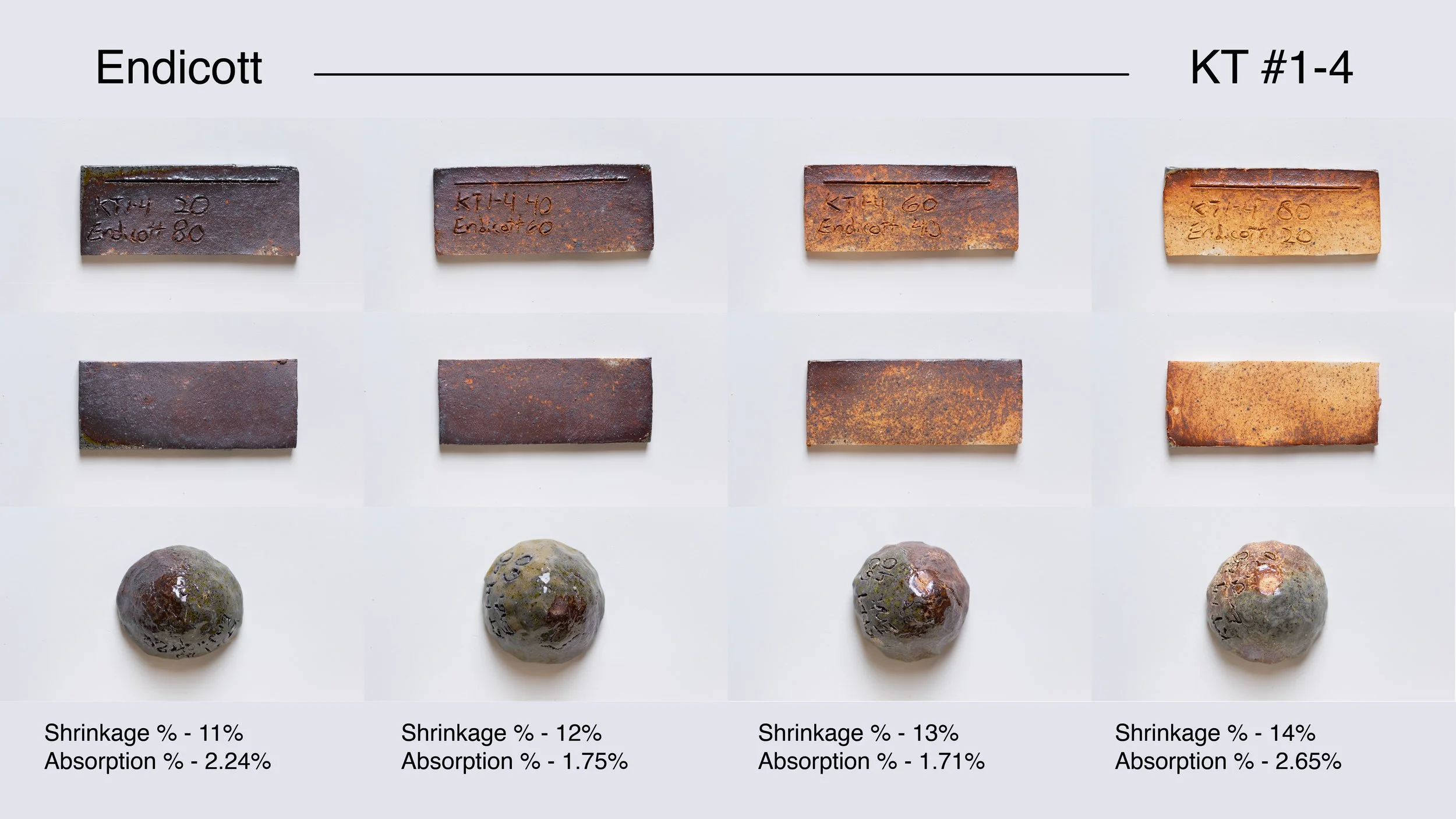
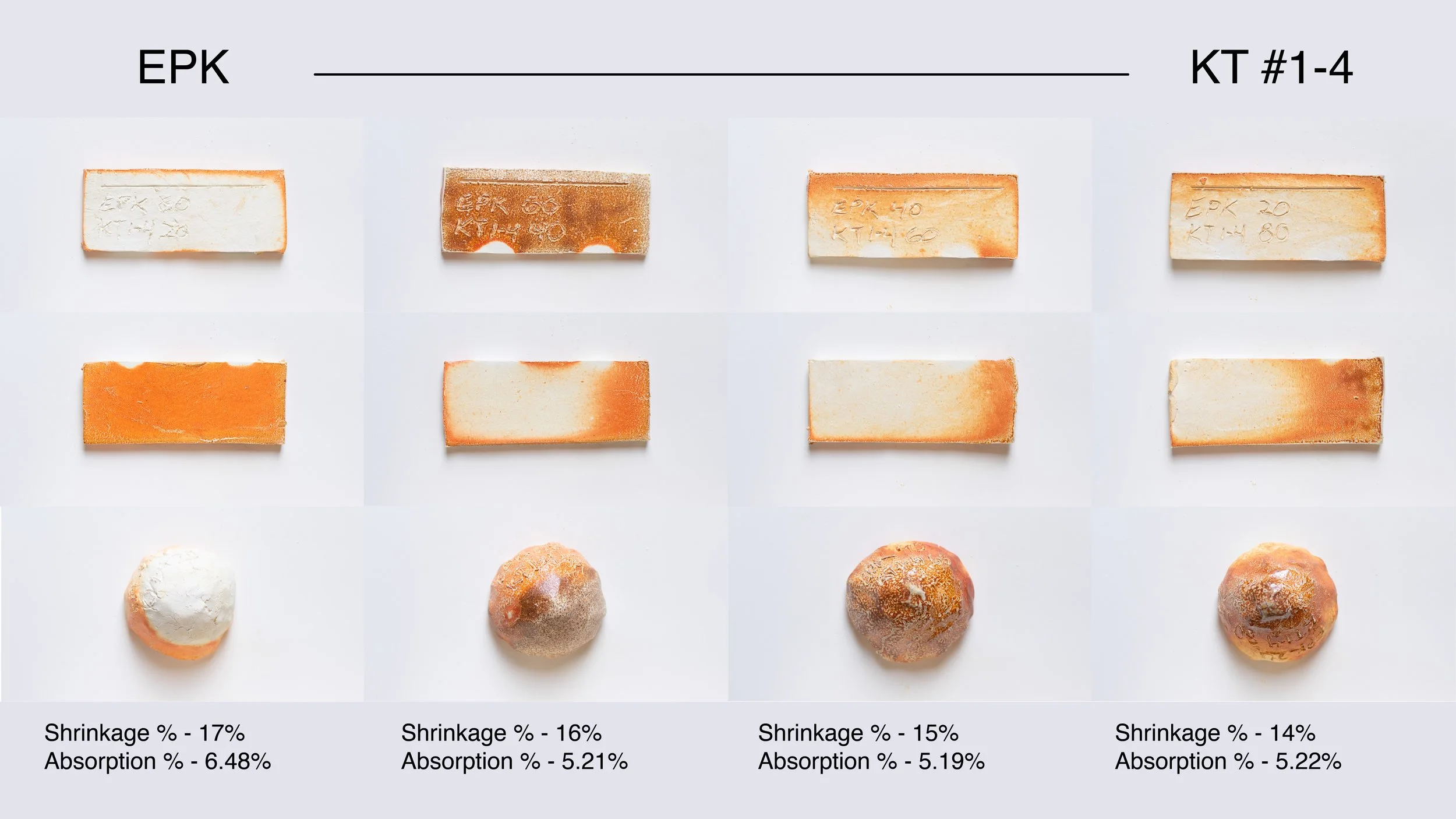
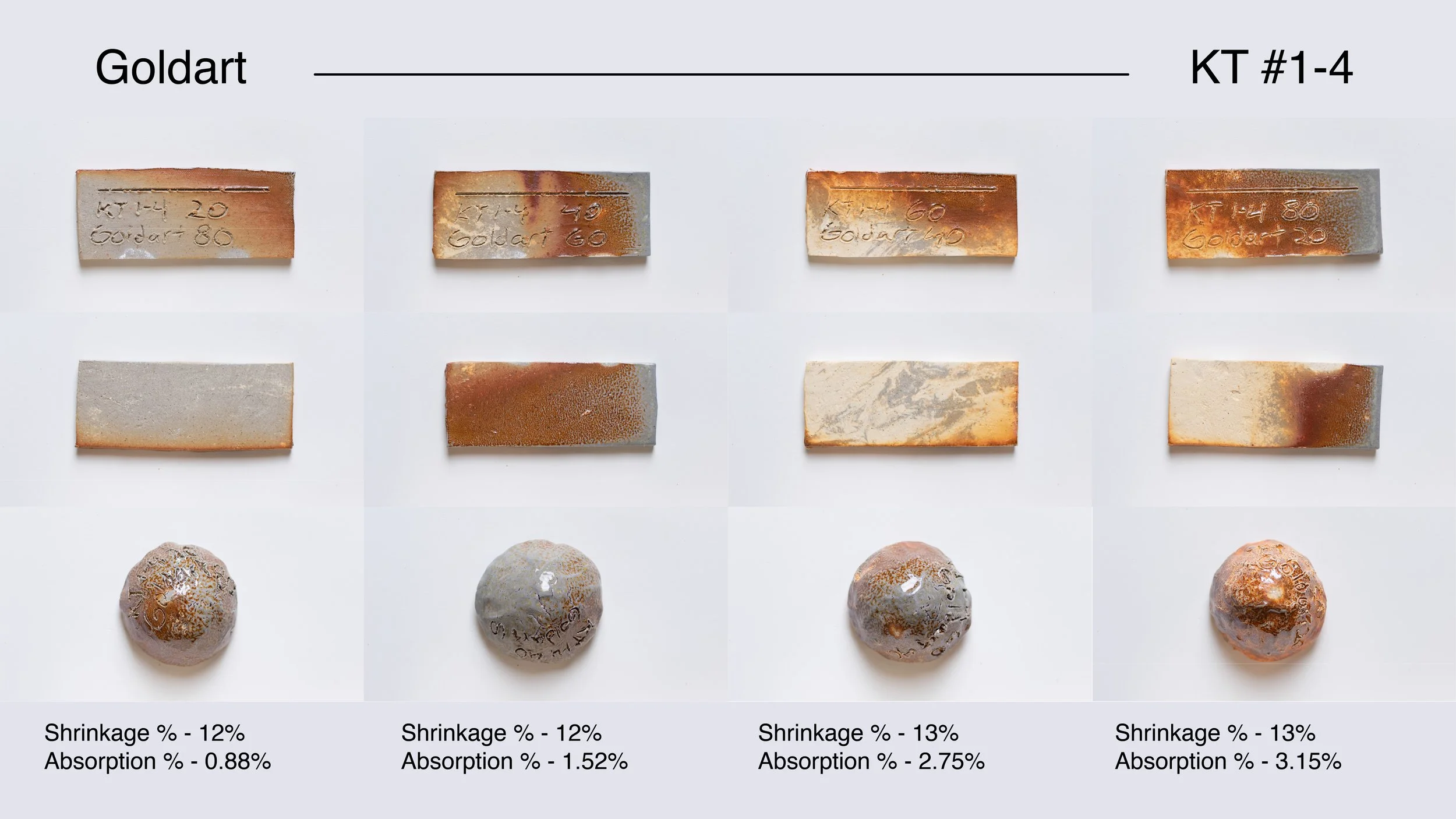
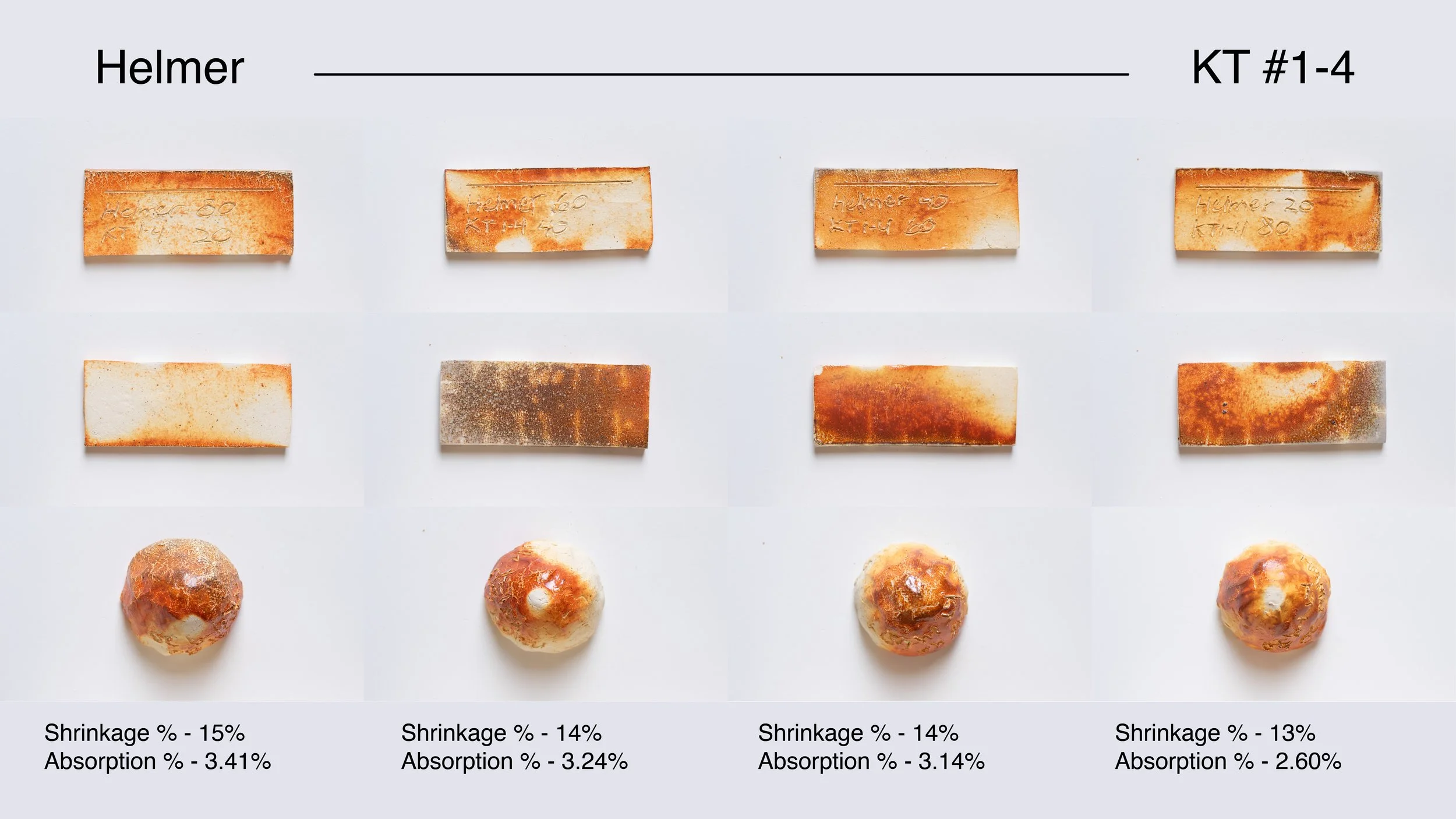
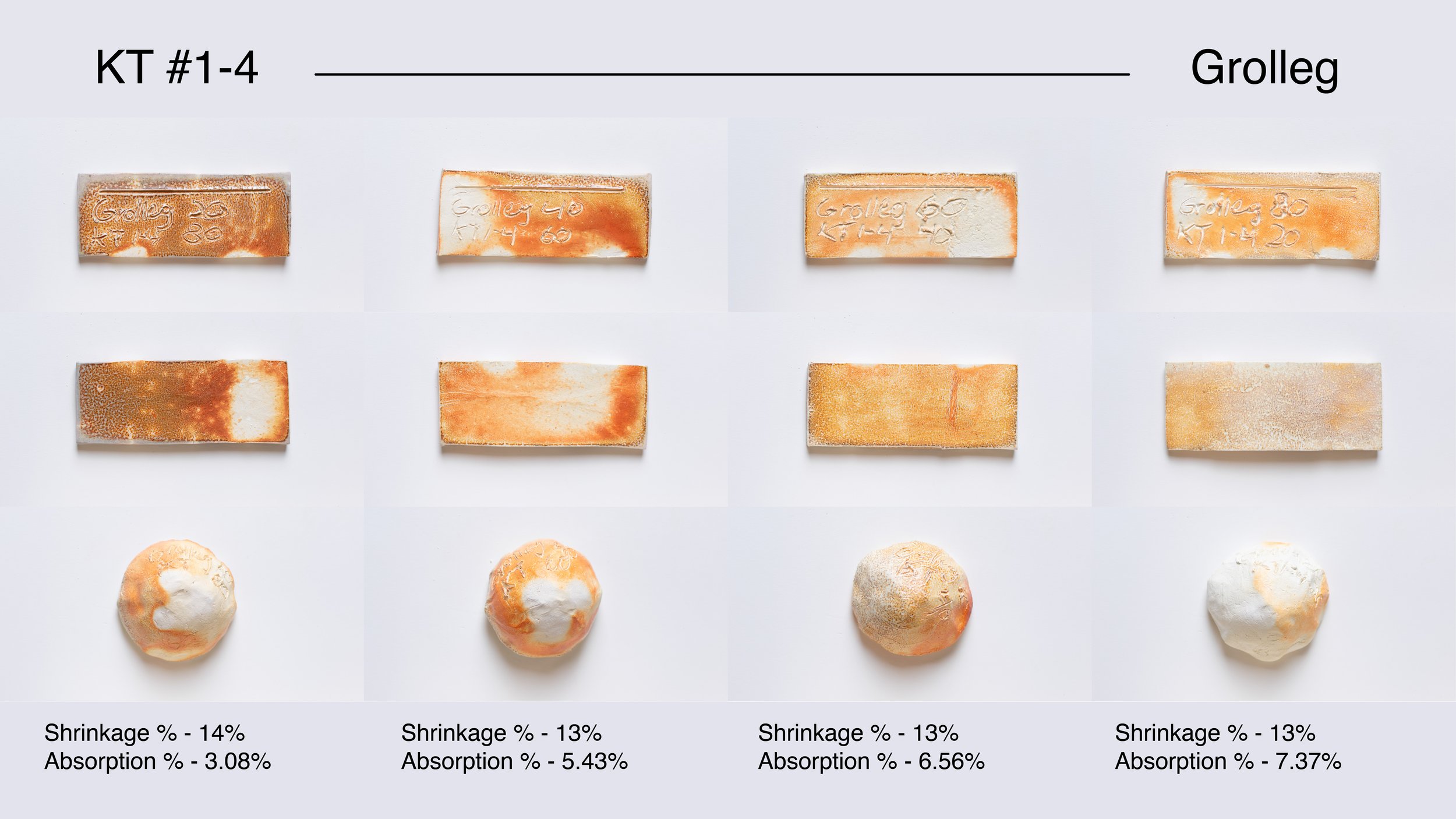
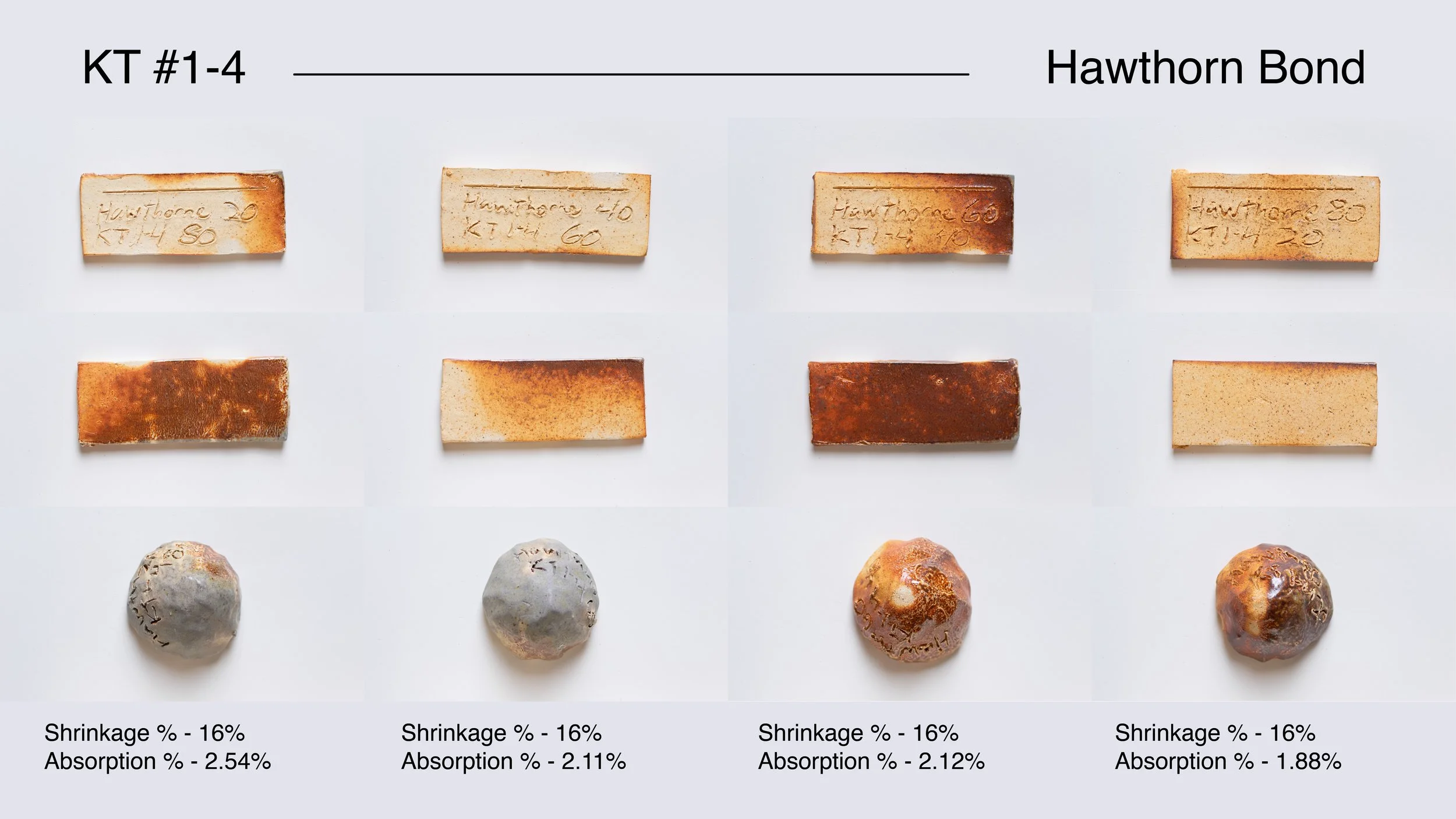
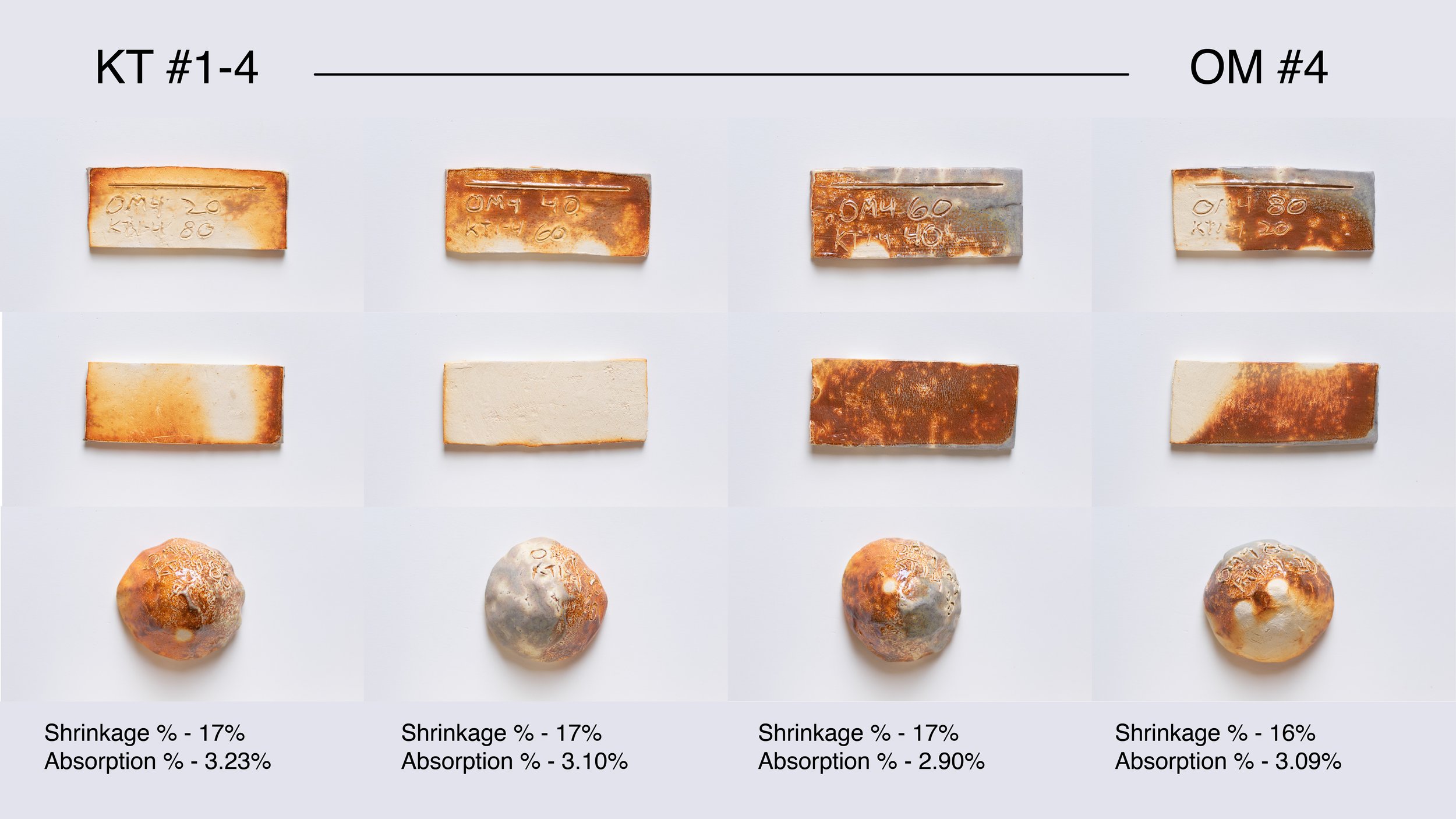
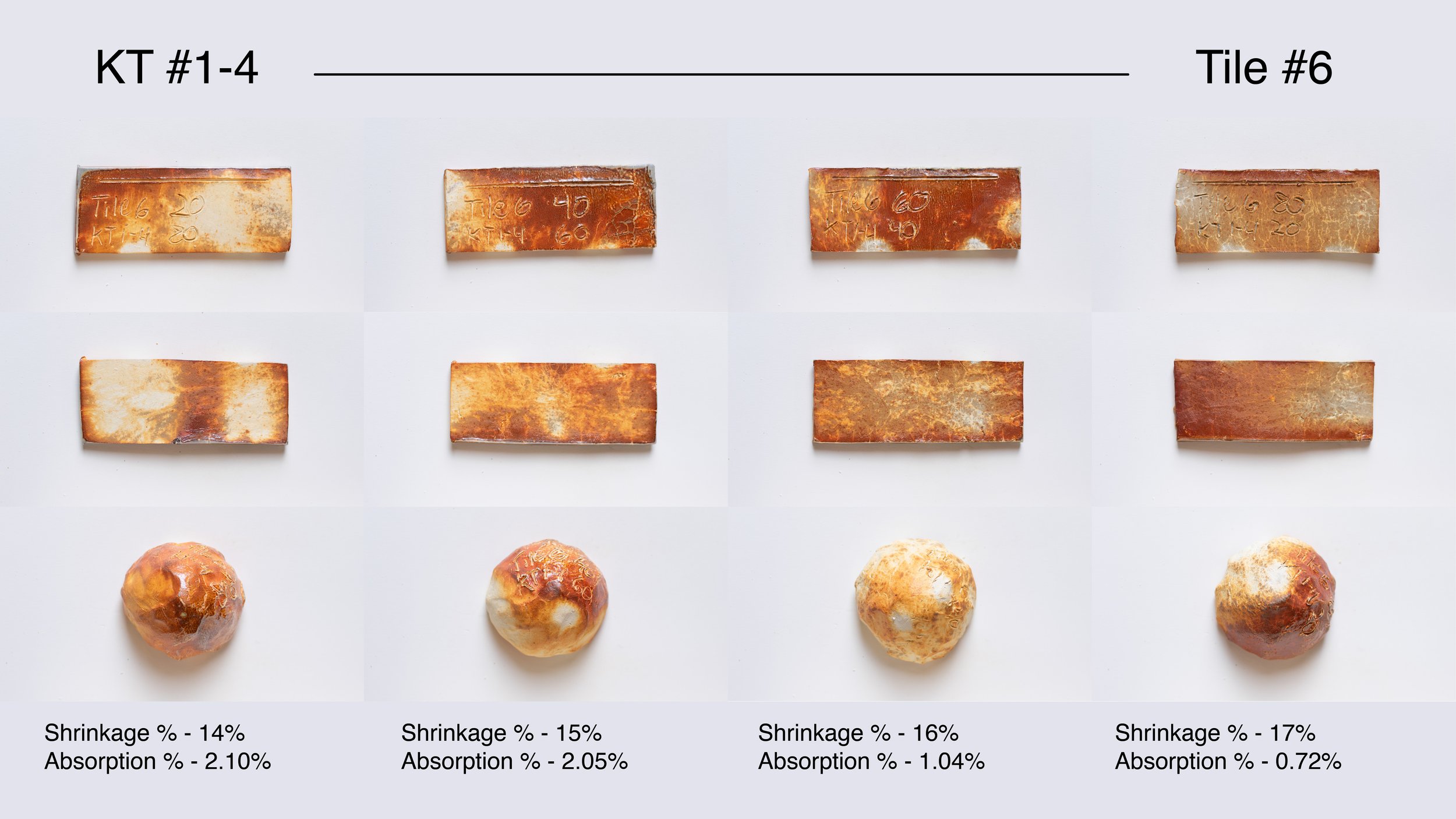
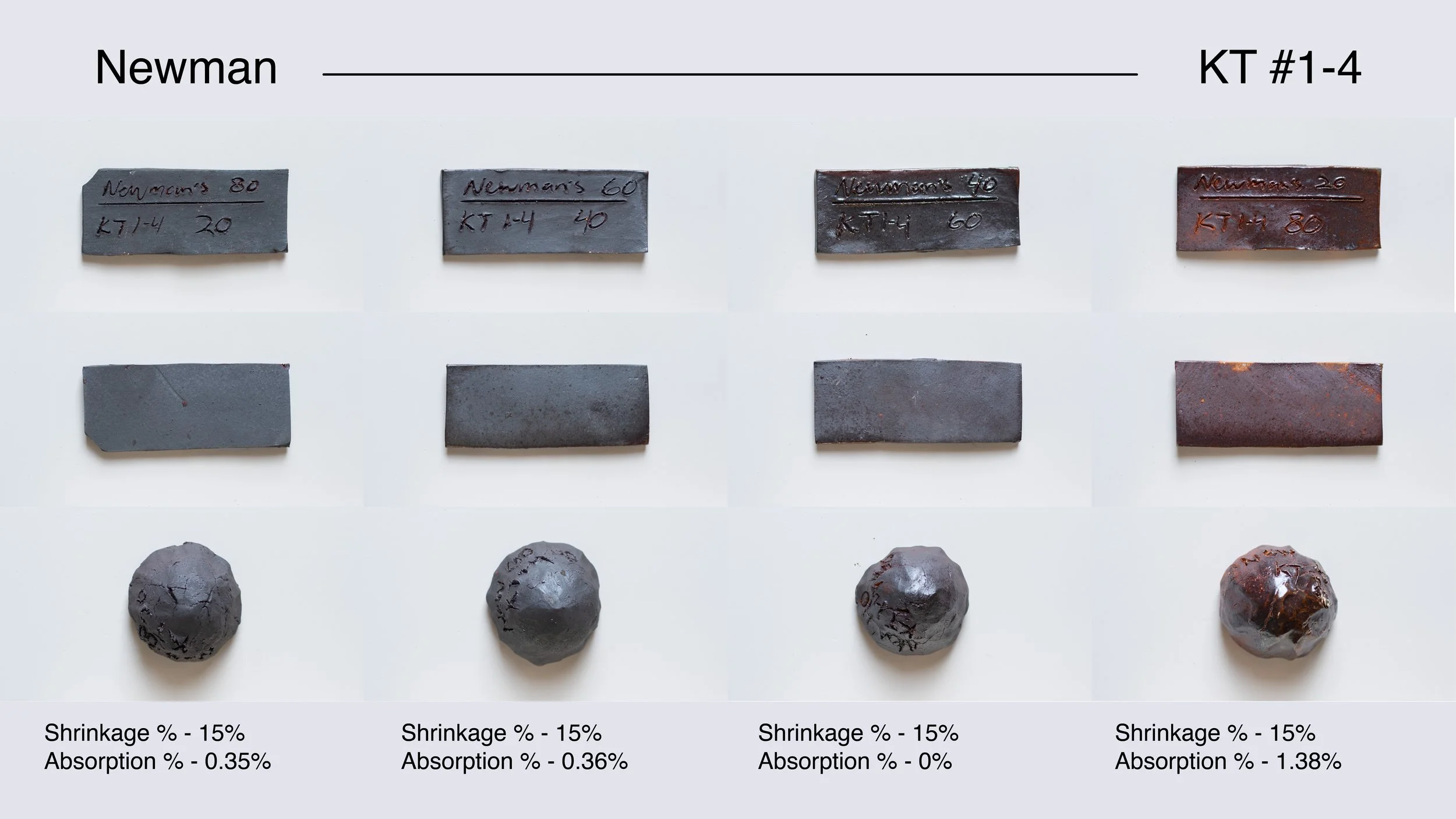
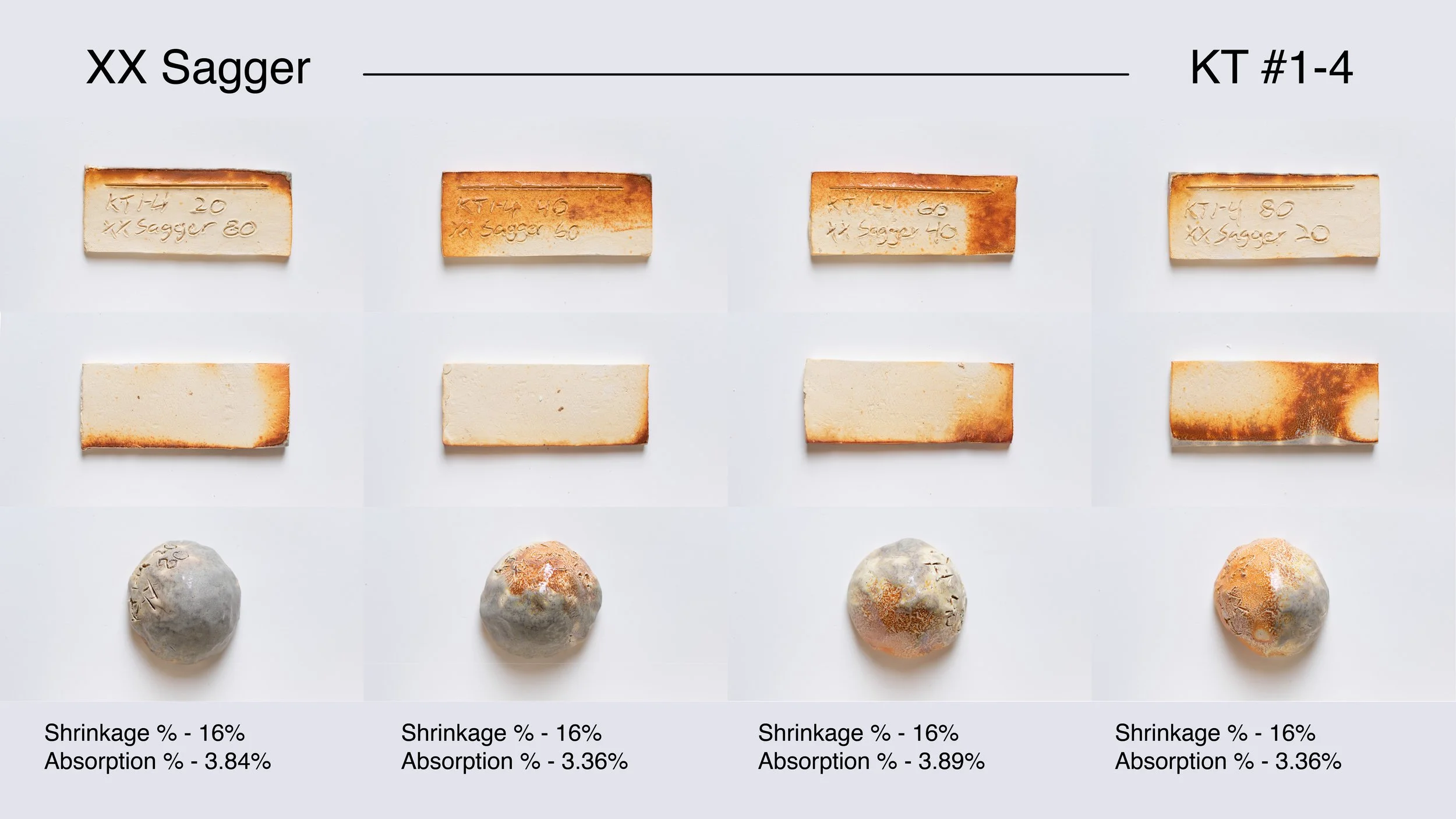
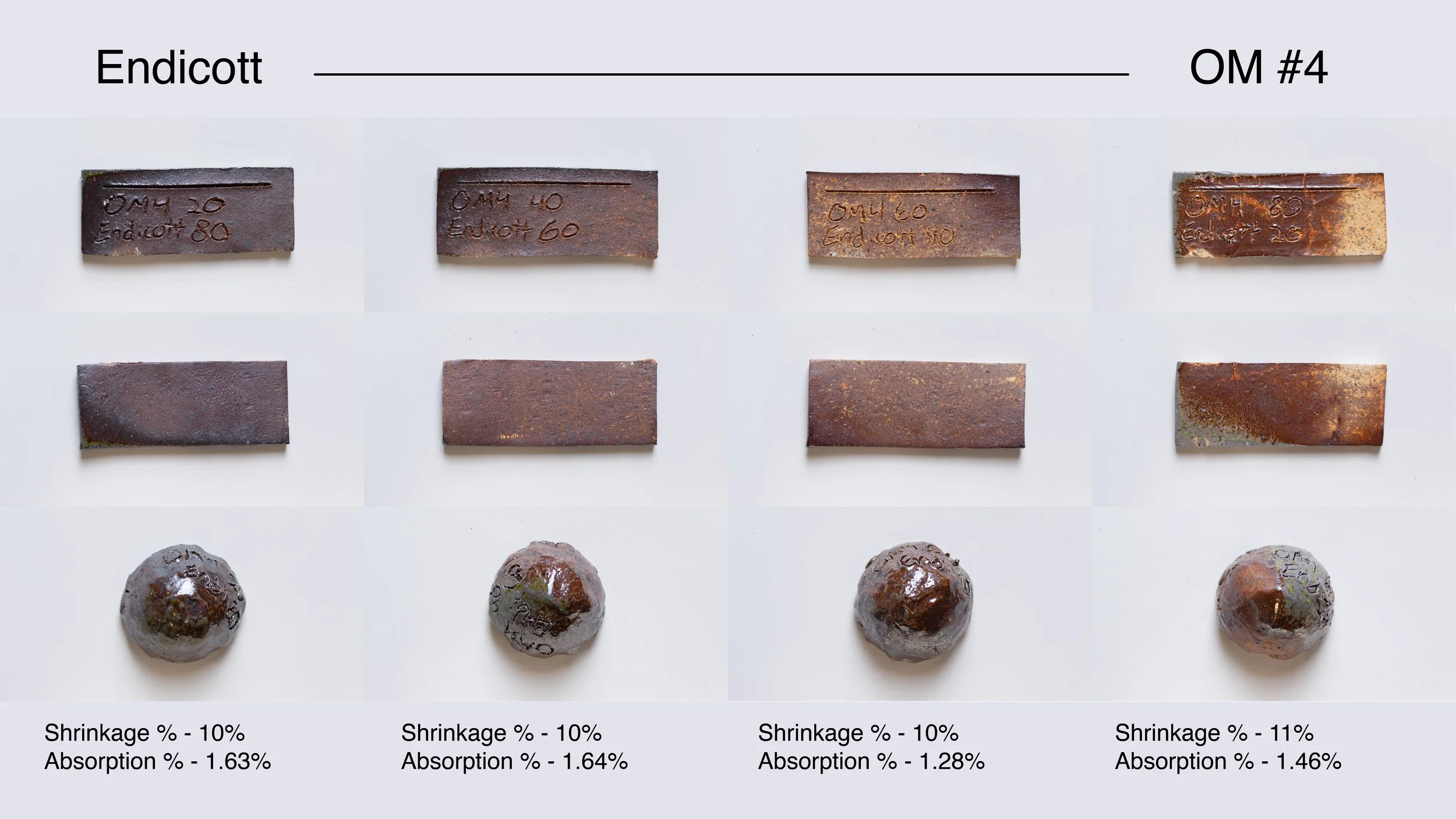
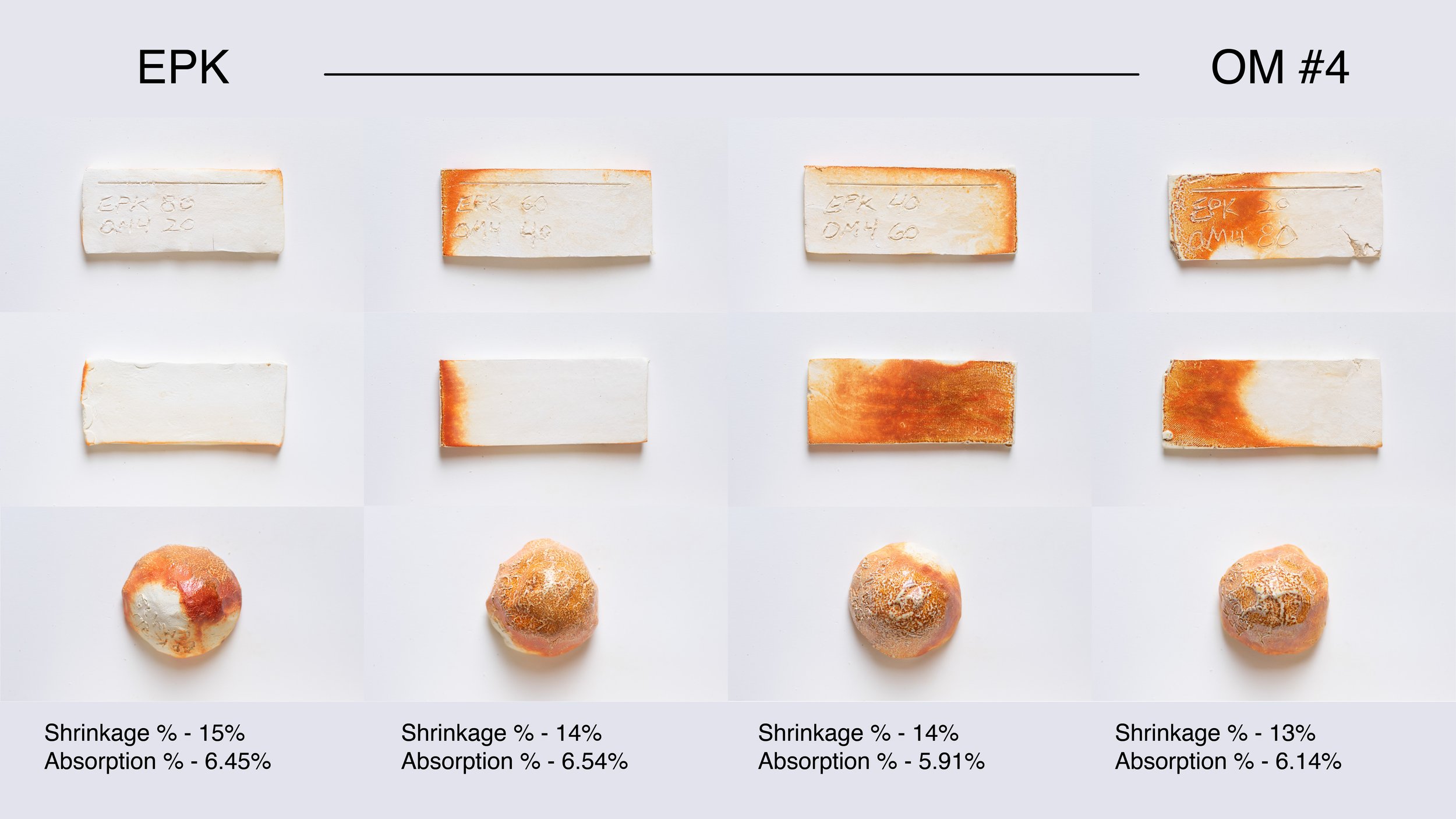
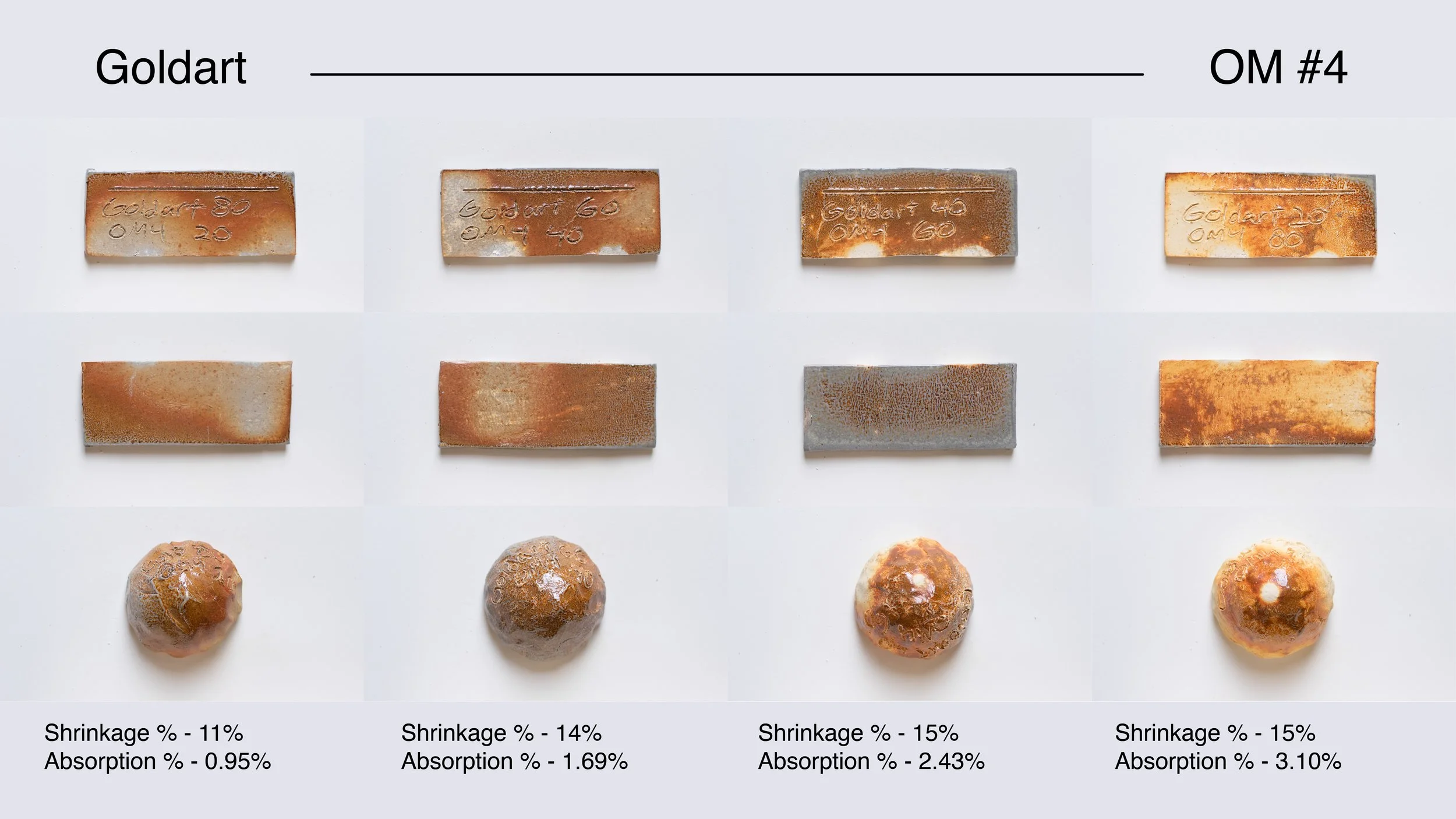
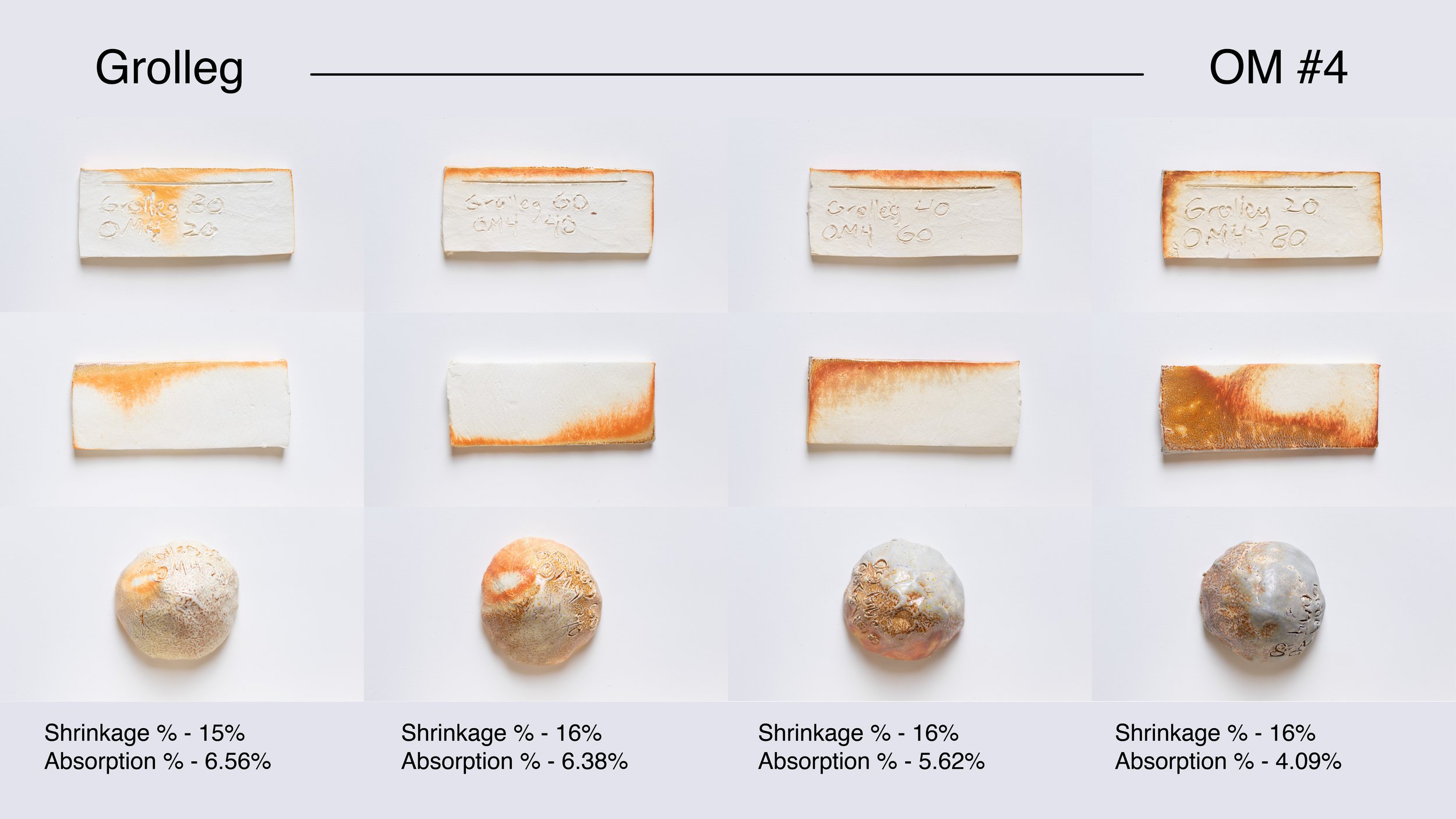
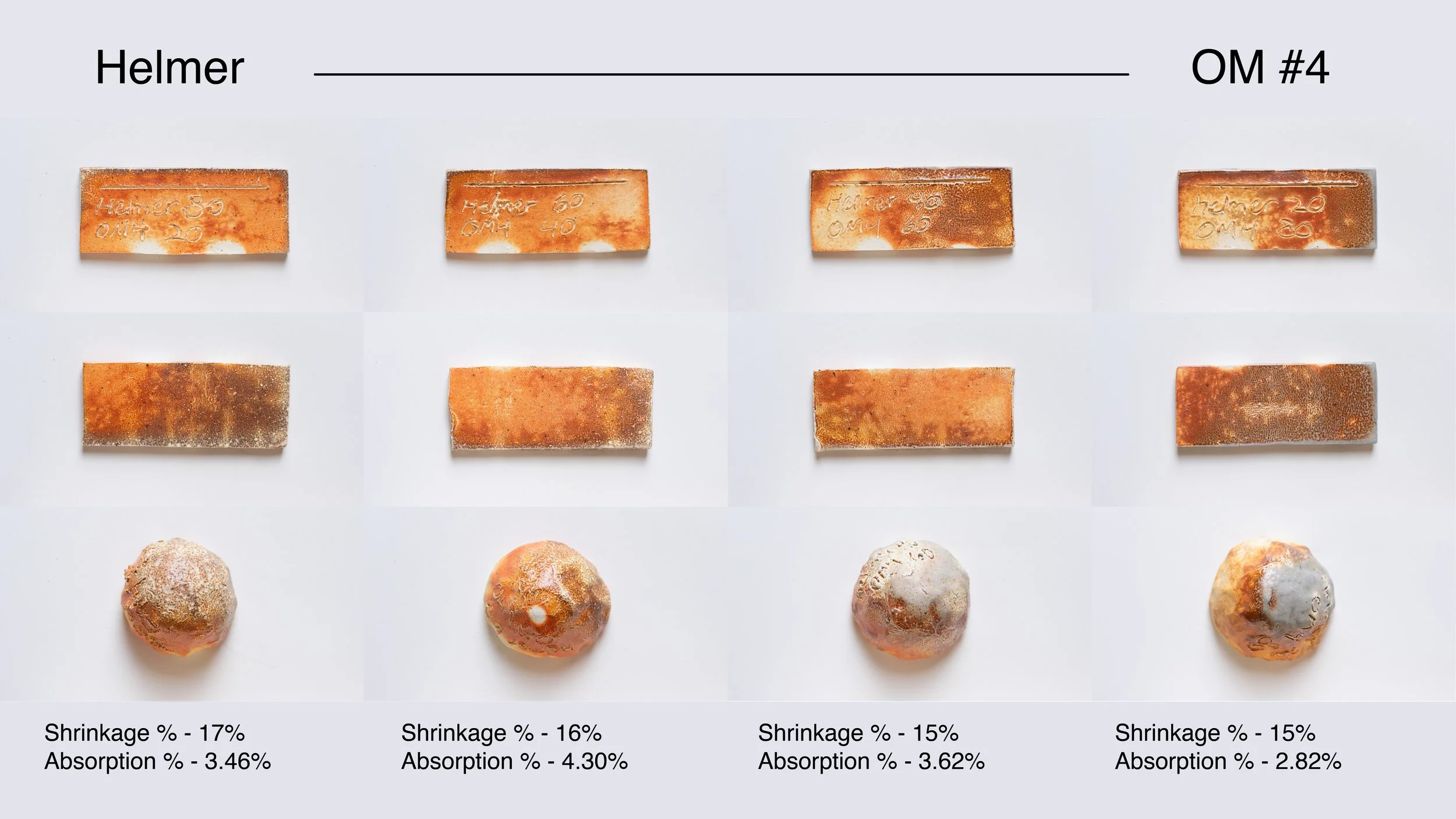
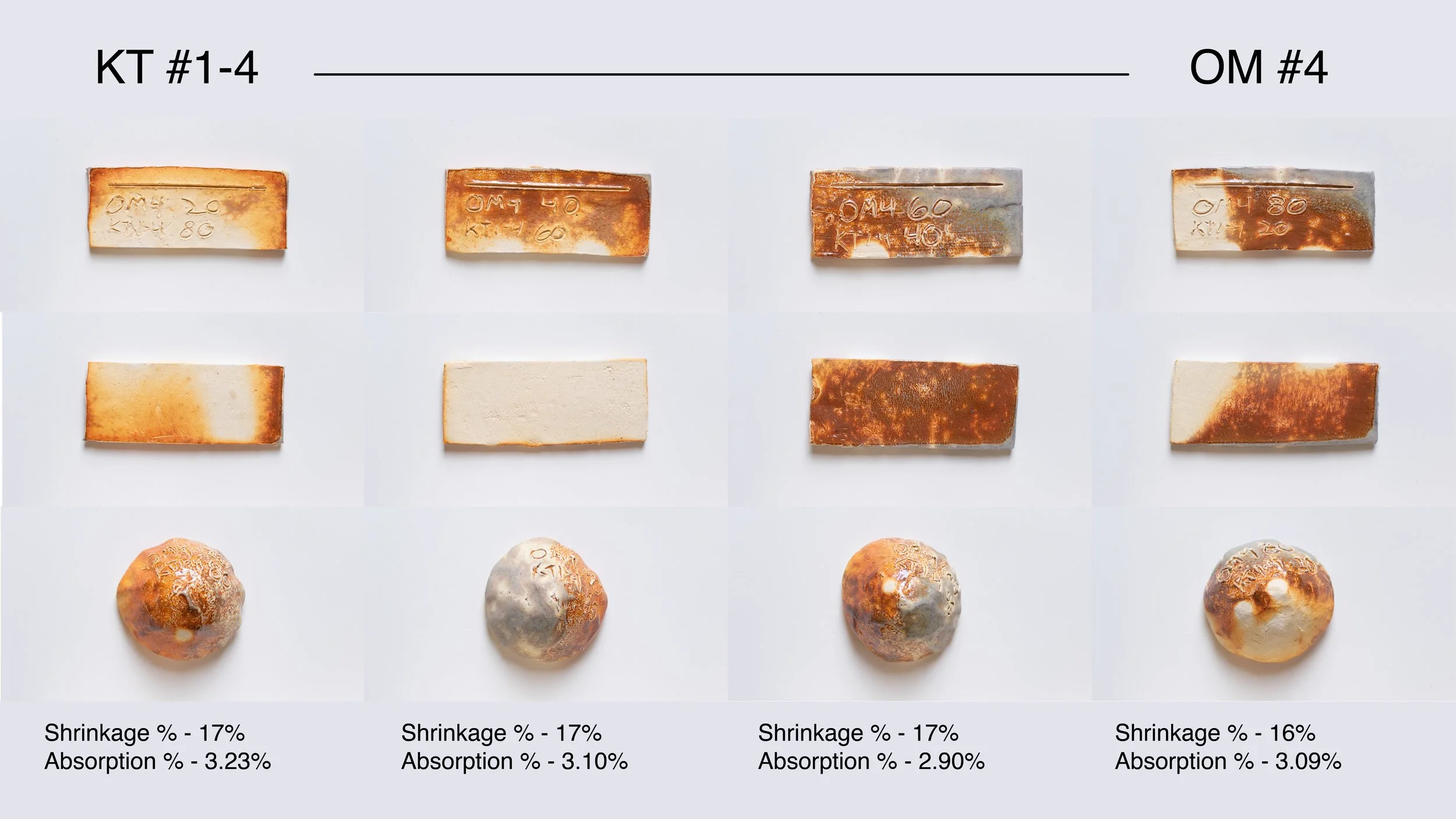
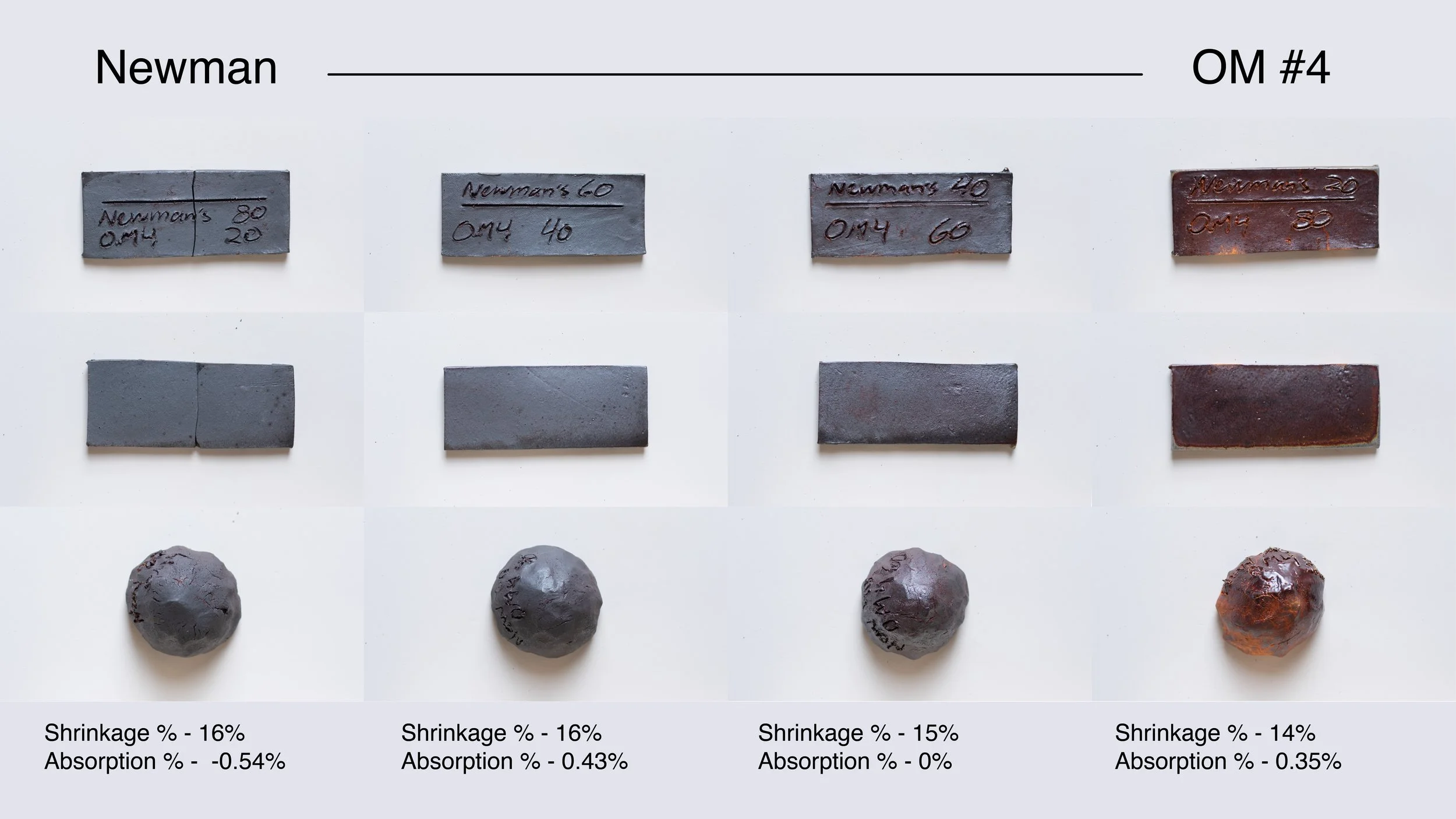
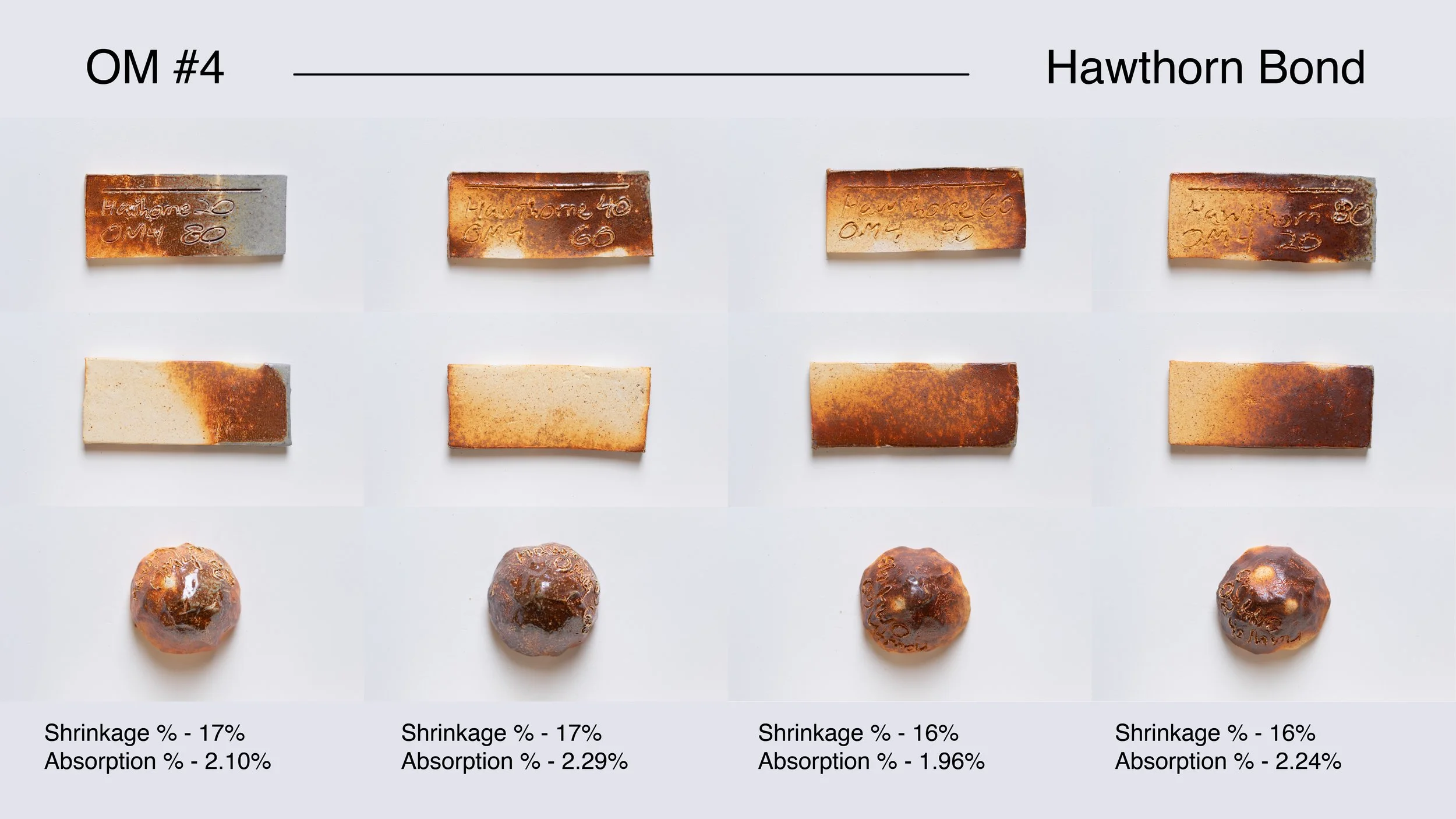
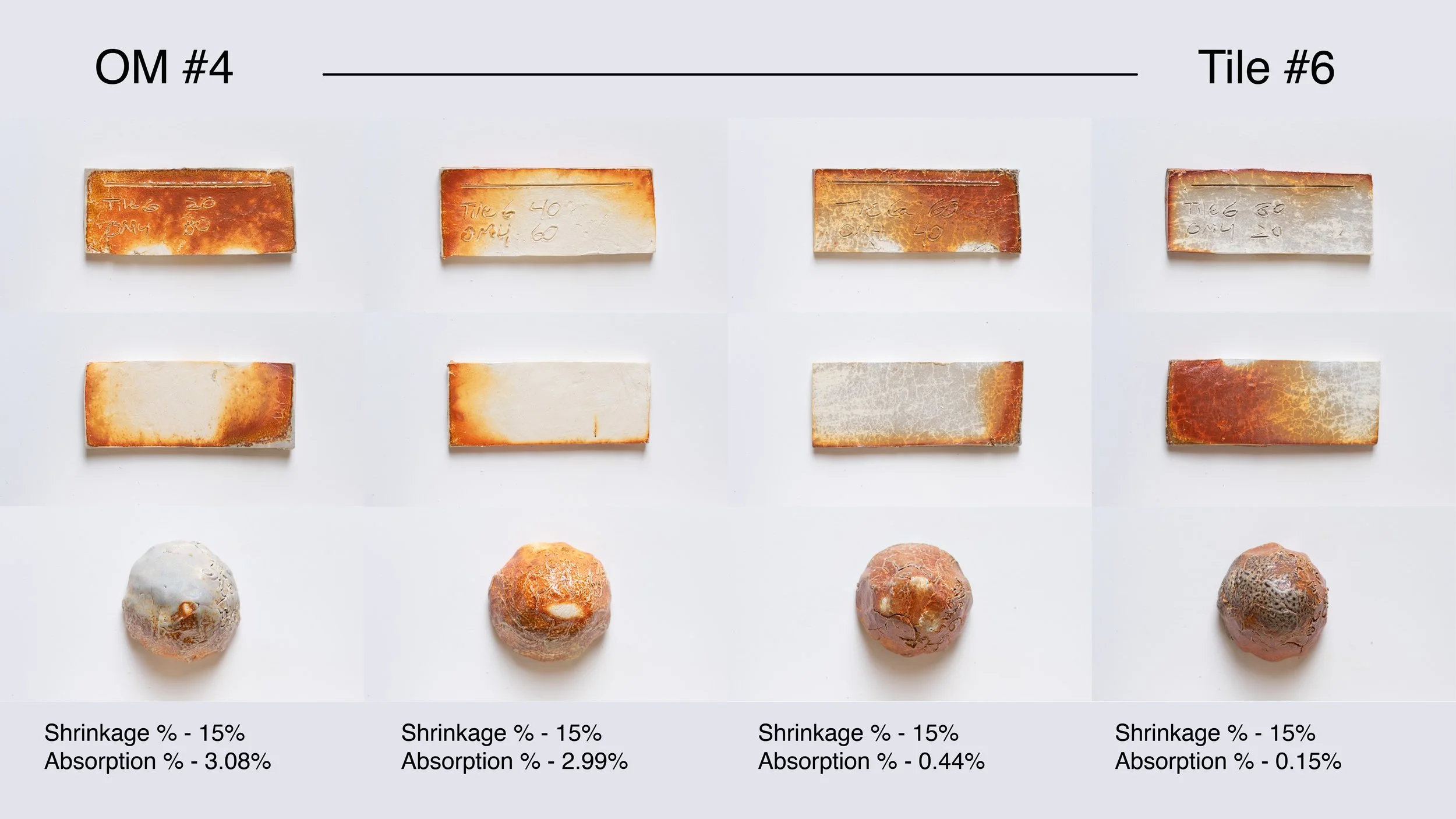
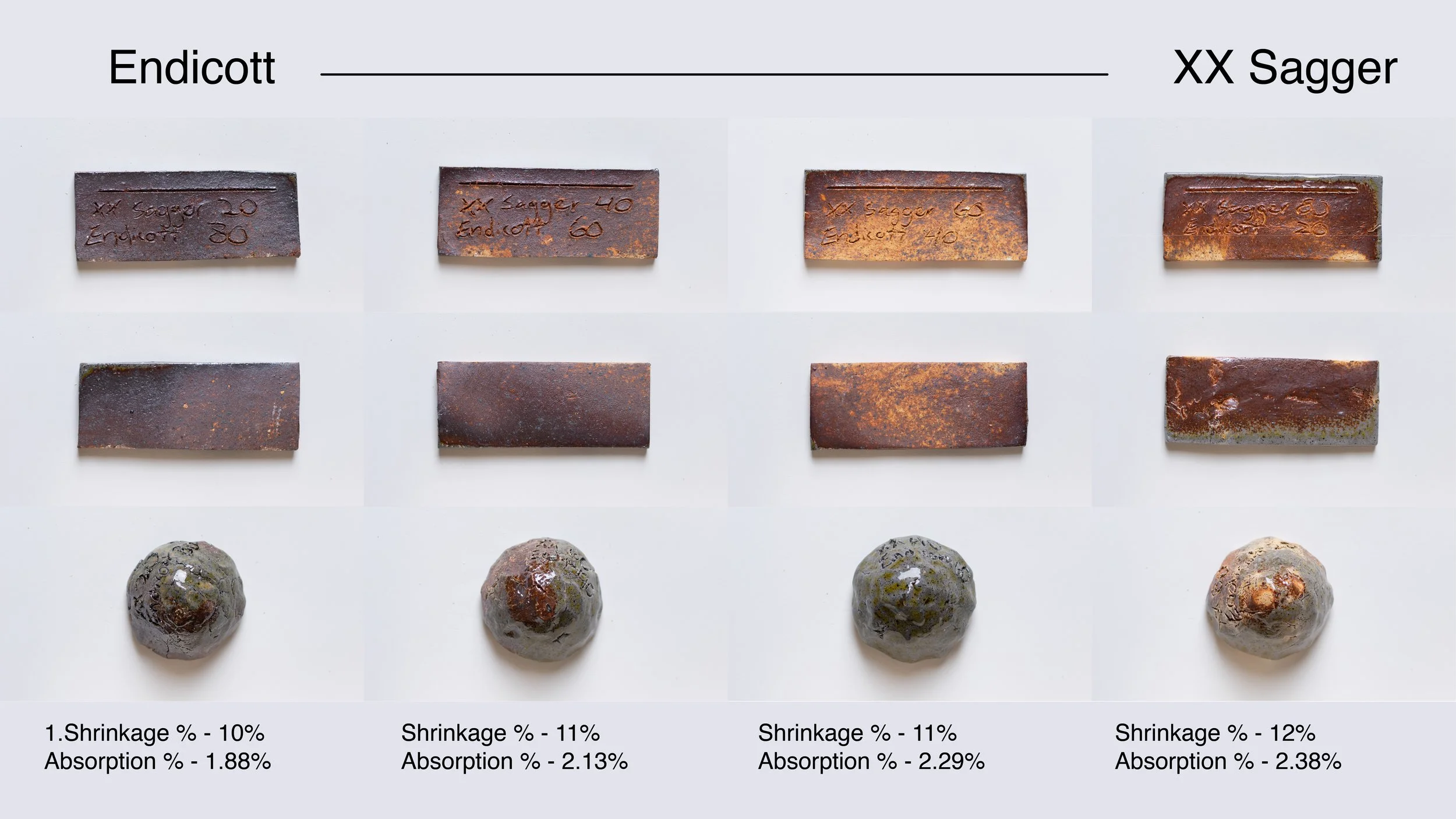
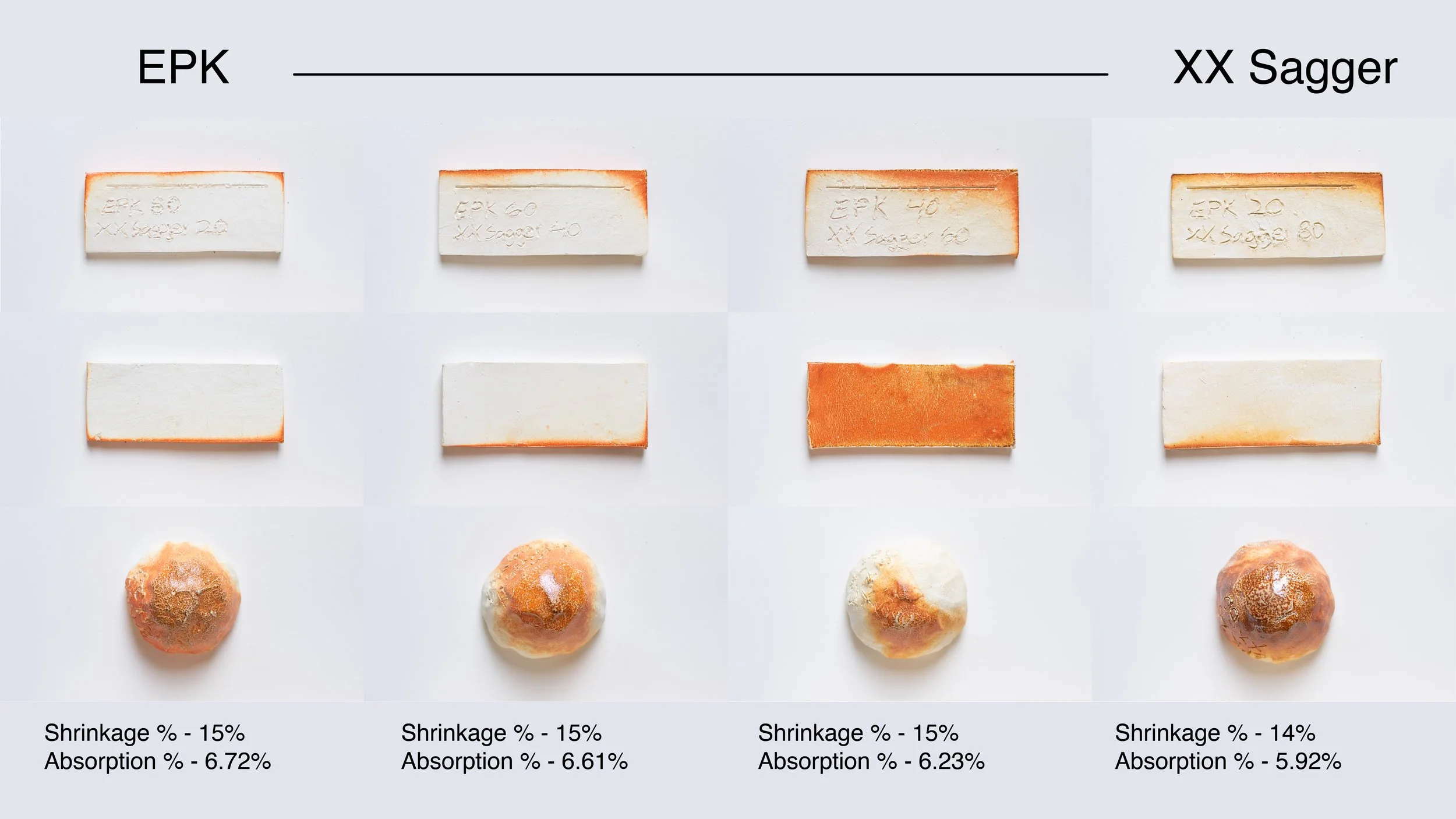
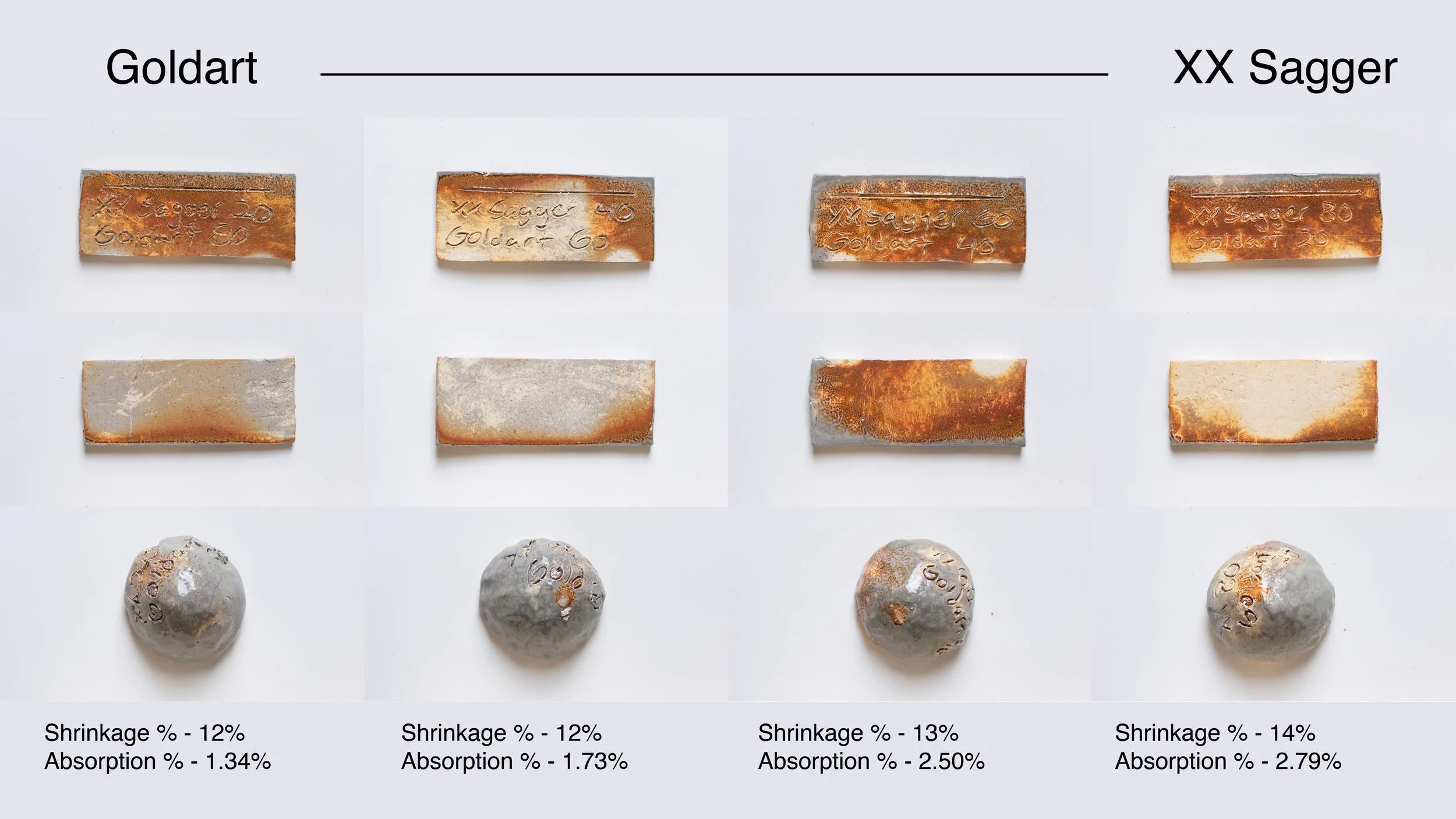
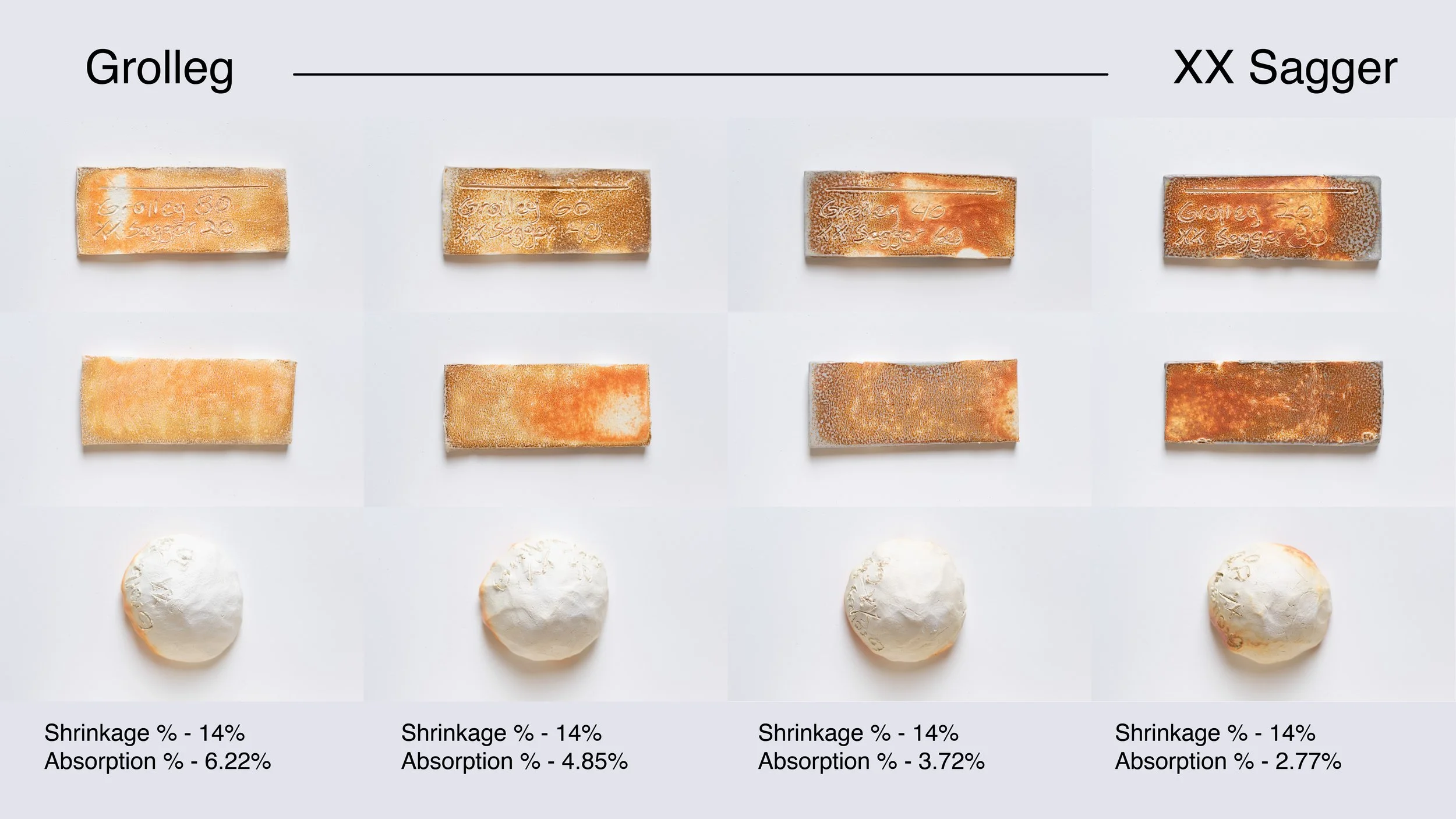
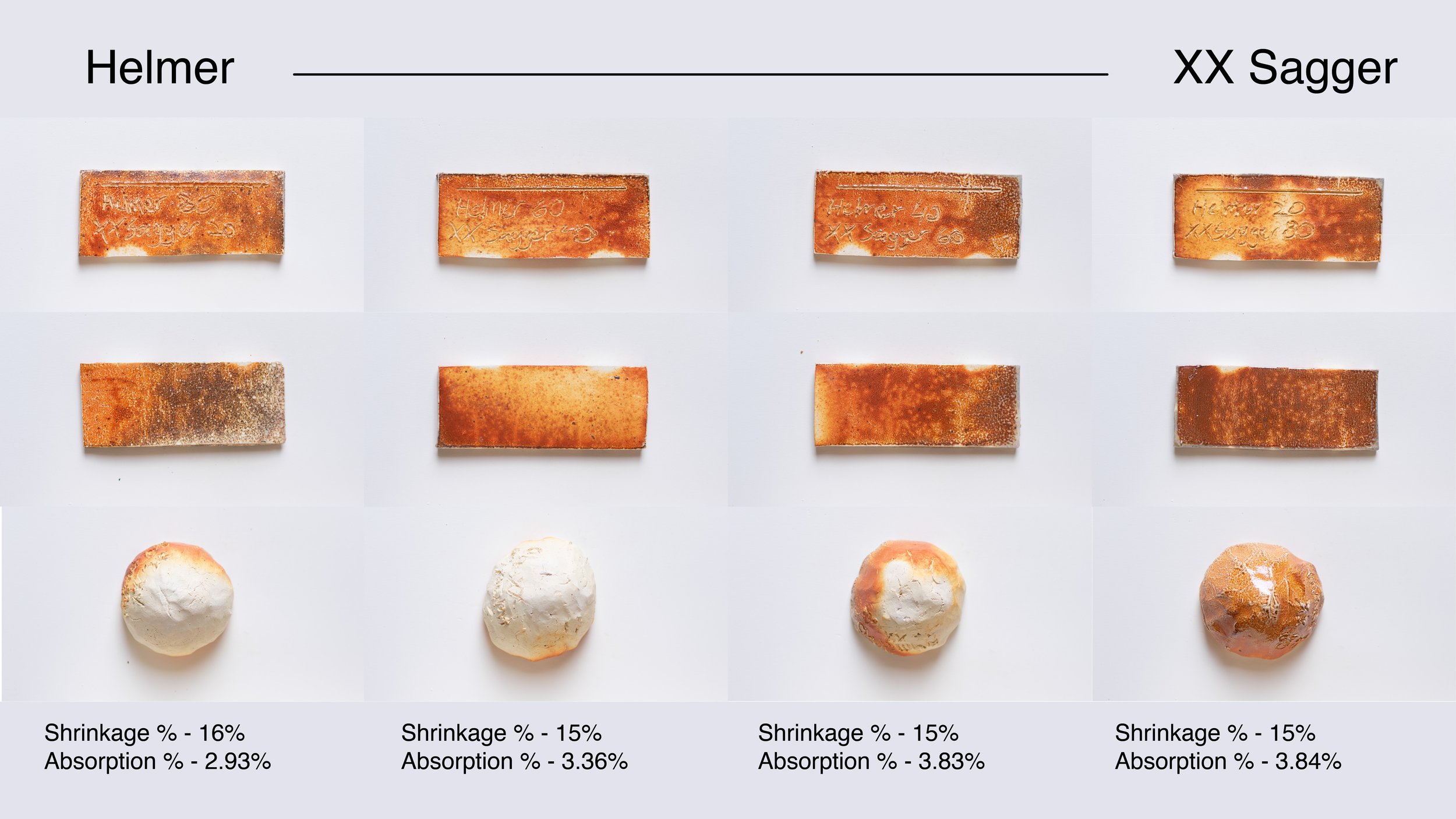
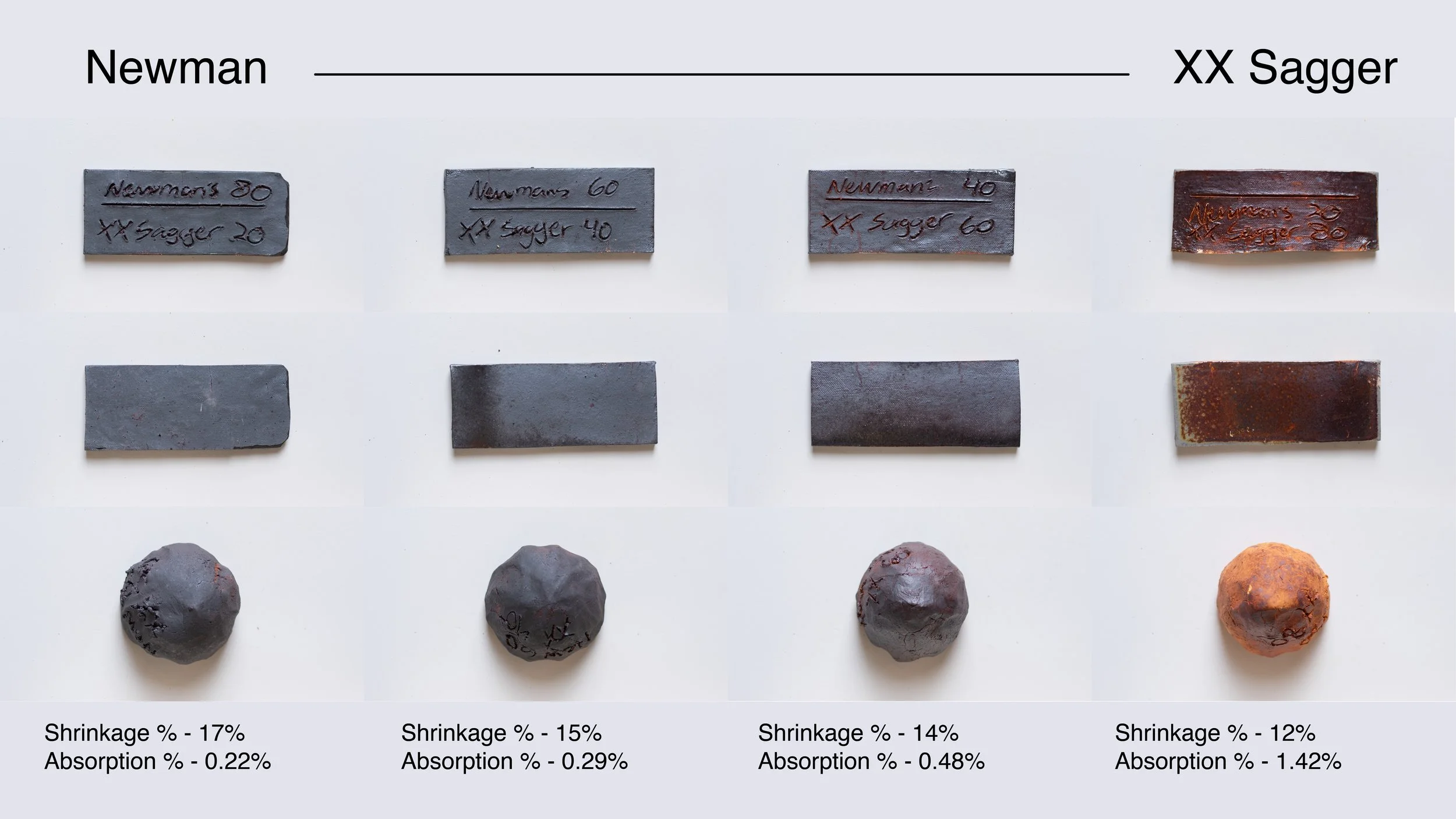
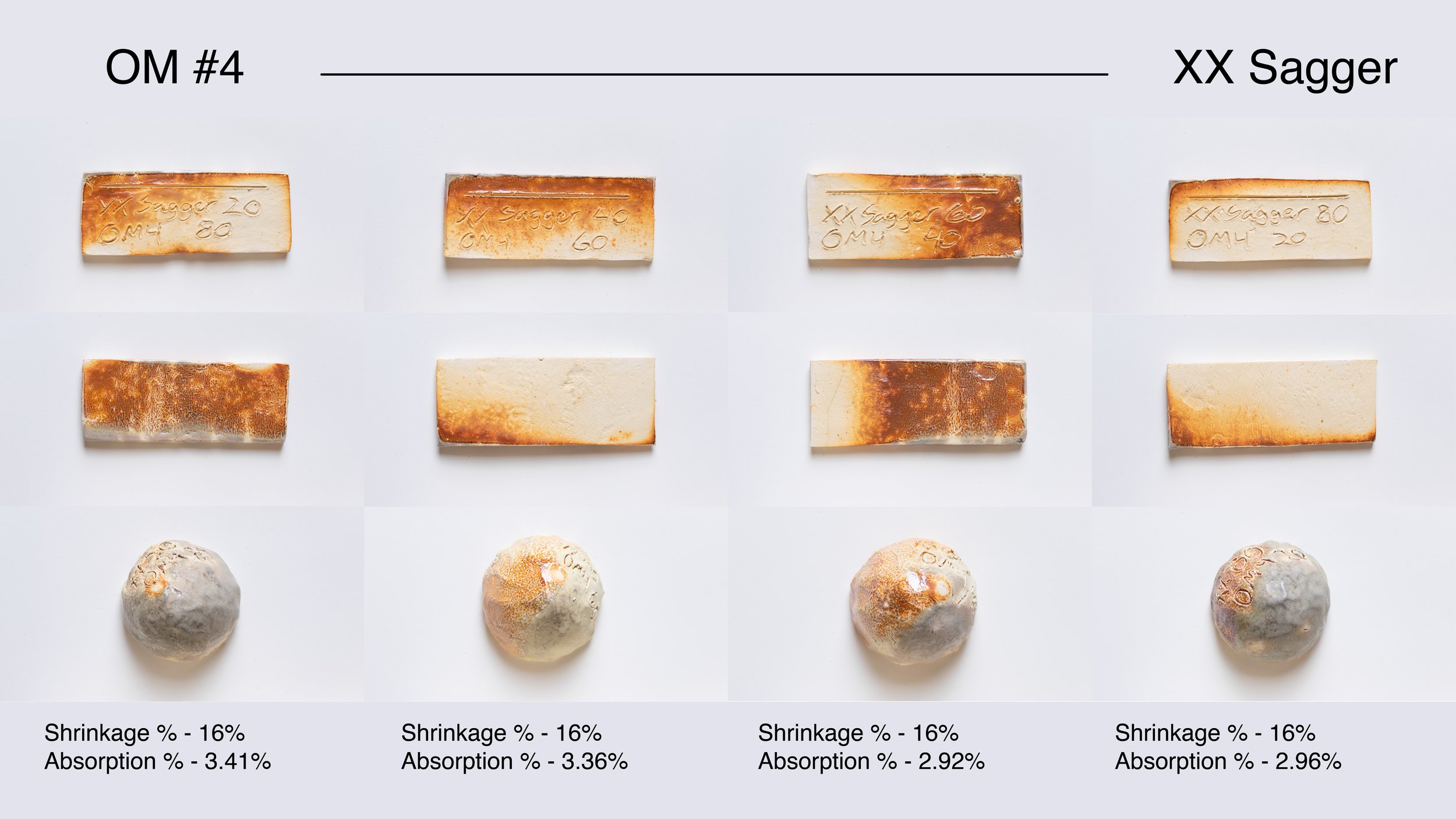
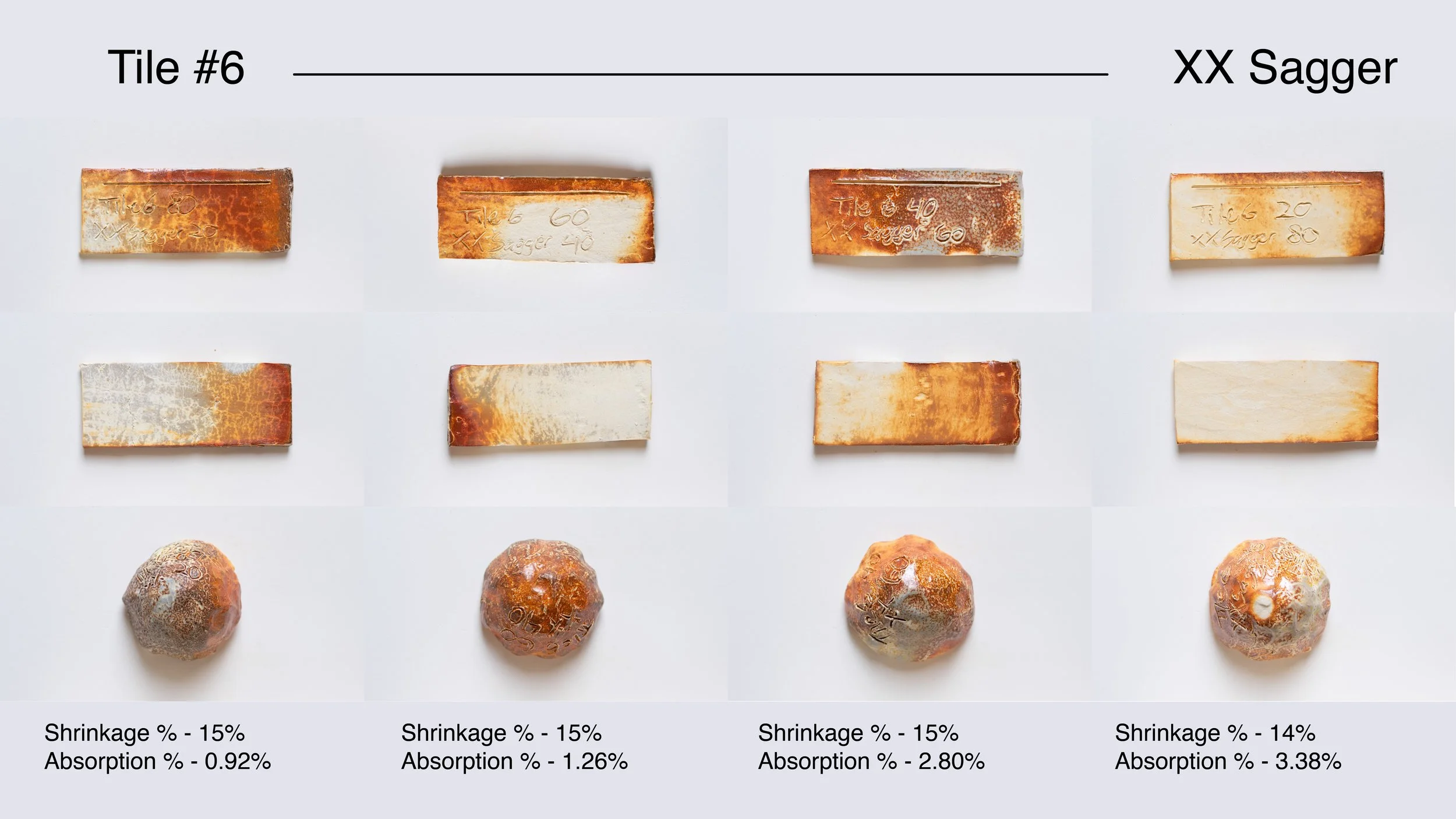
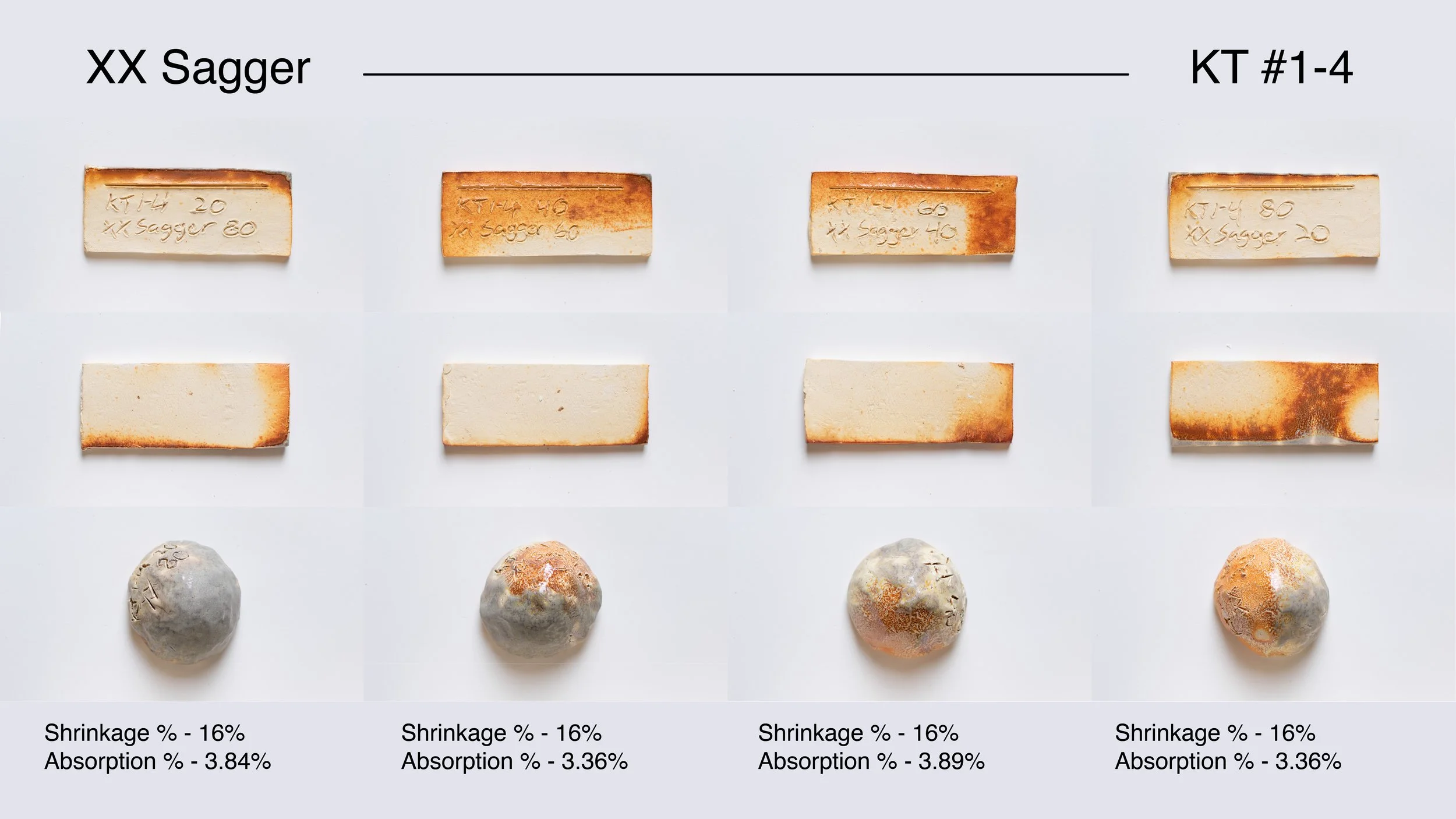
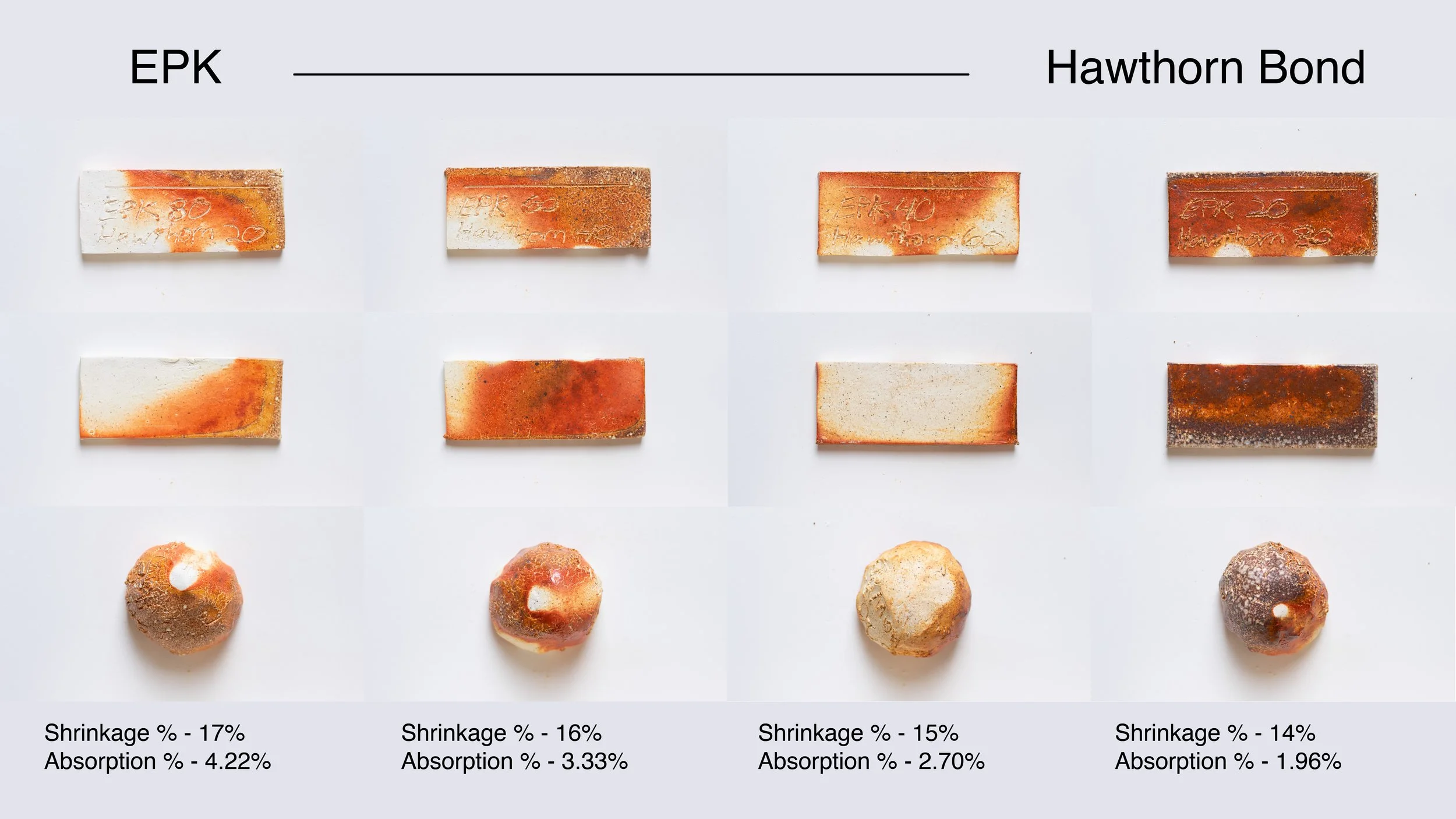
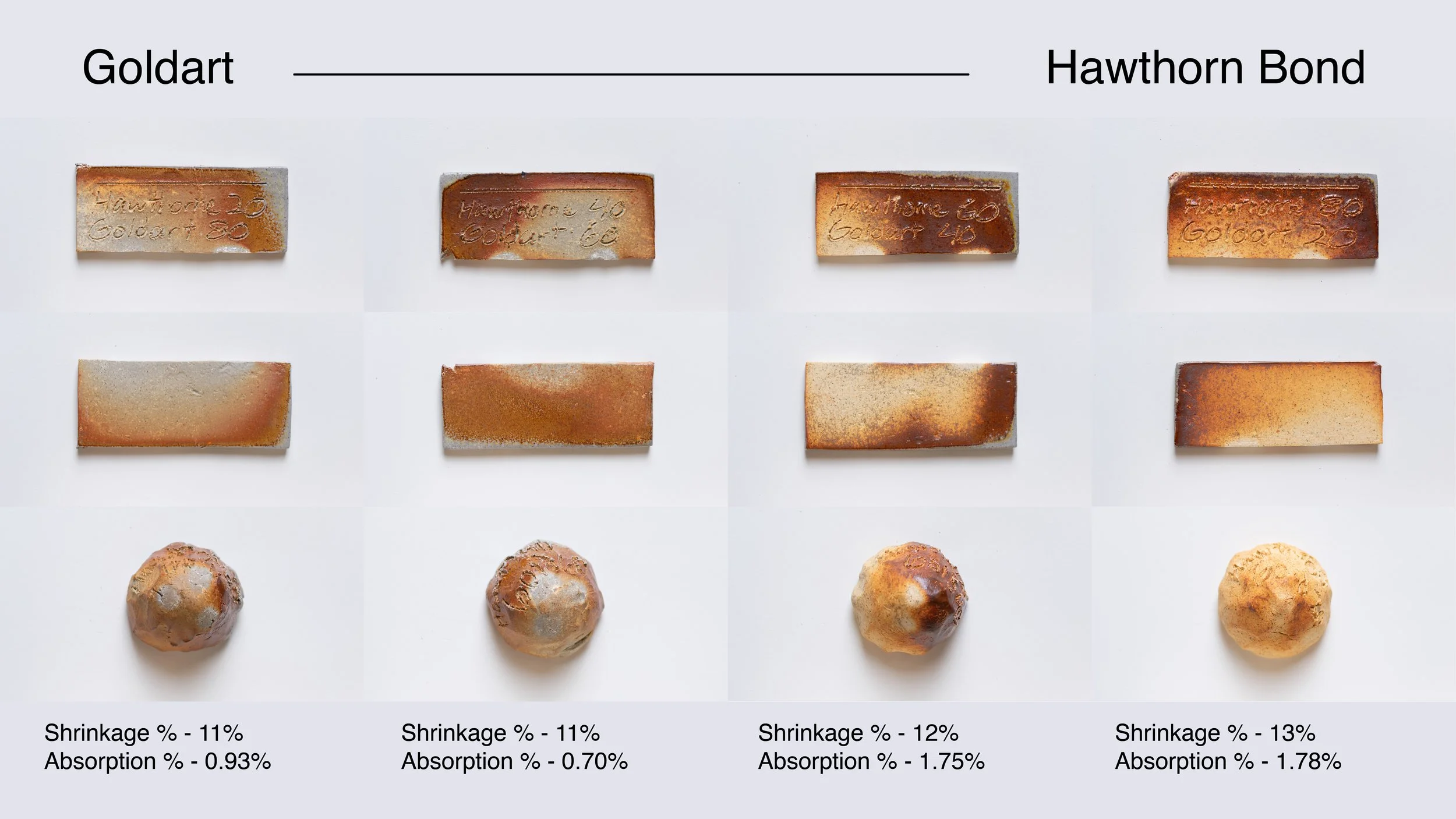
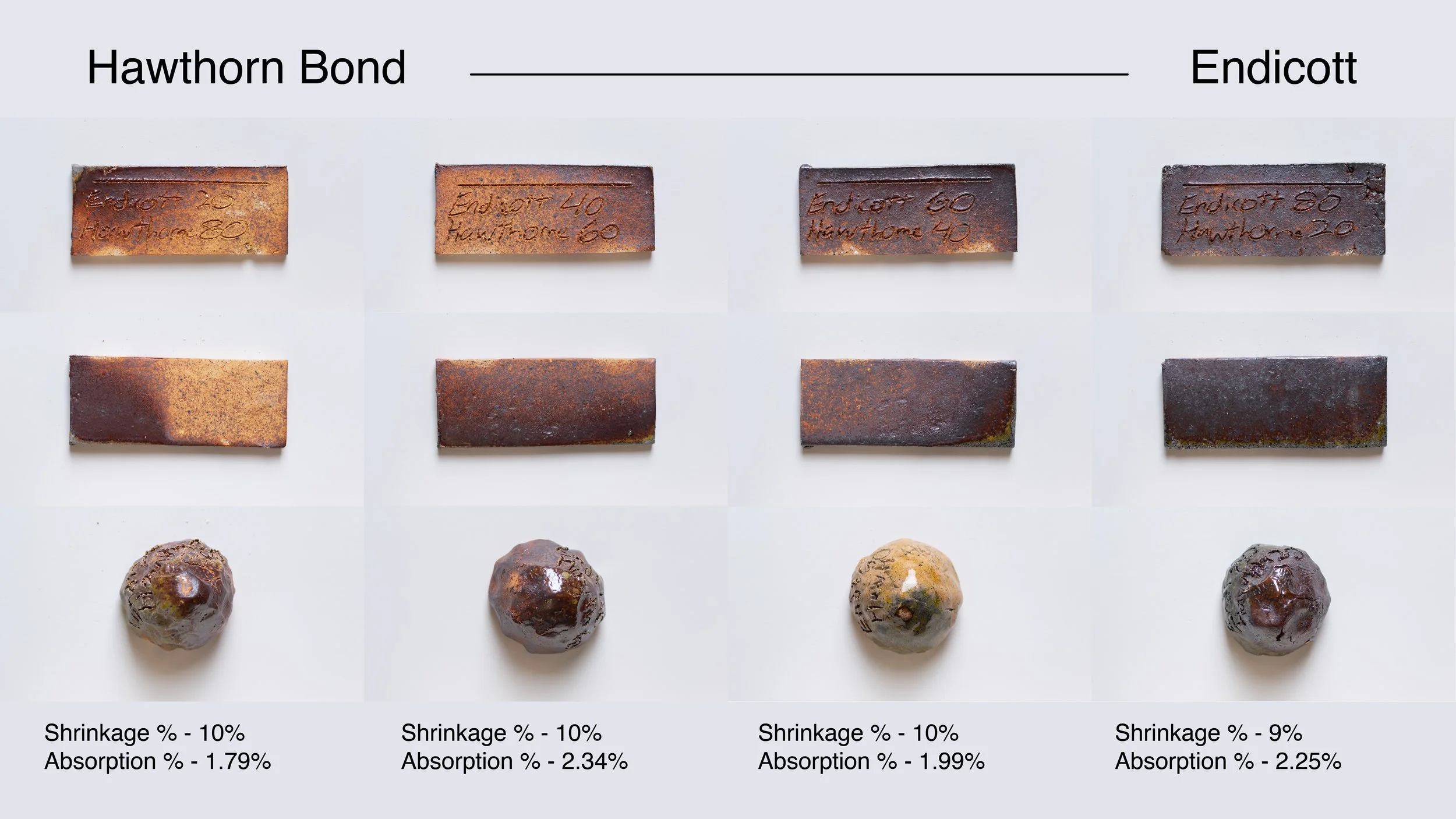
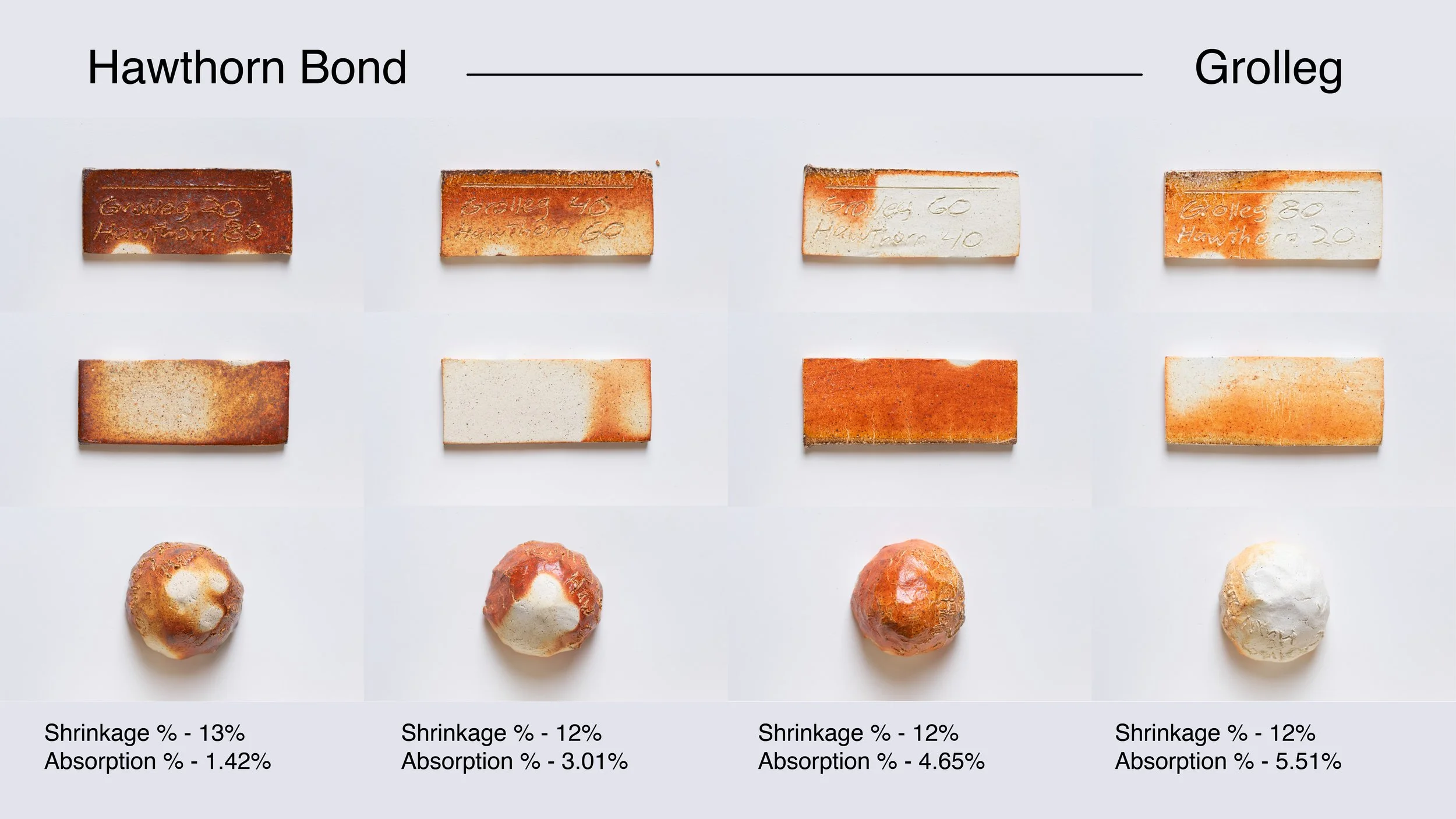
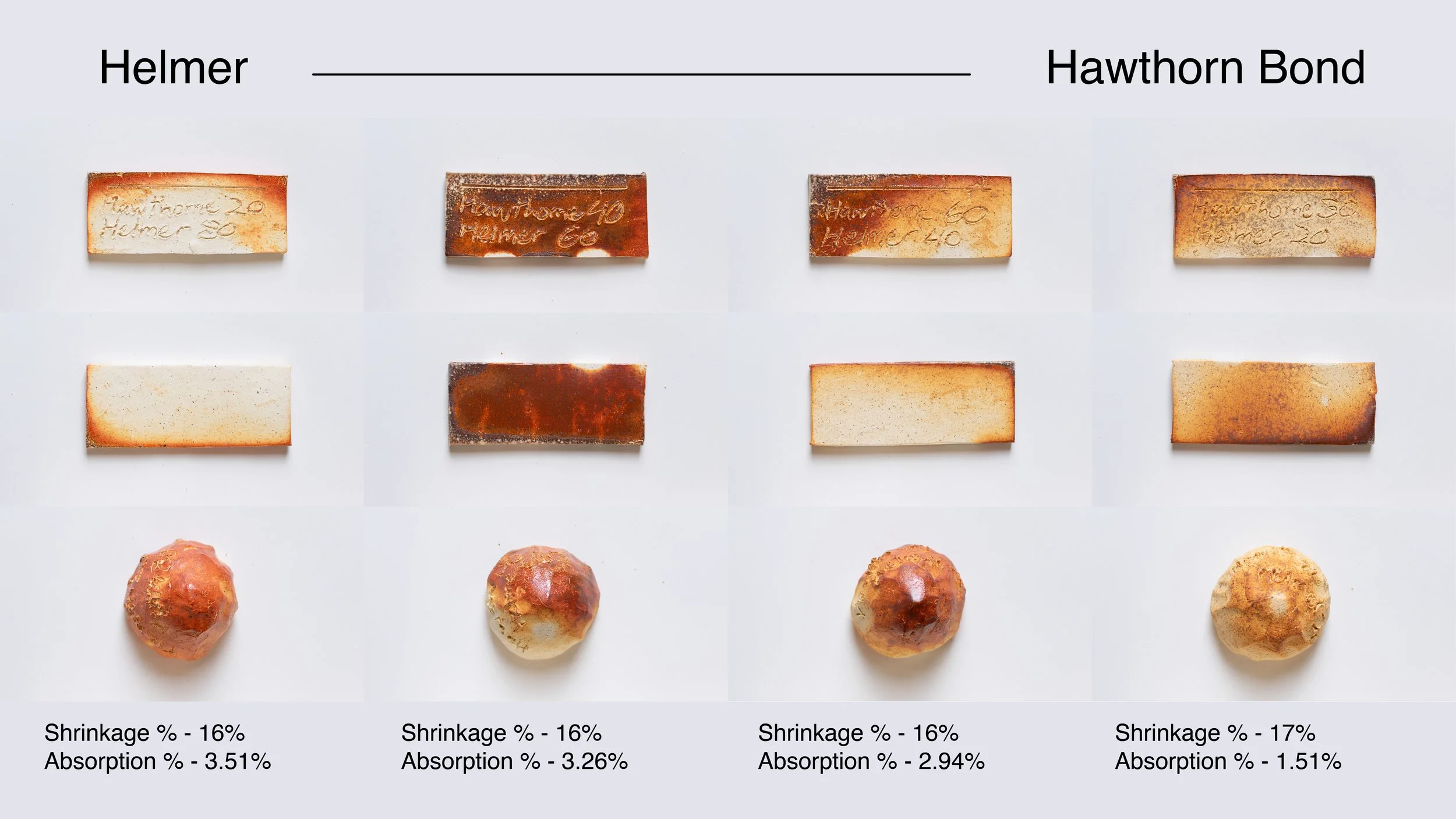
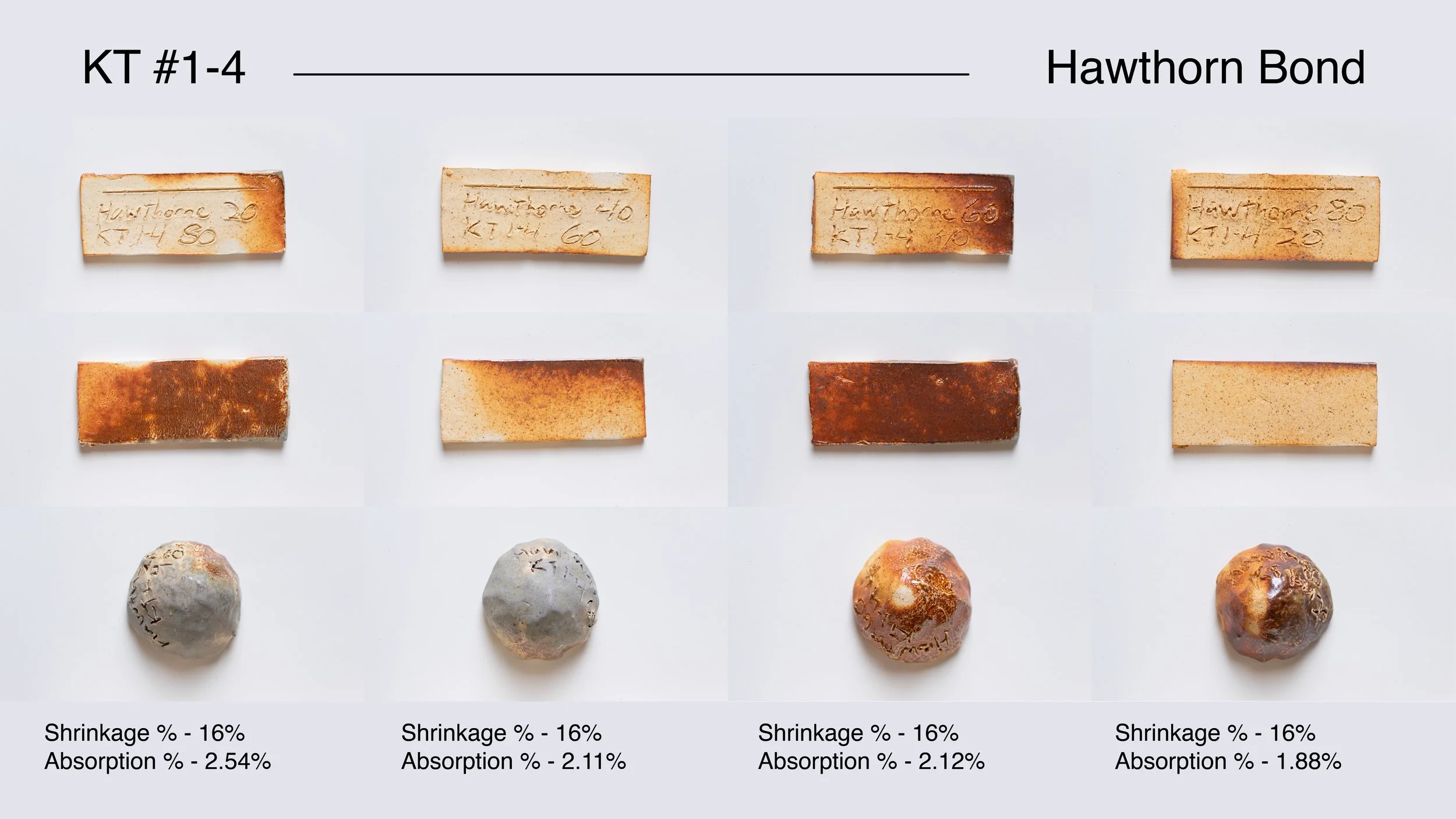
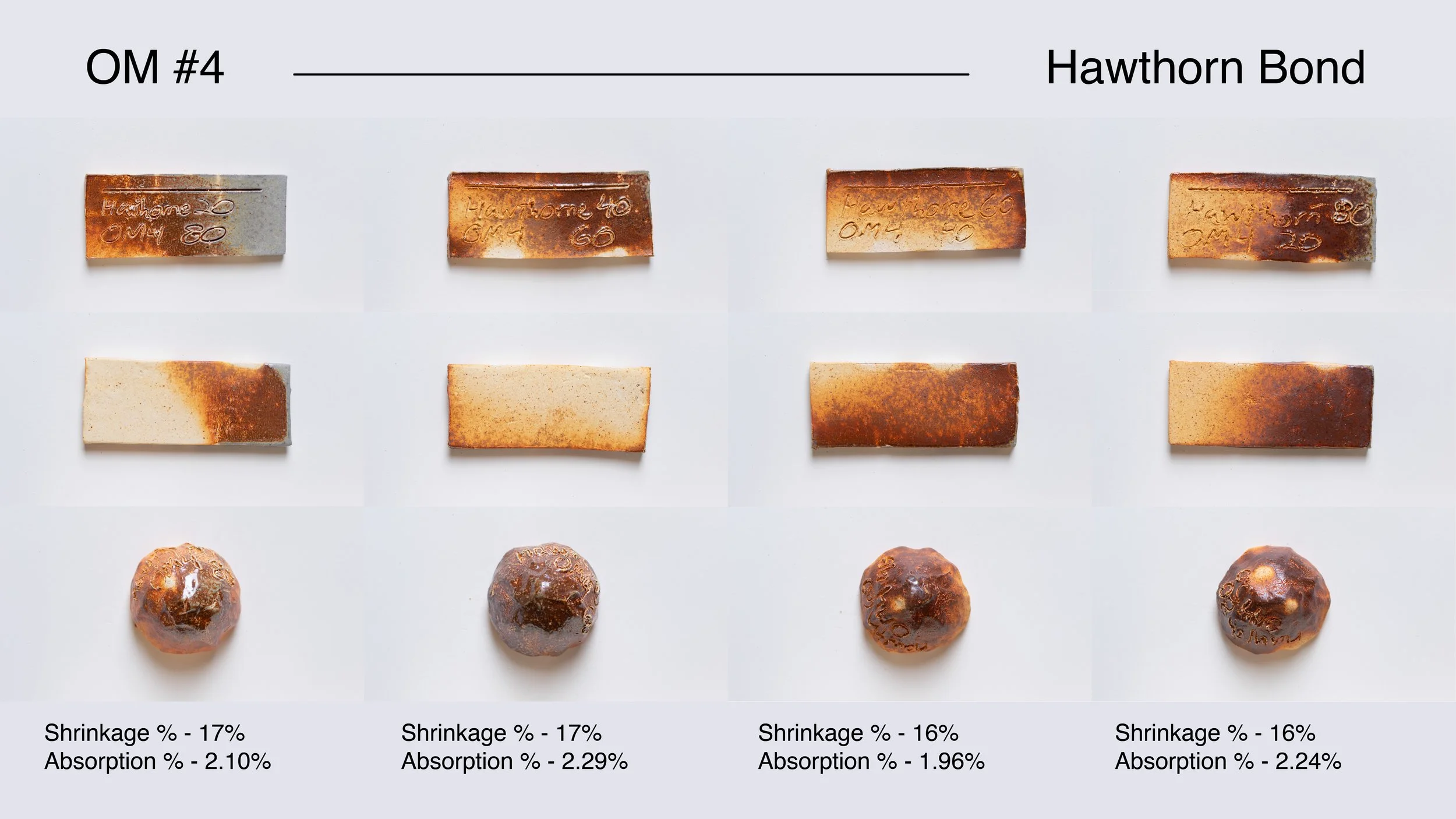
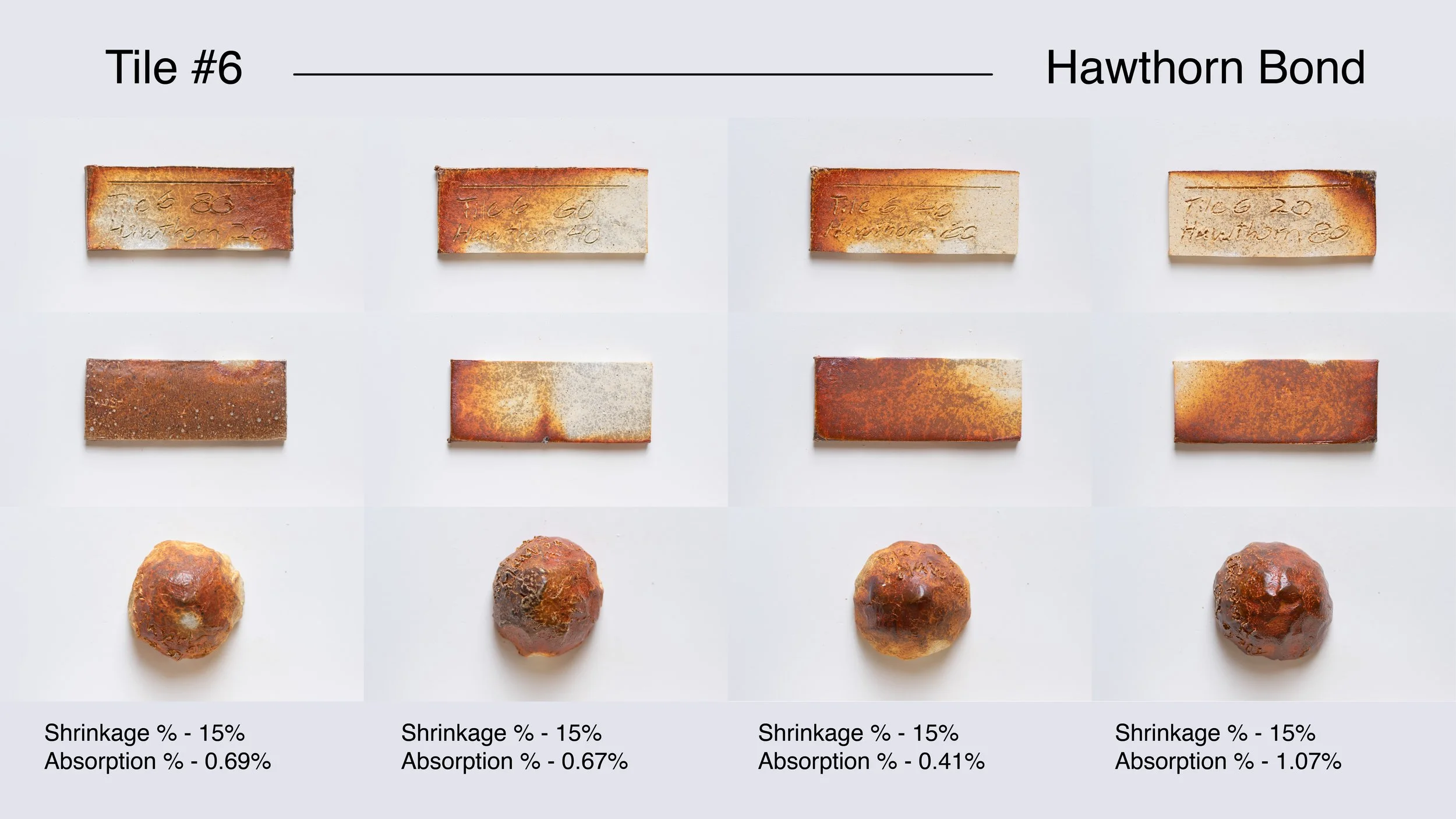
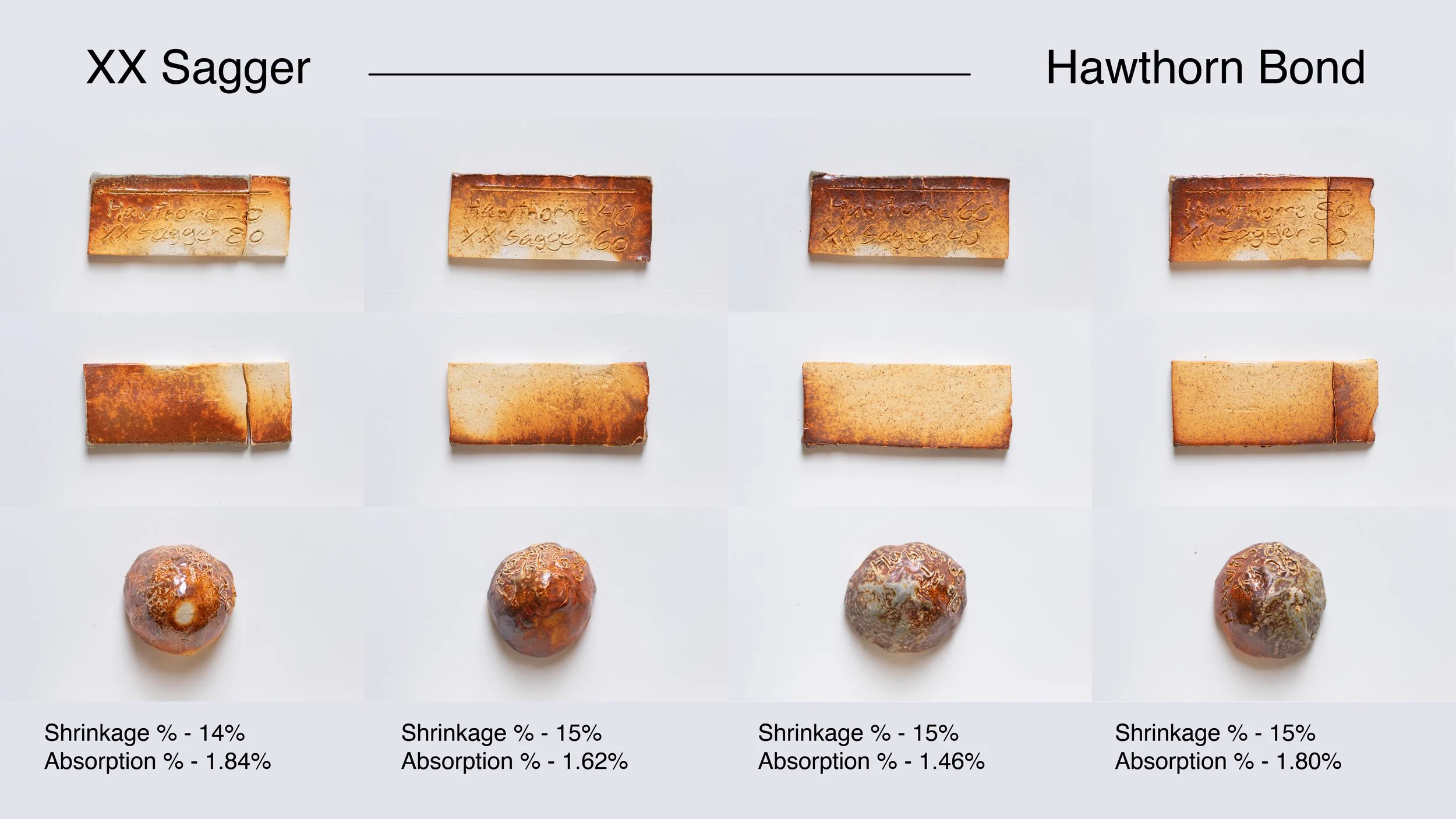
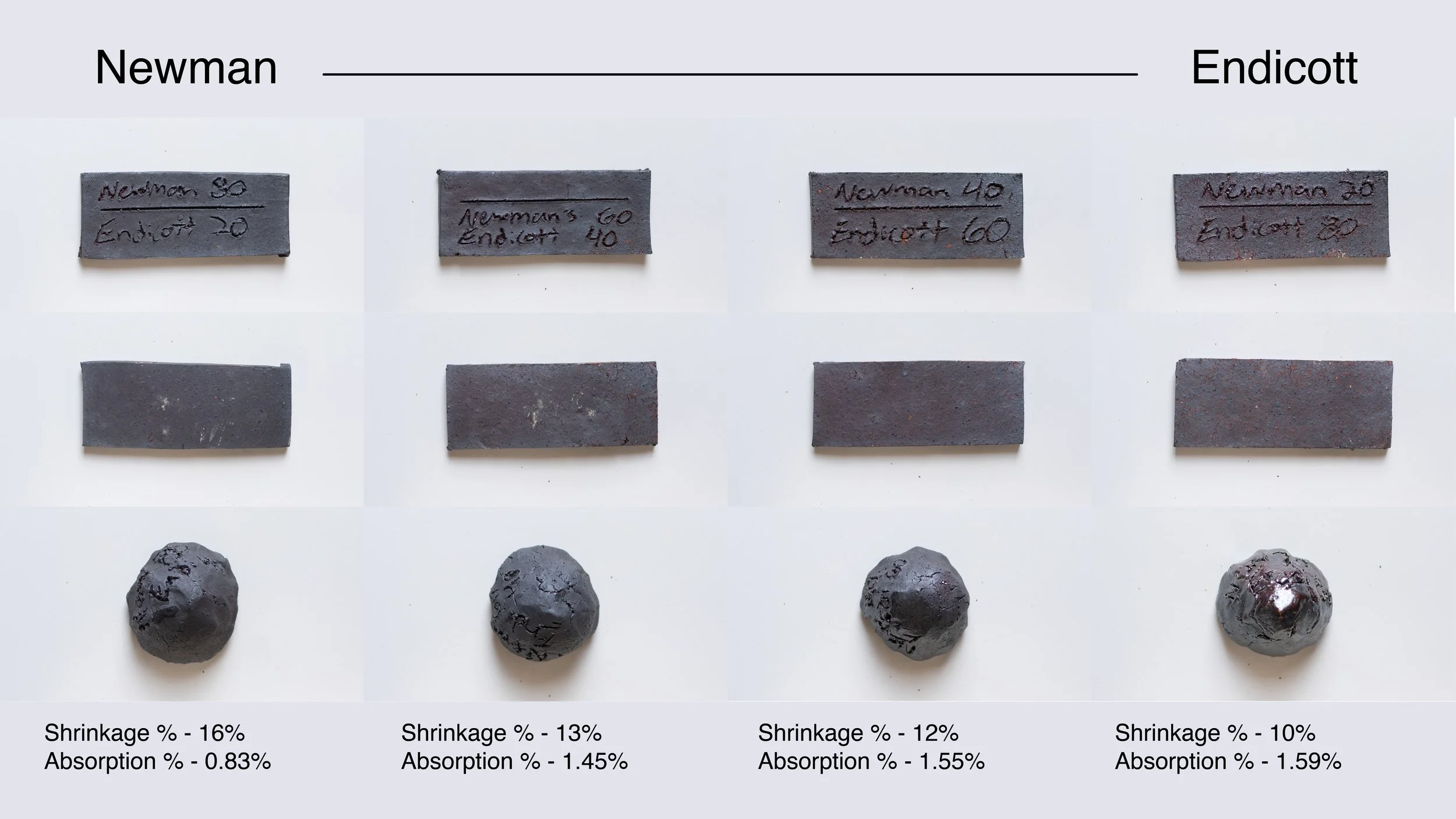
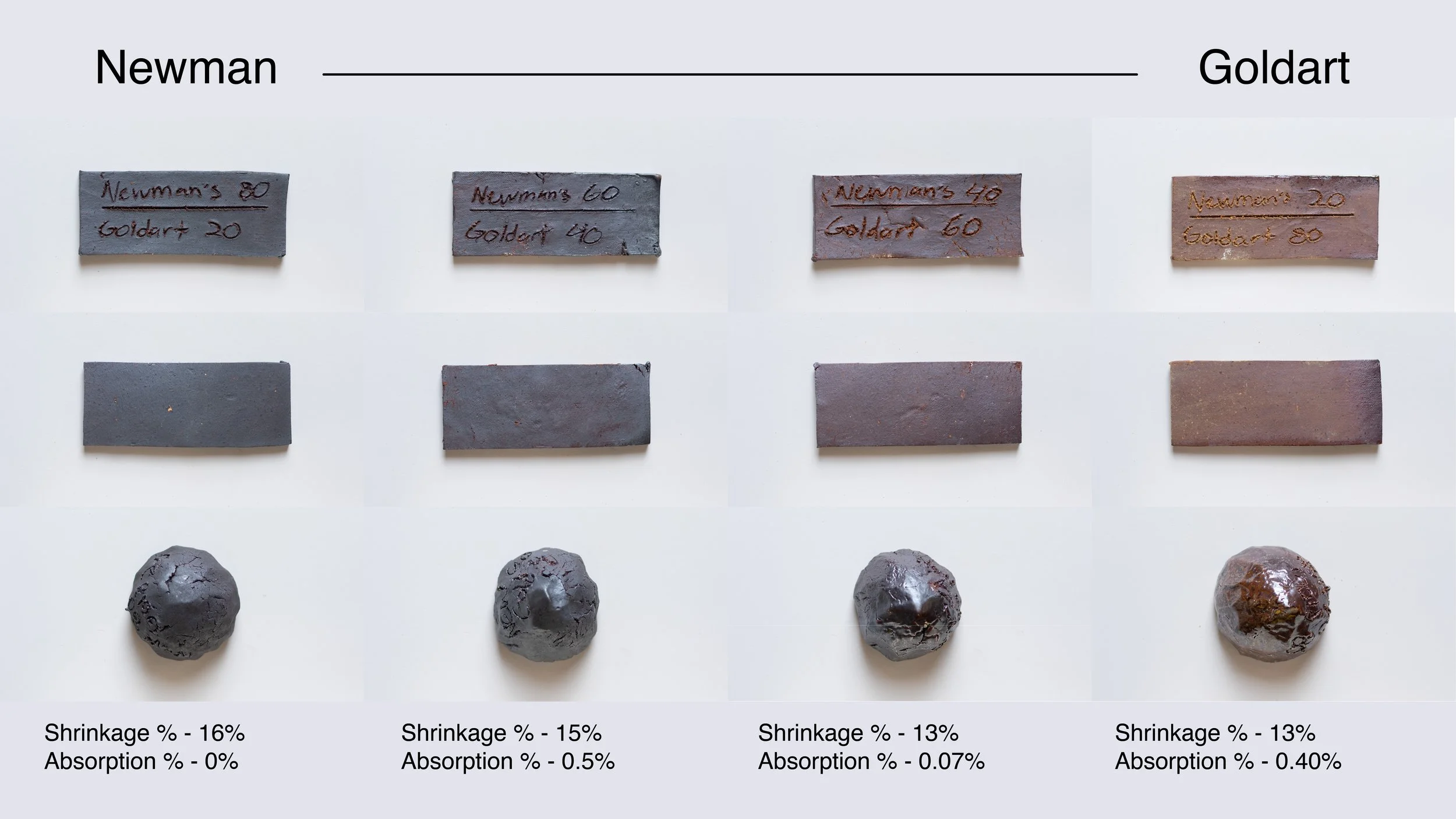
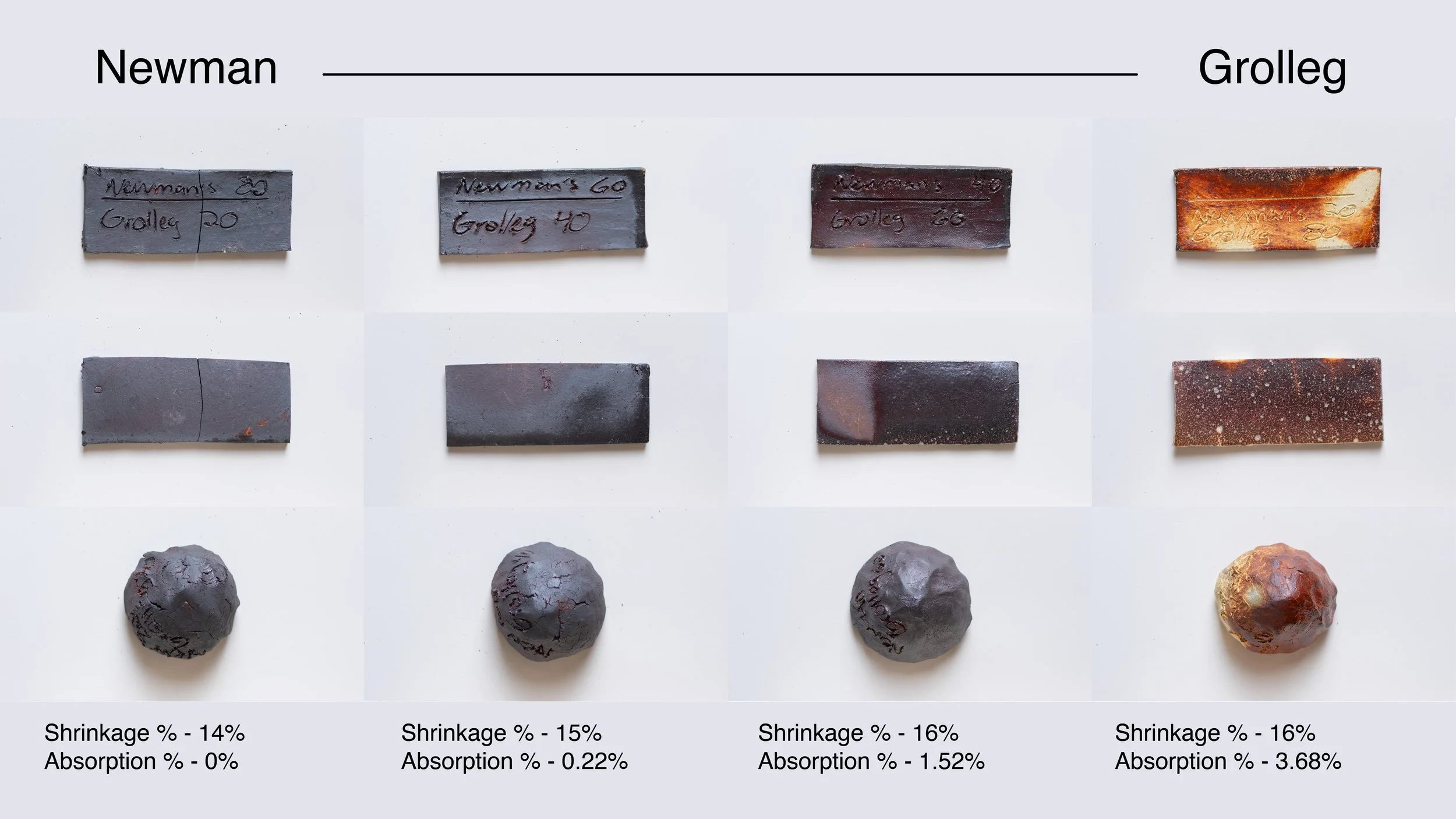
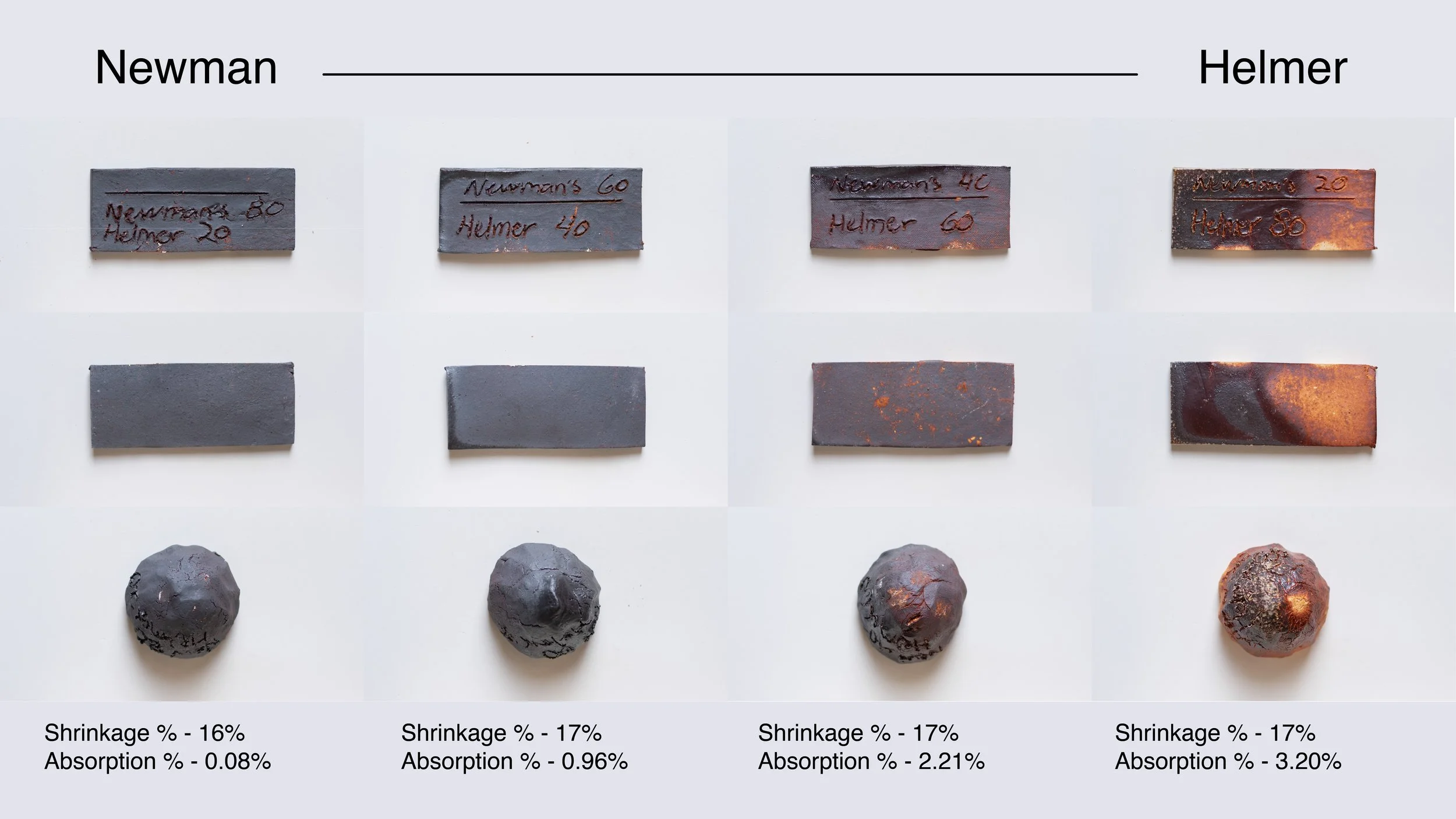
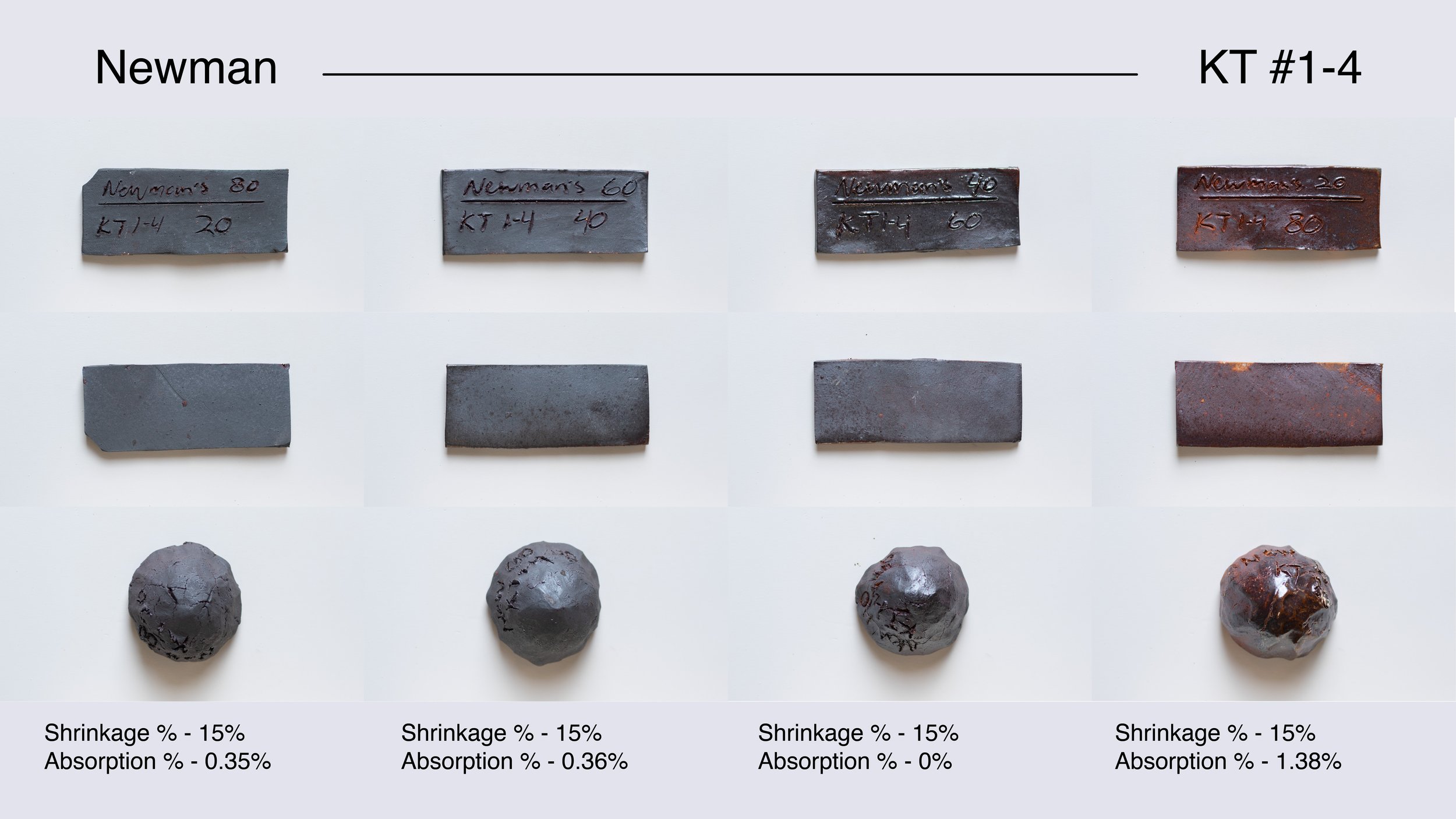
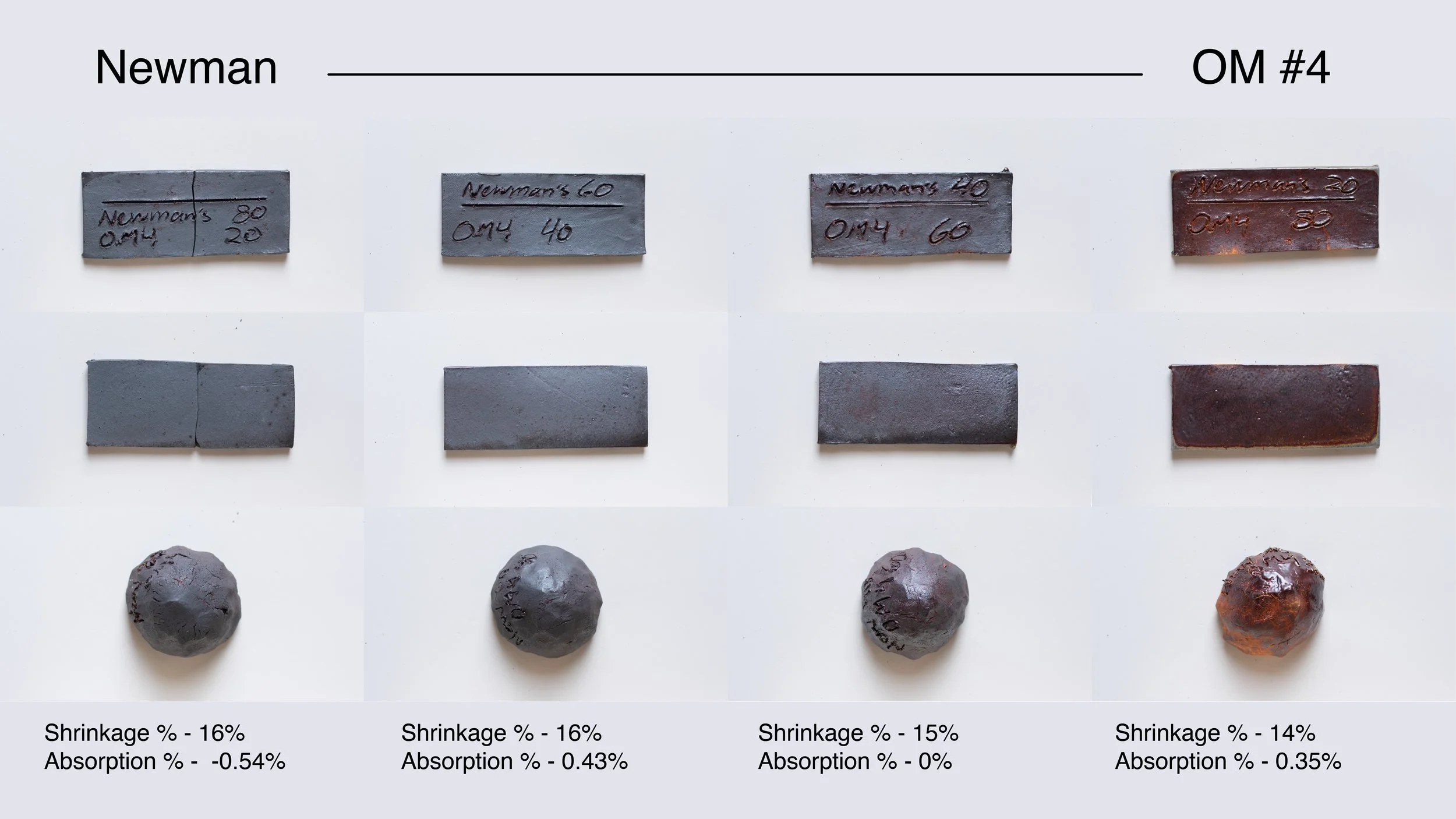
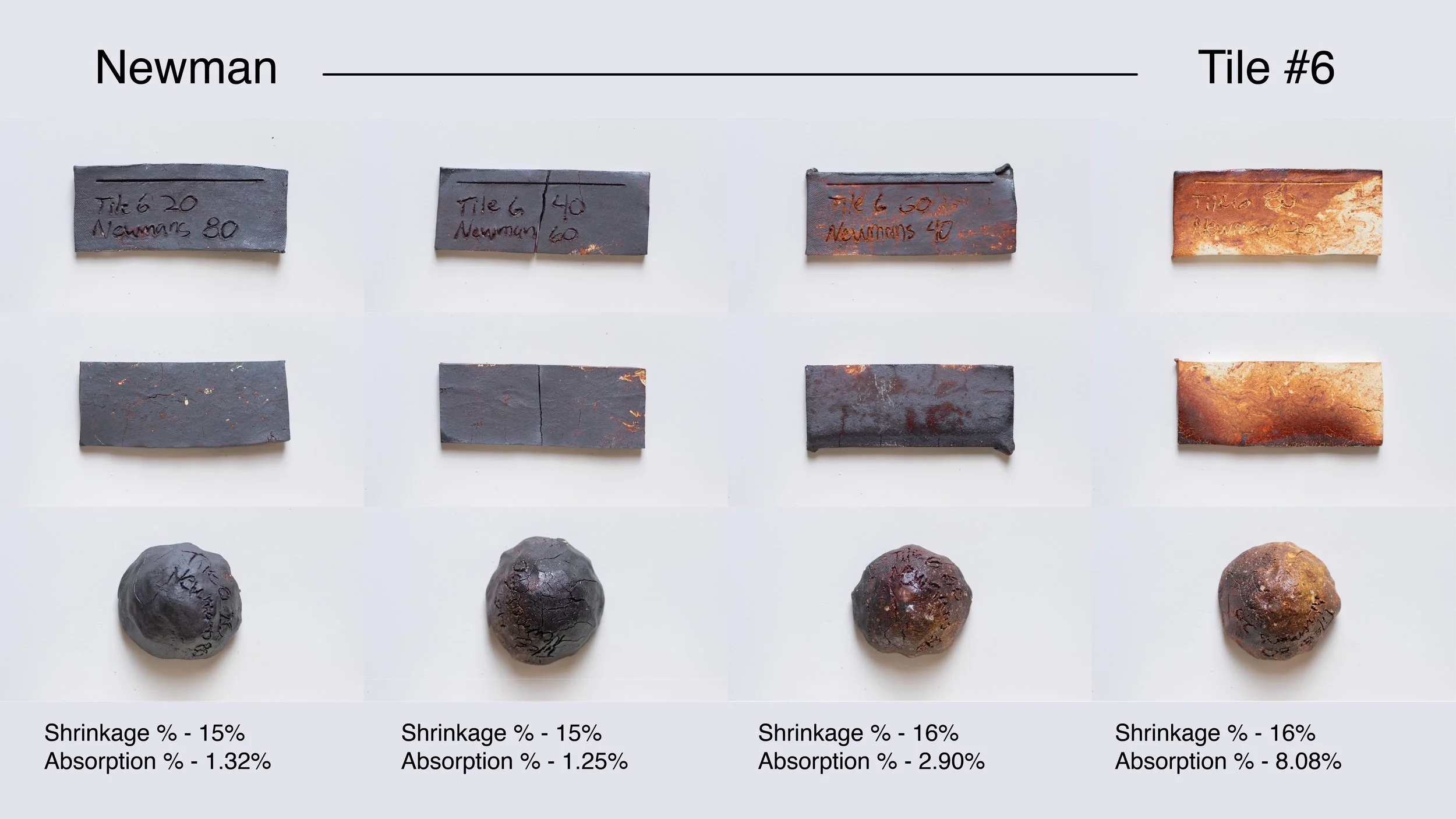
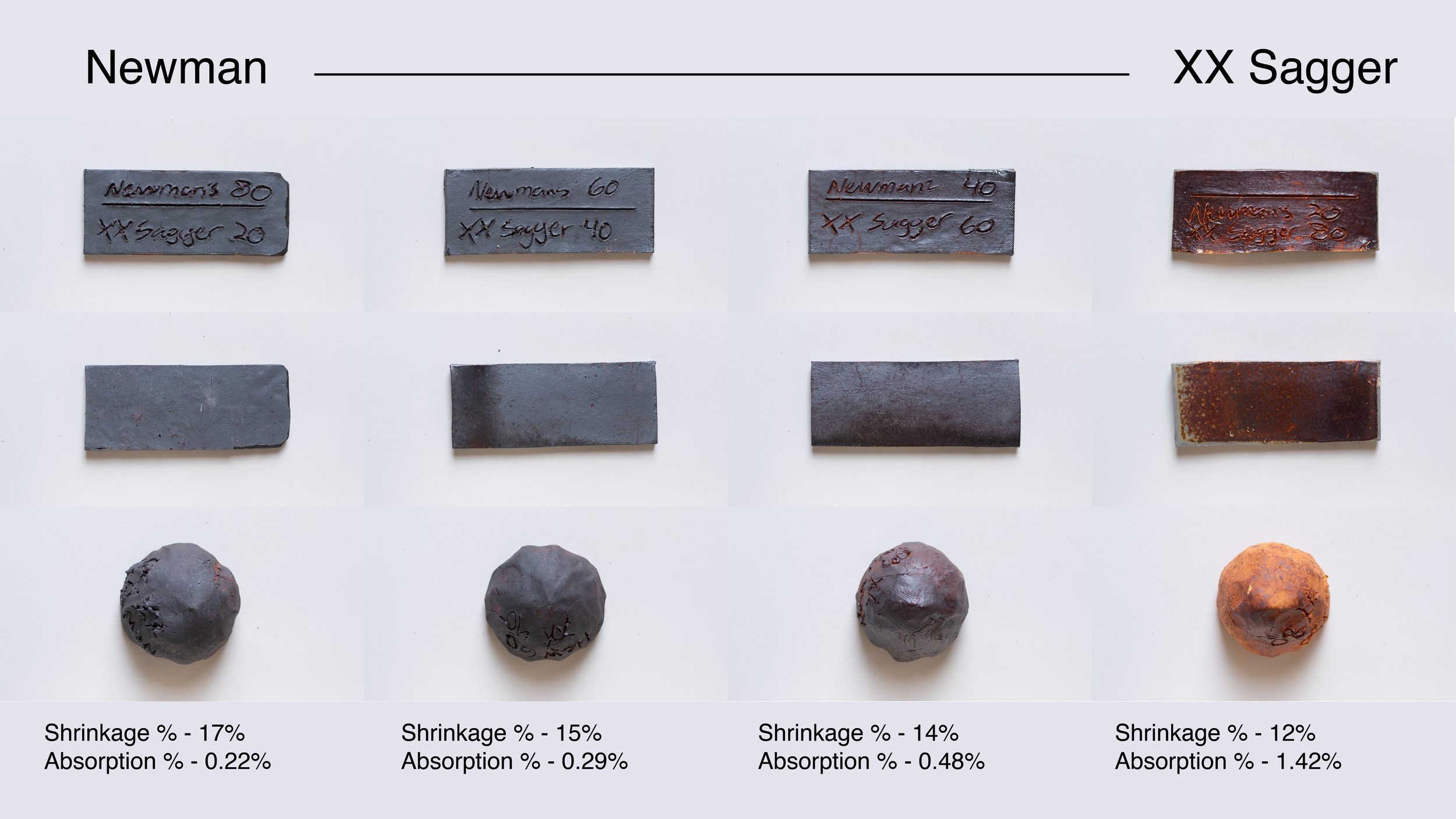
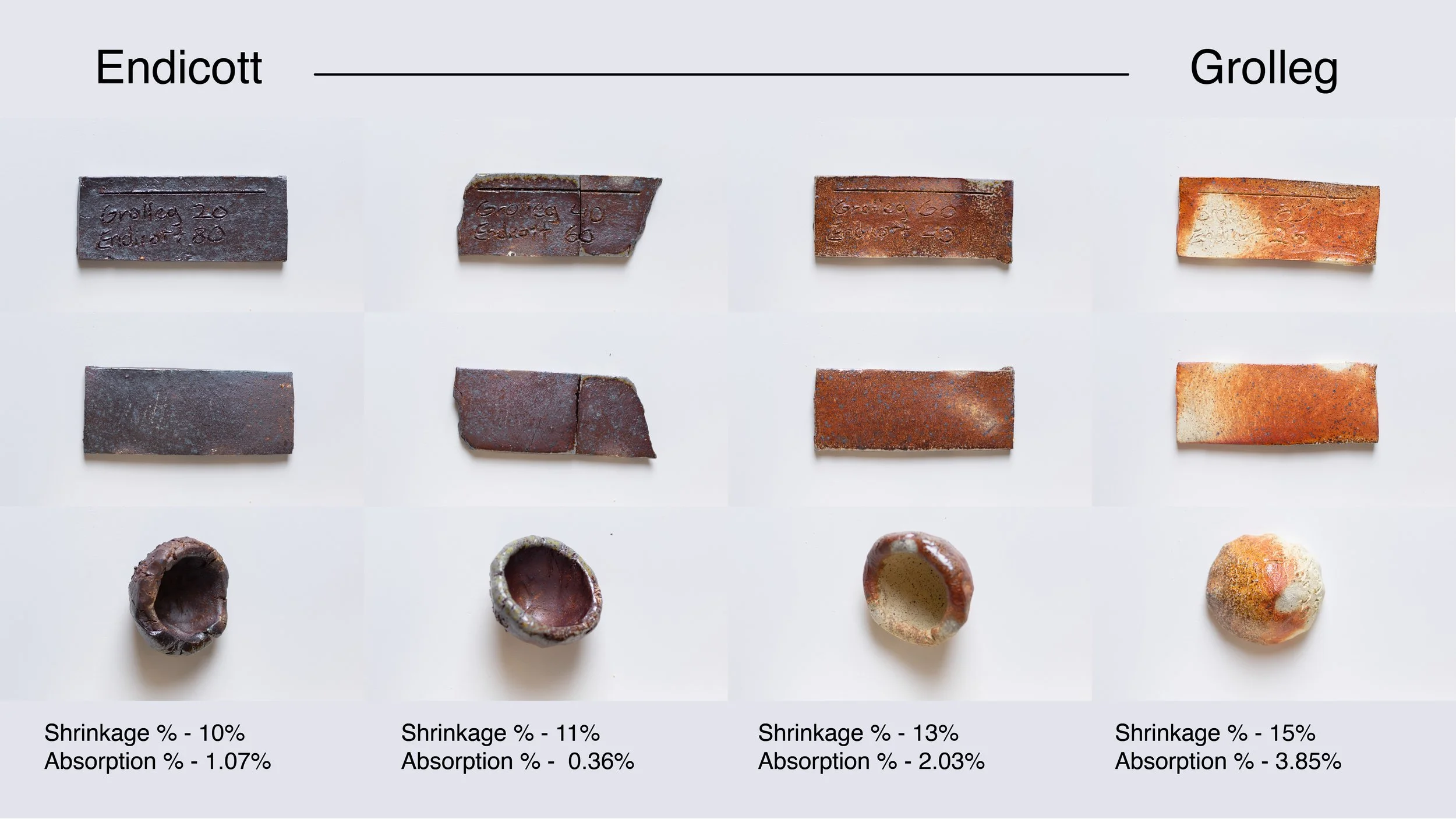
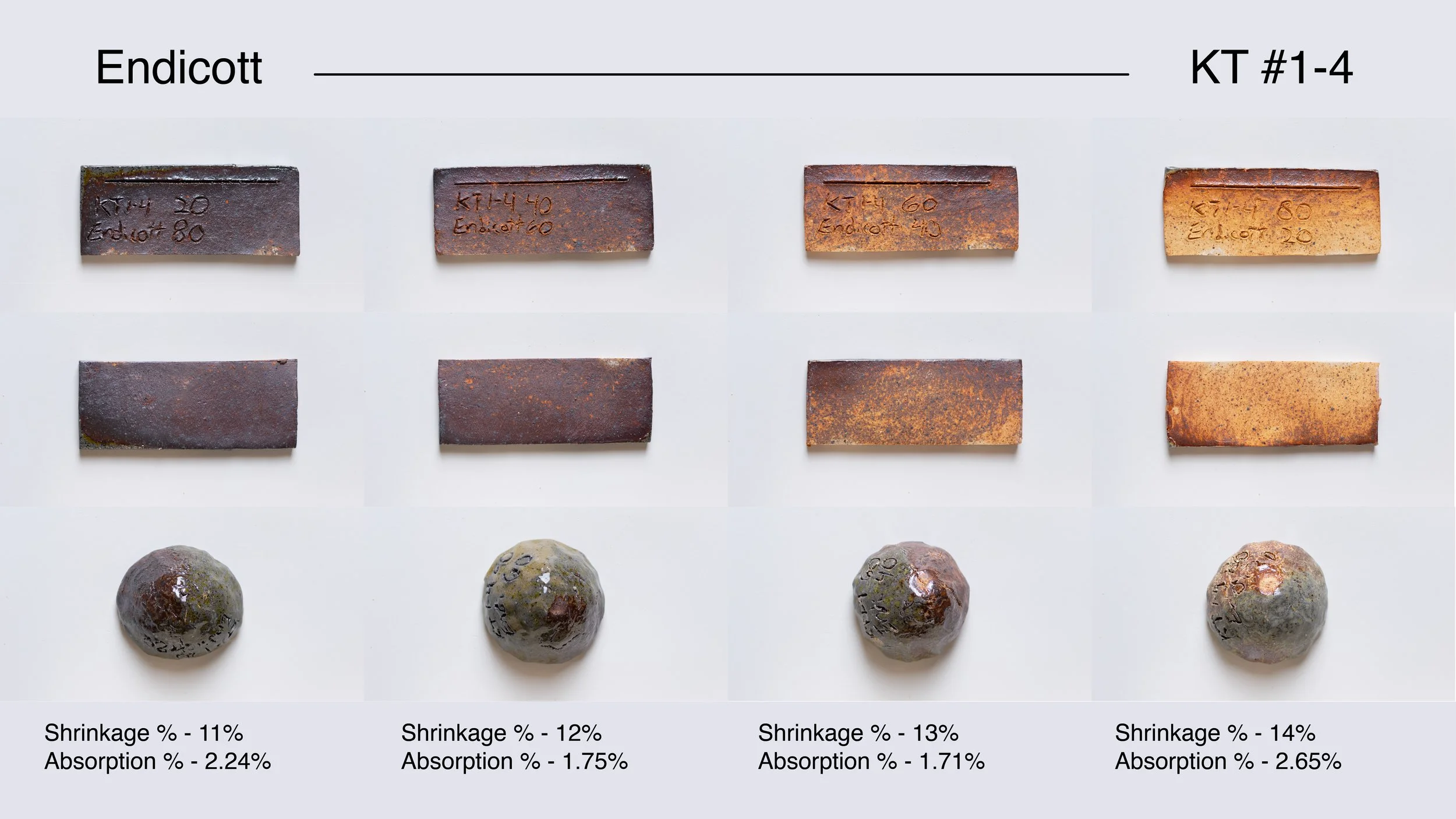
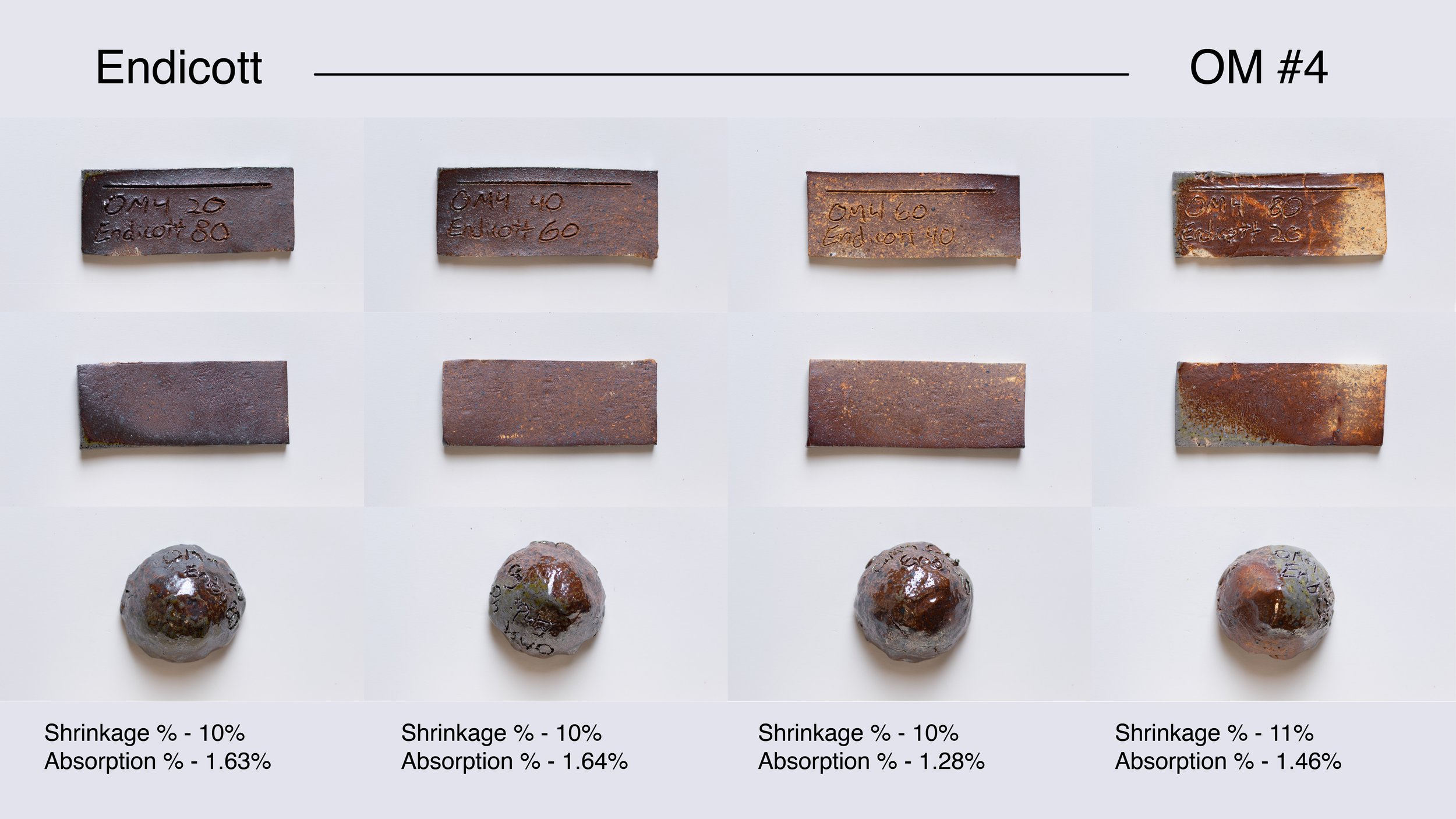
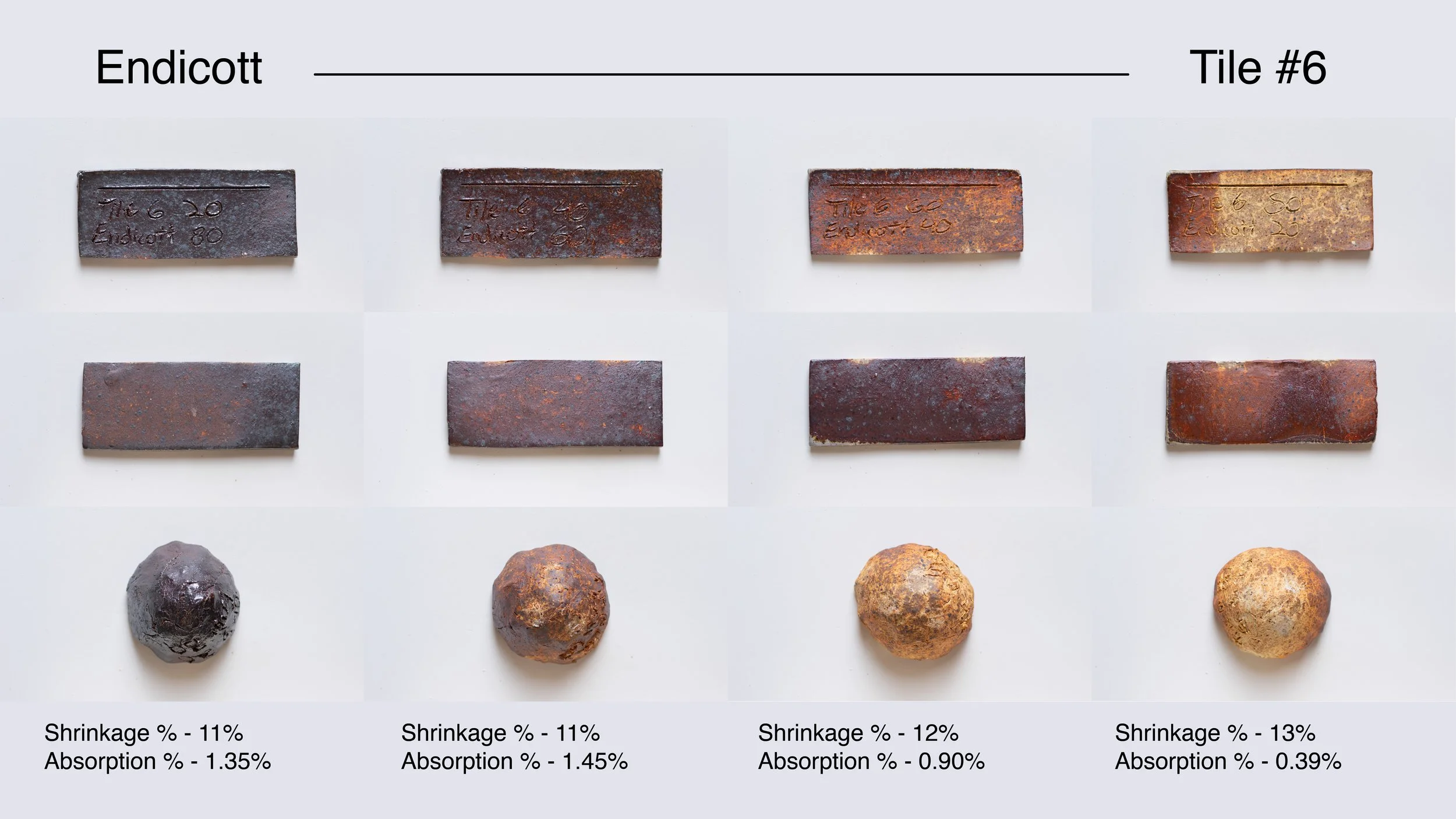
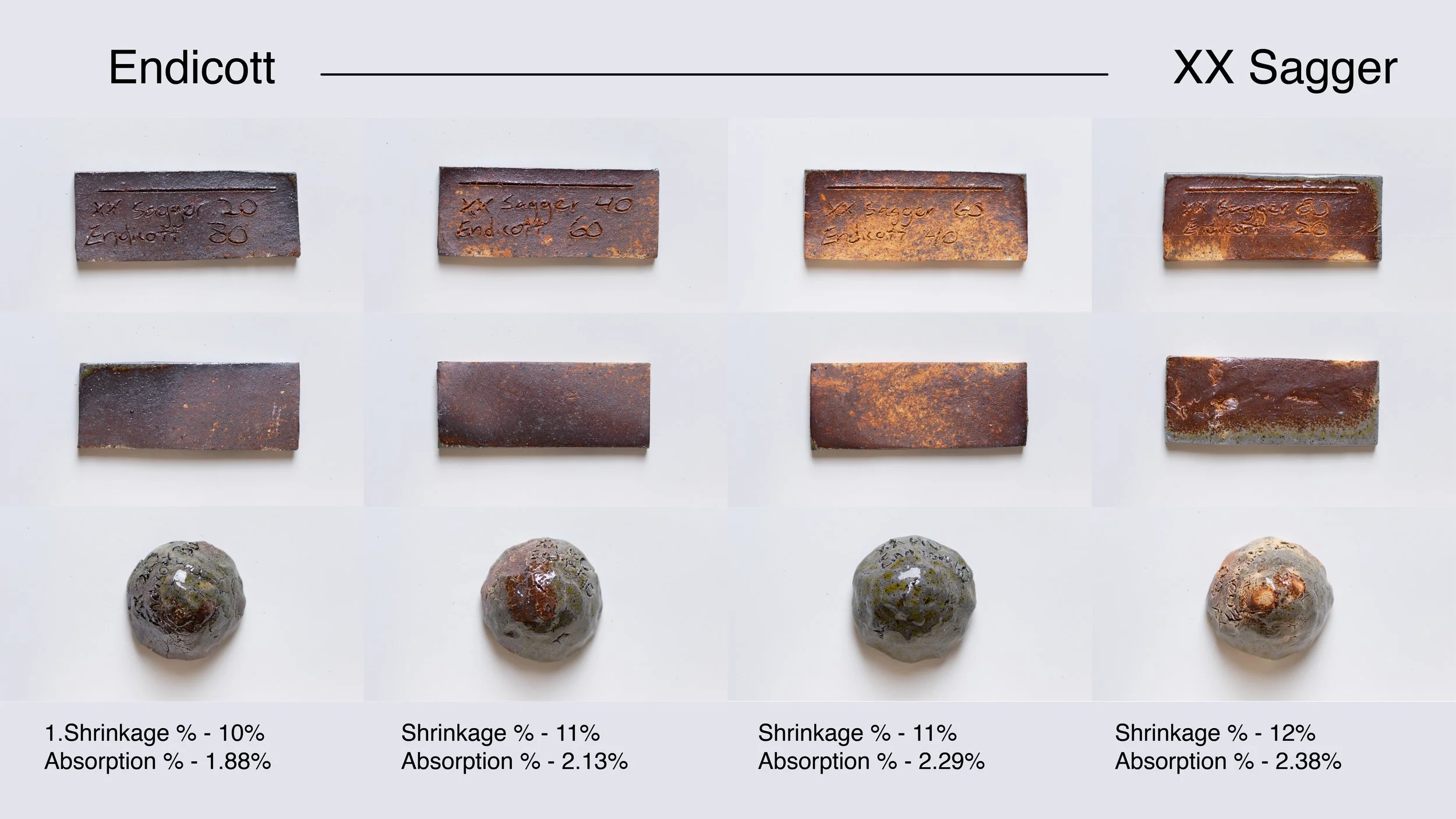
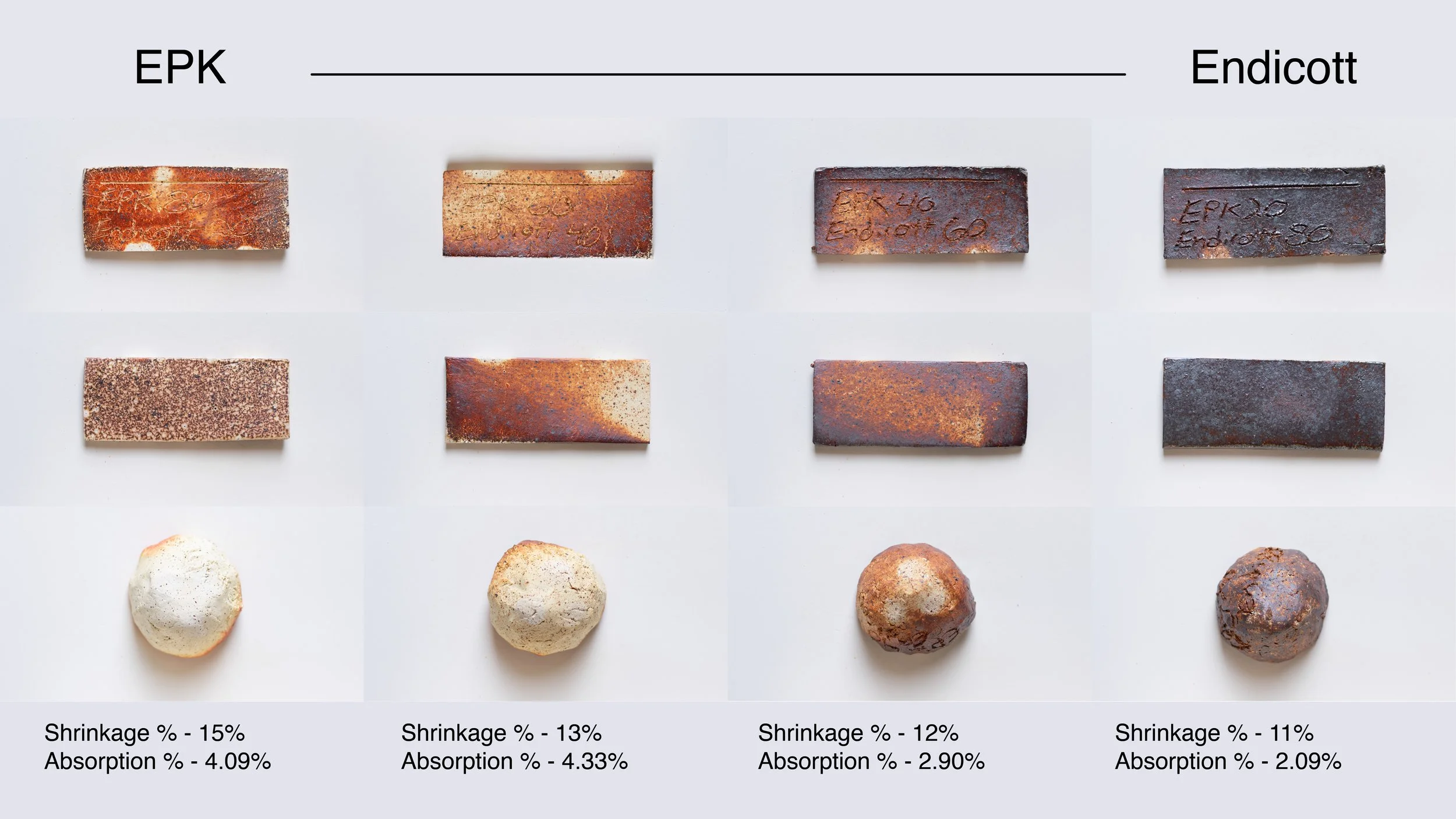
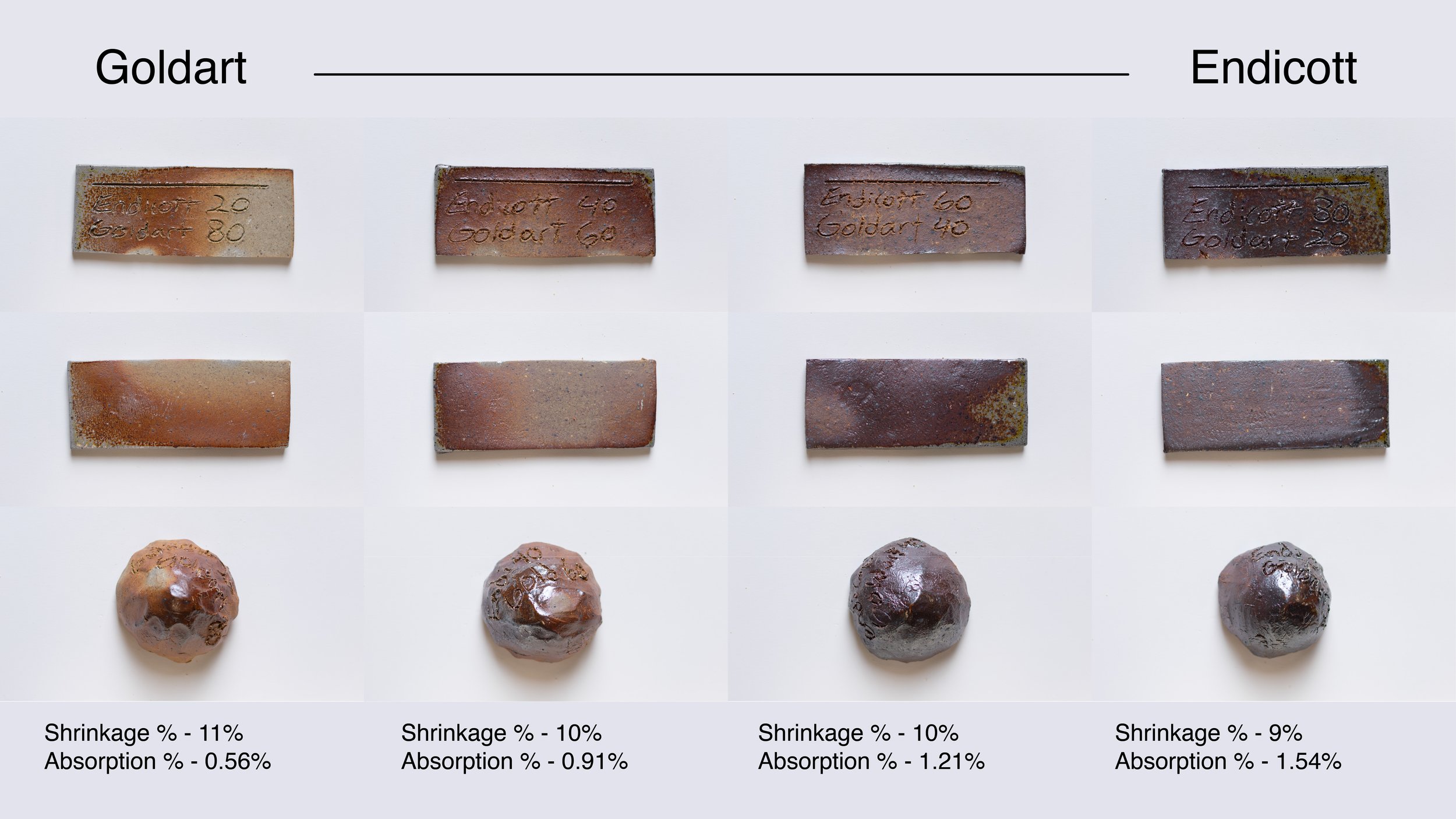
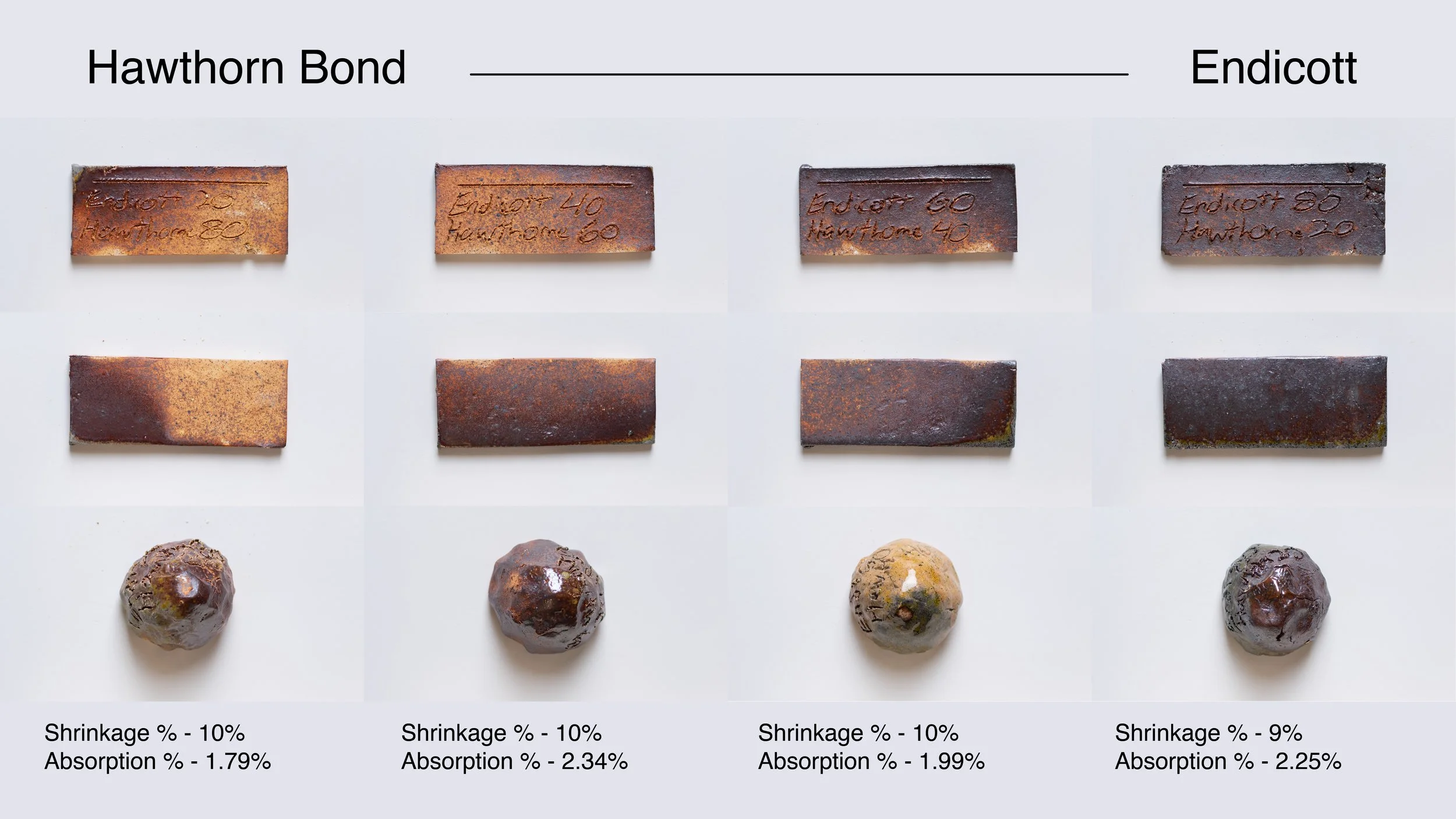
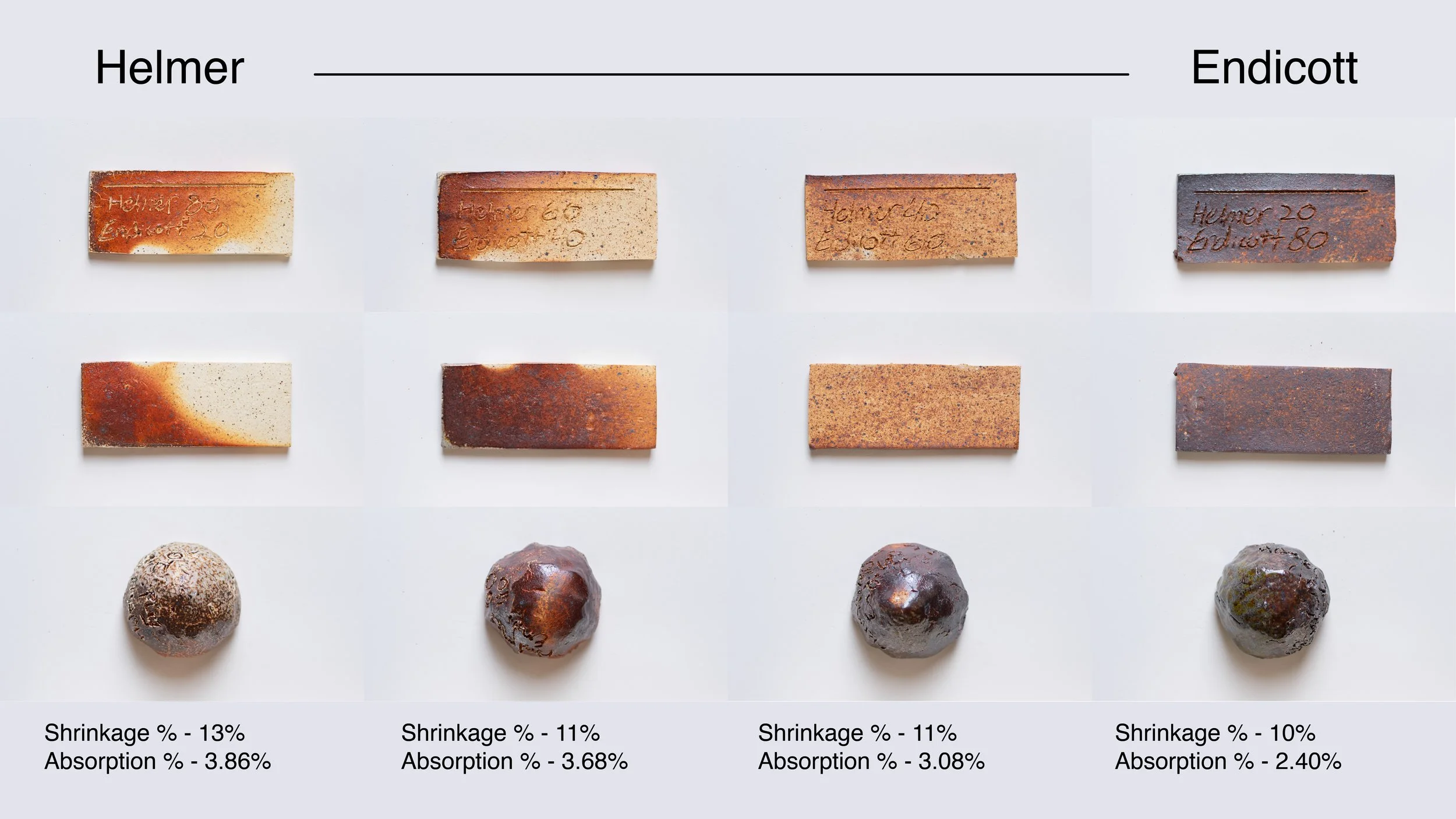
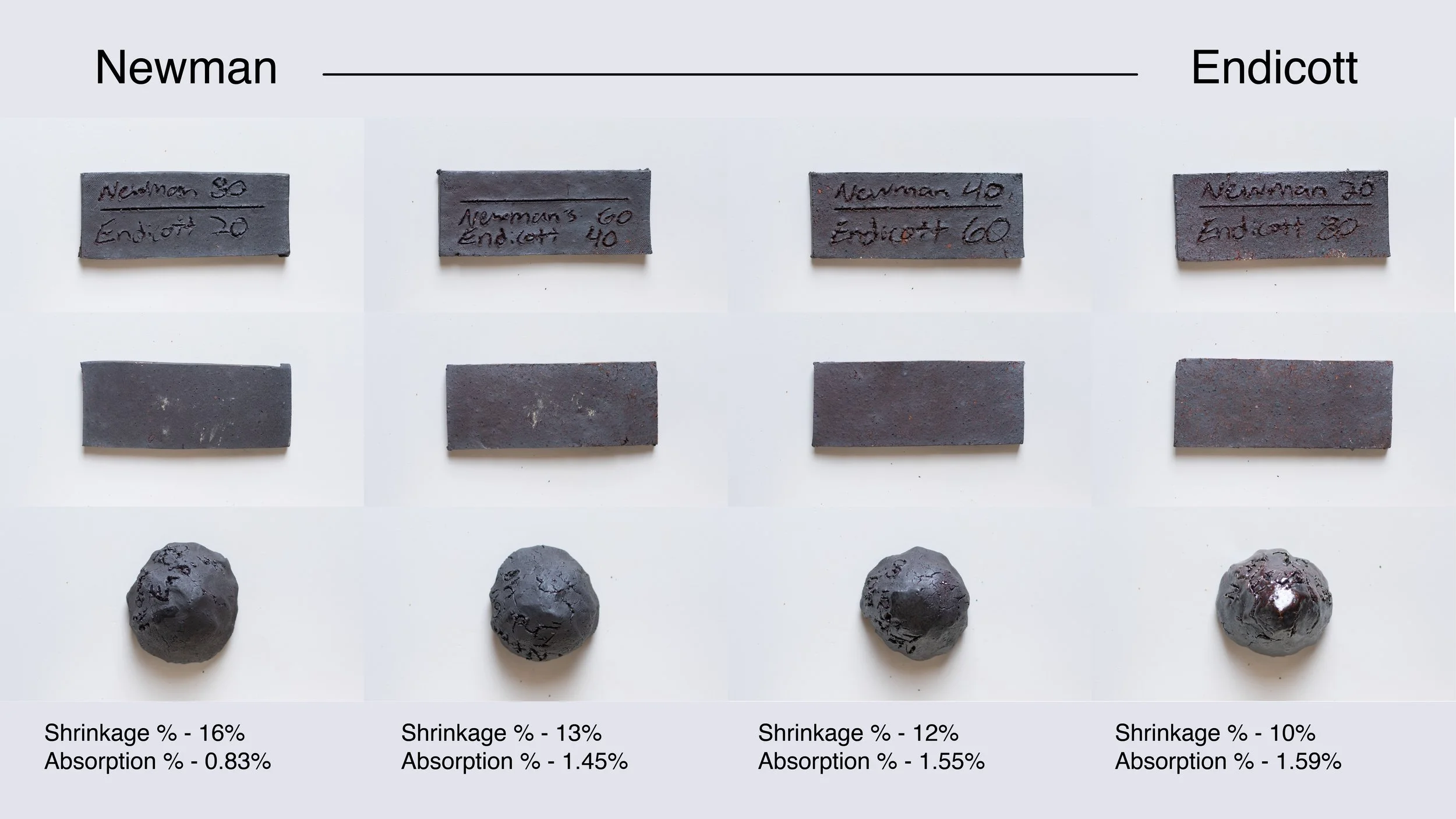
During my senior year of undergrad at the University of Nebraska—Lincoln I was awarded a grant-funded research opportunity to research the reactions of different clays in atmospheric firings, specifically soda. I took eleven high-fire clays that were accessible to me through my school’s materials room and created test tiles of all possible combinations, in 20, 40, 60, and 80 percent increments. In addition to these tiles I also made a small pinched cup for each combination, in hopes of recording better flashing information.
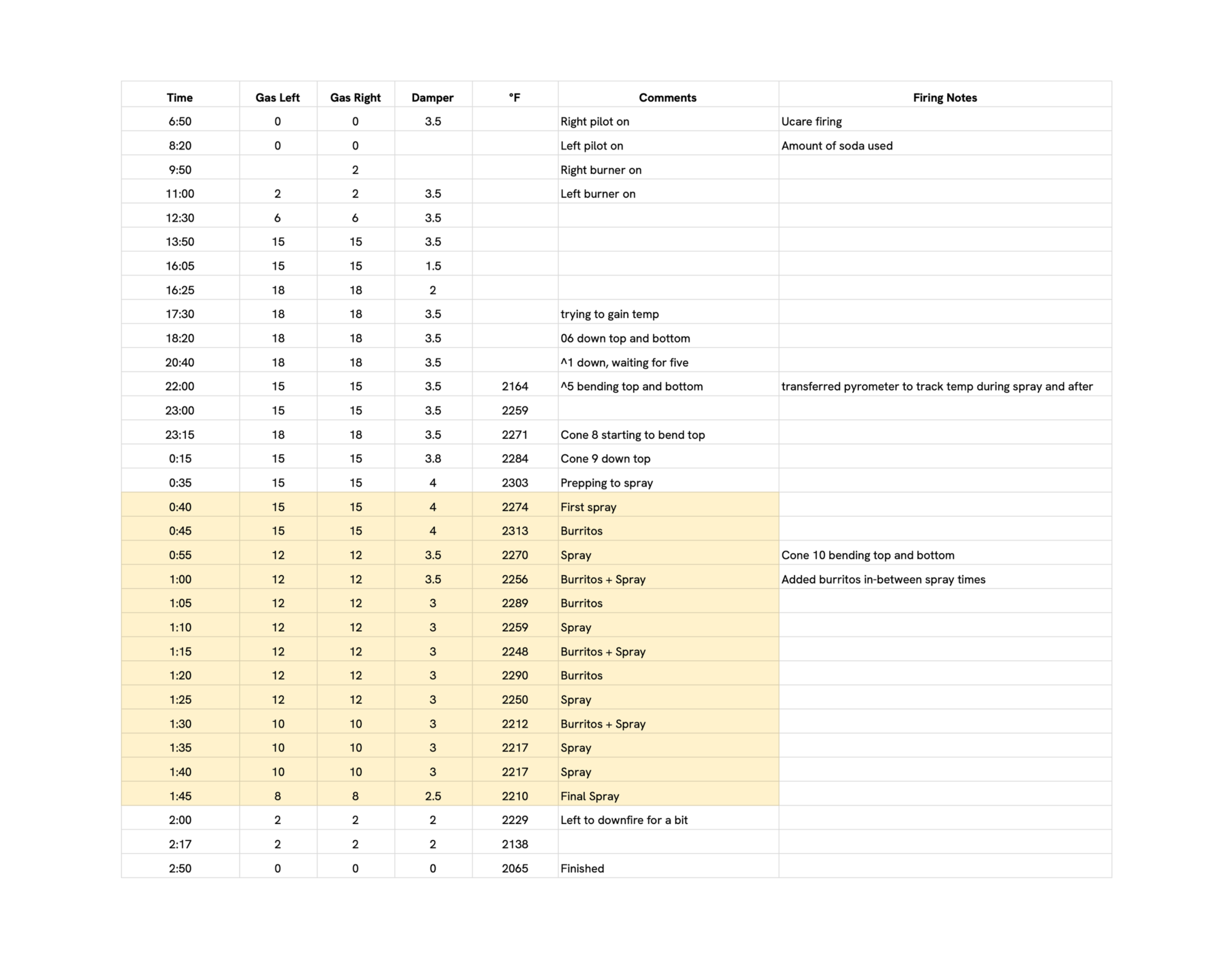
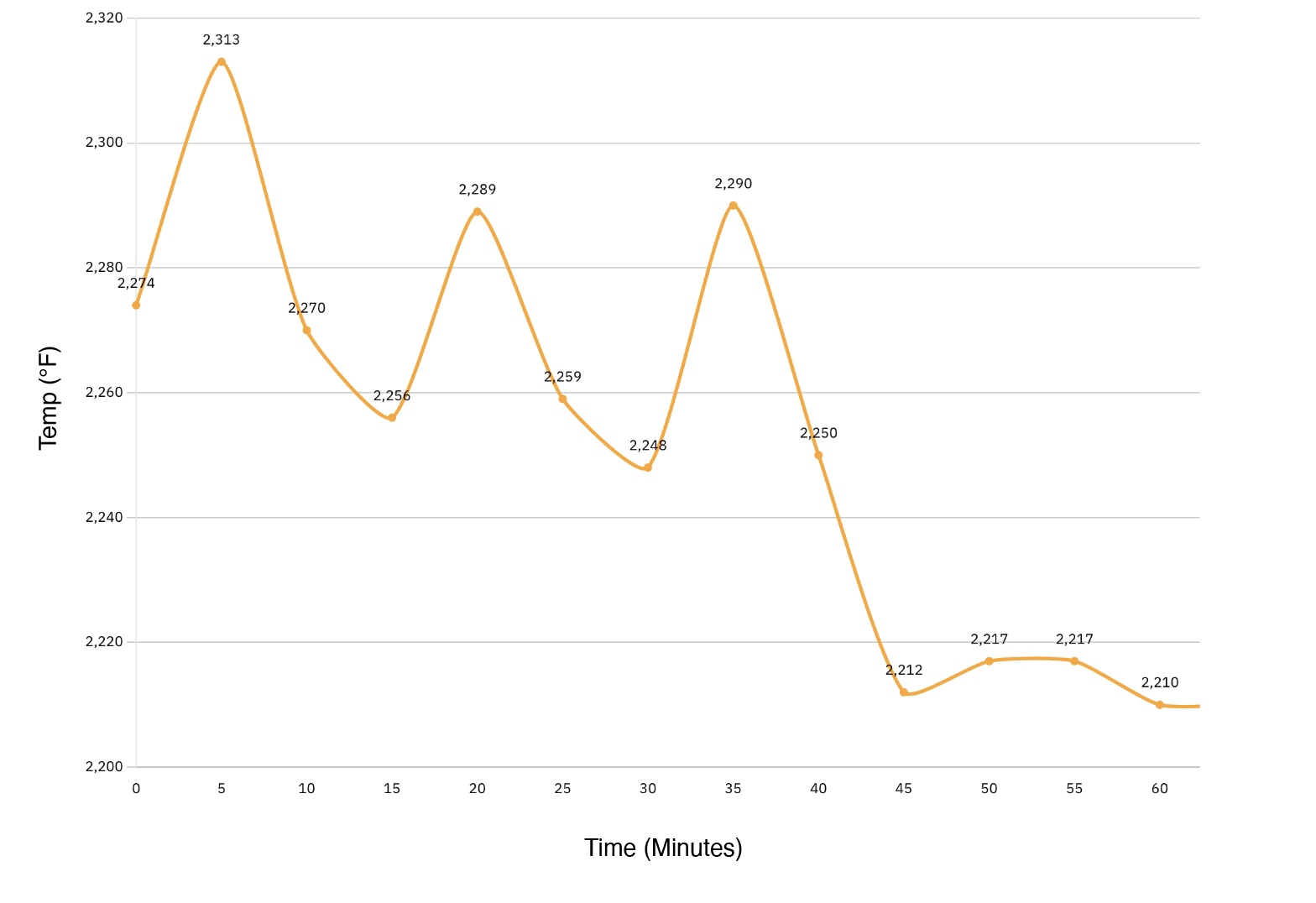
The firing went well, despite taking nearly seven hours to wad and load all tiles into the kiln. They were fired in one of UNL’s downdraft soda kilns, which is approximately 22 cubic feet and took about 5 pounds of sodium carbonate. 2 pounds were dissolved in water, and 3 pounds were mixed into dry “burrito” packets, which were added in between sprays.
The EPK shortage unfortunately occurred midway through my research, so there is a missing set of tiles for that kaolin as I was unable to acquire any to finish the experiment. The data I did produce, however, will greatly inform my practice in developing clay bodies and understanding the reactions and behaviors of these different clays in both their green and fired states. I was surprised by EPK and Goldart’s difficult workability, impressed by Endicott’s shiny soda surfaces, and further curious about Grolleg’s dryness in the kiln. This experiment has provided lots of new information that I will take with me in my continued research and artistic practice.
Grolleg
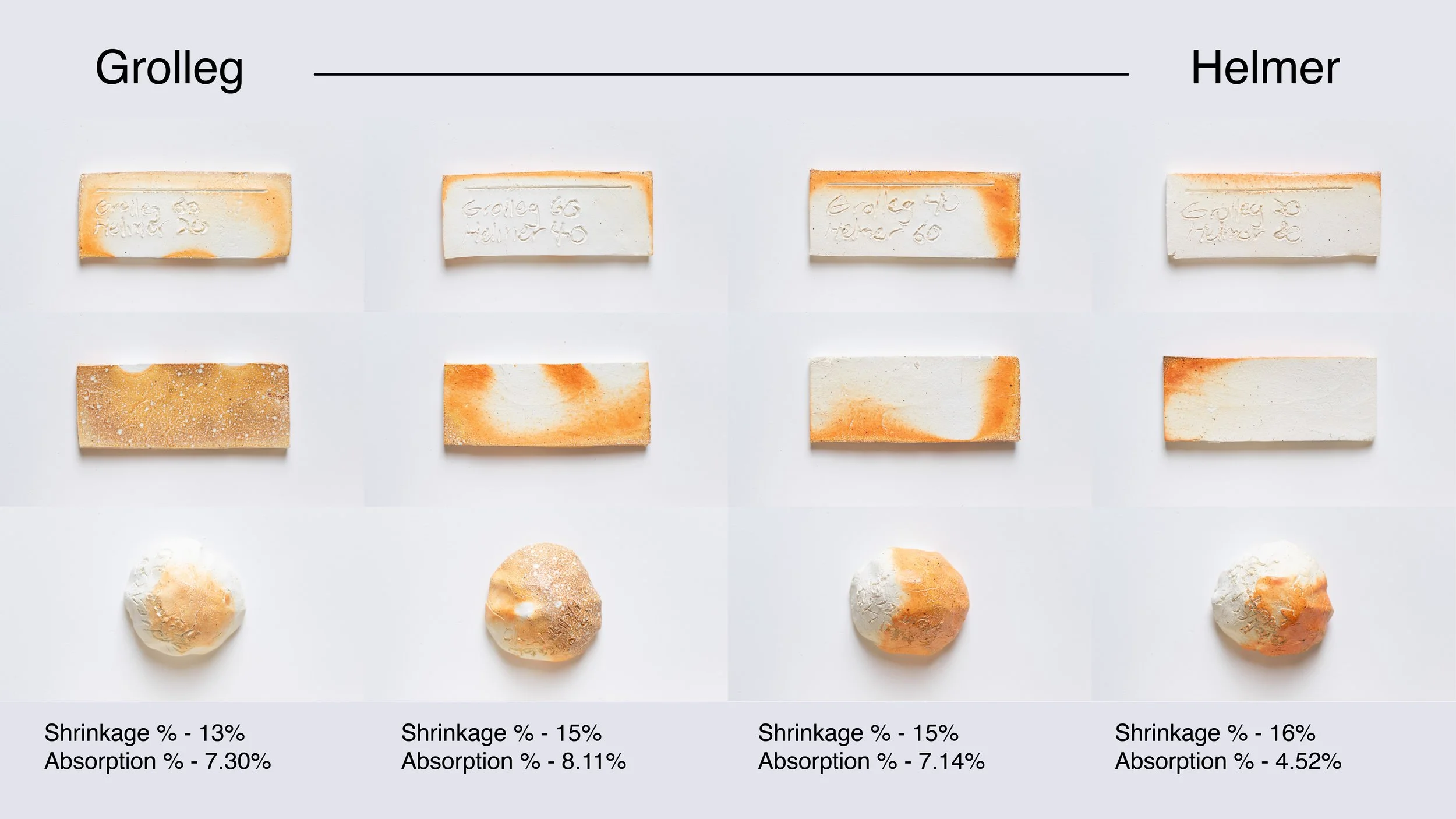
Helmer Kaolin
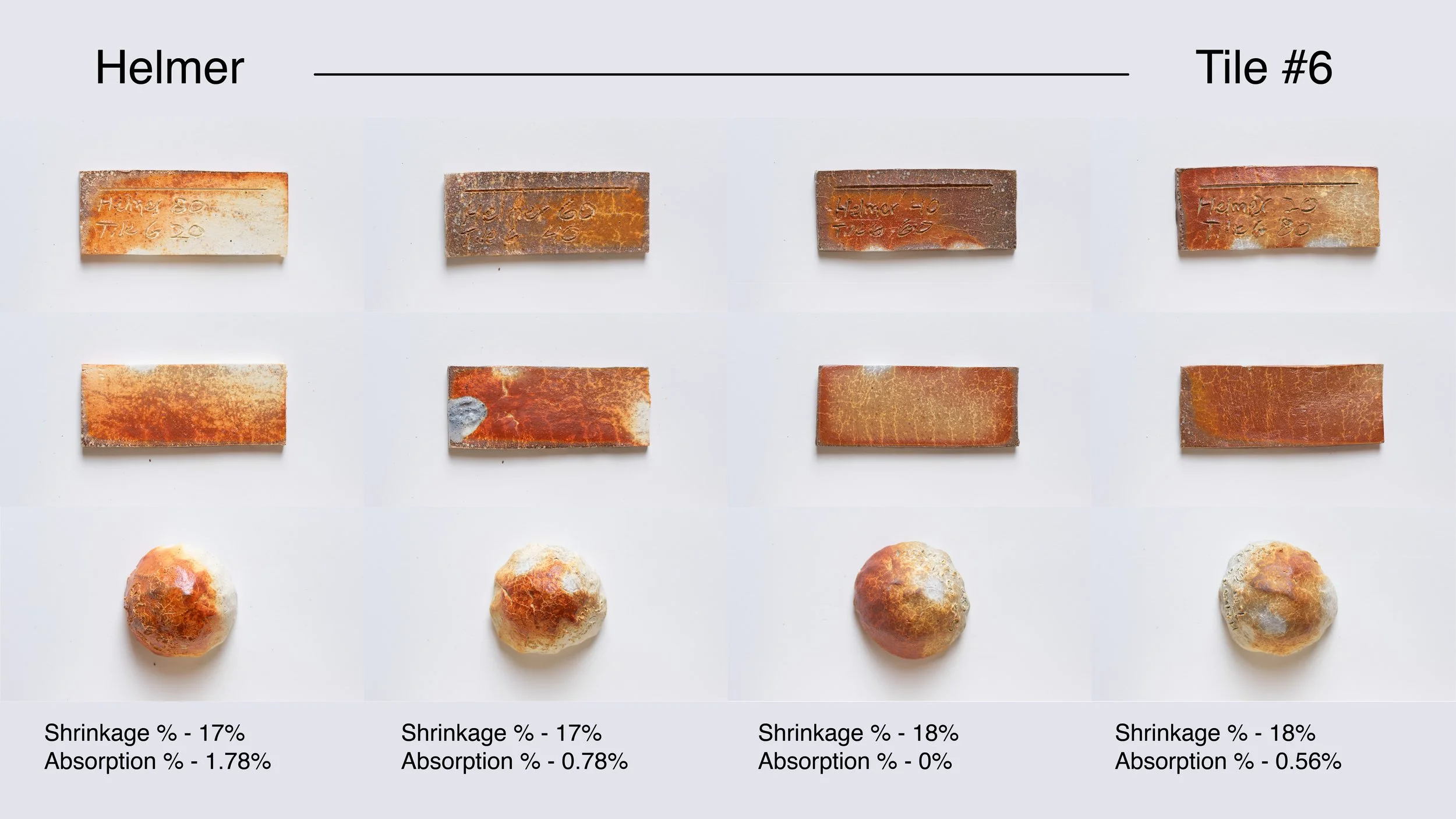
Tile #6 Kaolin
Edgar Plastic Kaolin
Goldart
KT #1-4 Ball Clay
OM #4 Ball Clay
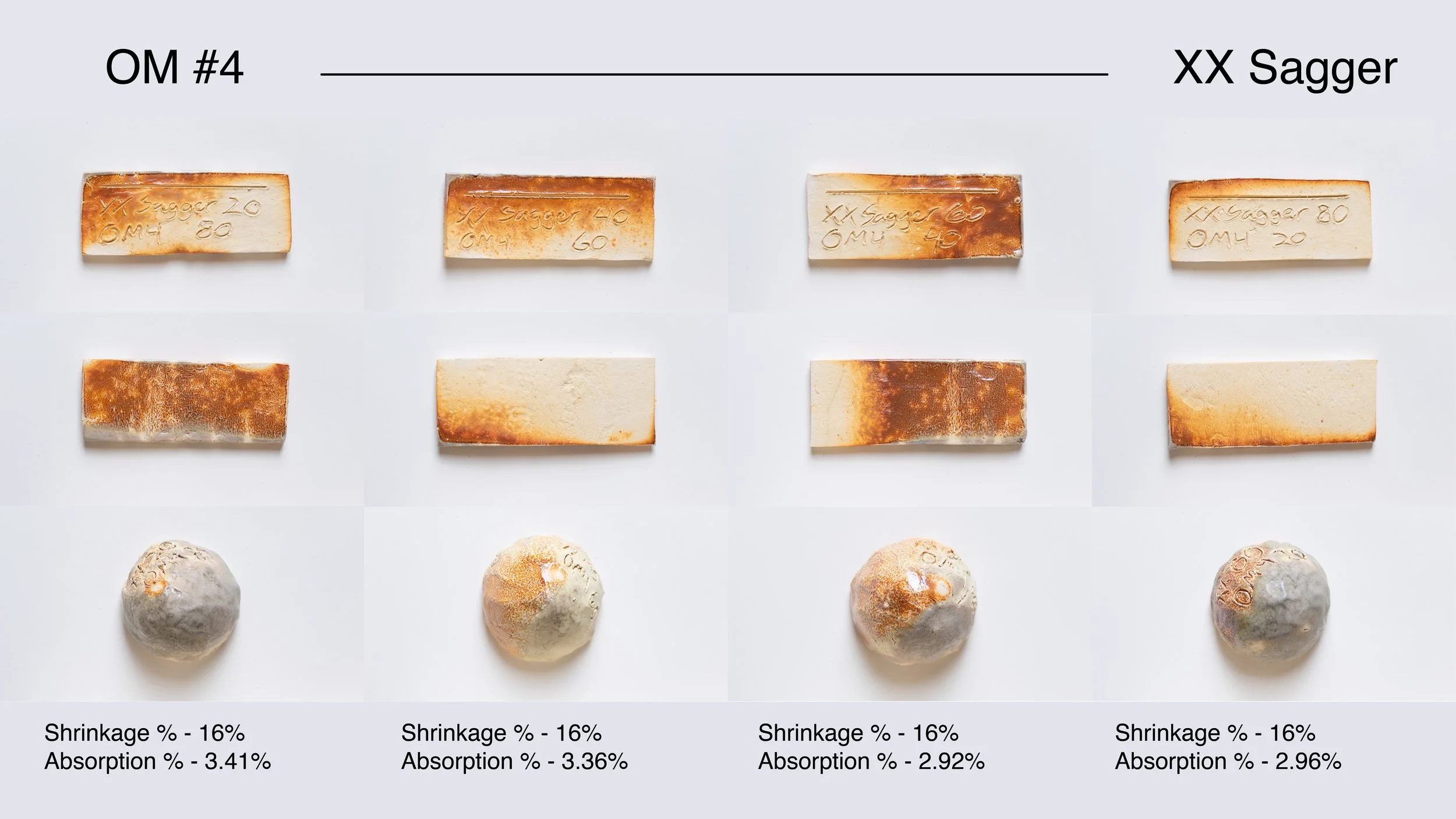
XX Sagger Ball Clay
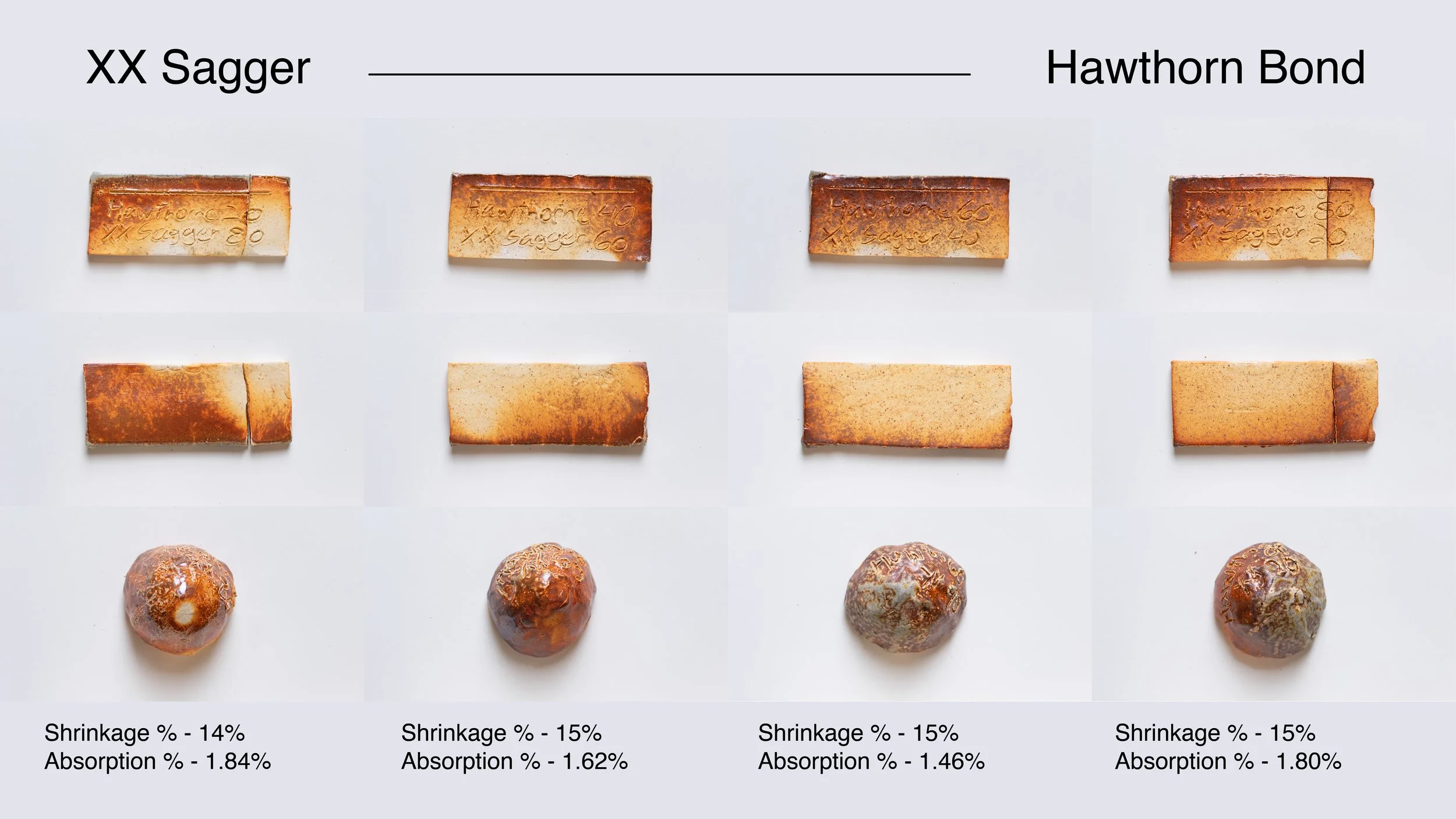
Hawthorn Bond Fireclay
Newman’s Red Fireclay
Endicott Brick Clay
Firing Schedule